
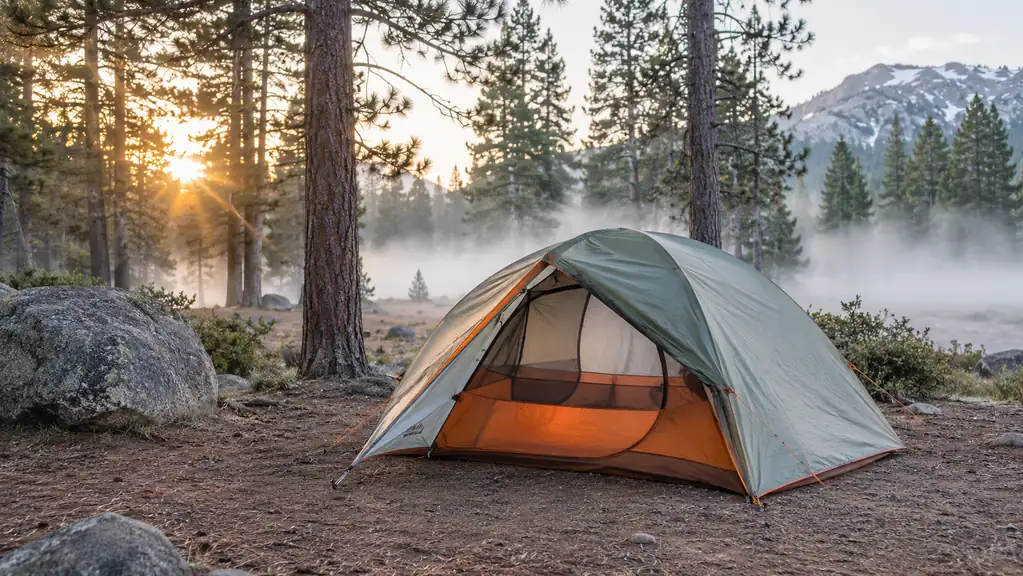
I bought the Naturehike Cloud-Up 2 on the recommendation of a stranger in a campground at Huntington Lake, which is not how I usually buy anything. He had it strapped to a daypack and he told me it weighed less than his lunch. I have been camping in the Sierra since I was a boy and I am sixty one now, with a back that reminds me of thirty years up a pole, so weight matters to me in a way it did not used to. Two seasons in, this tent has been up at Shaver Lake in July, down in the Sequoia country in September, and once on a Central Coast state beach where the wind came off the water all night. Here is the honest version, including the parts that irritate me.
The short answer: it is a genuinely good three season tent that I now keep in the Tacoma instead of the garage, and it has one real weakness, which is that two full grown adults inside it is a negotiation rather than a comfortable arrangement. Everything else, the weight, the weatherproofing, the setup, I would buy again tomorrow.
The Quick Verdict
Light enough to forget you packed it, dry in real weather, and quick to pitch even with a bad knee. Tight for two adults who want their own space.
Amazon Check Today's Price →The Tent That Lives In The Truck, Not The Garage
4.3 pounds, freestanding, and the footprint comes in the bag. Check today's price and the current listing details on Amazon before your next weekend out.
Amazon Check Today's Price on Amazon →How I Have Actually Used This Tent
I am not a thru hiker. I am a retired utility lineman from outside Fresno who car camps out of a 2014 Tacoma with a camper shell, and who takes a couple of short walk in overnights a year when the grandkids are not along. That is the honest frame for this review. I have not put a thousand miles on this tent. I have put twenty odd nights in it, across two summers and one shoulder season trip, and I have put it away wet more than once, which is the real test of any tent.
Three trips tell you more than any spec sheet. A three night stretch at Shaver Lake where it rained hard enough that the fire went out twice. A windy night on the Central Coast where the fabric snapped all night and I slept maybe four hours. And a September trip in the Sequoia area that dropped near freezing, where the condensation inside turned out to be a bigger problem than the cold.
What I want from a tent at this stage of my life is different from what I wanted at thirty. I want to stand up straight while I pitch it. I want a door I can get through without doing a crab walk. I want to find the zipper in the dark without unbending my knee. And I want it to not leak. That is the whole list. This tent gets most of it, and the parts it misses are worth knowing about before you order.
Setup: Quick, With One Caveat For Old Knees
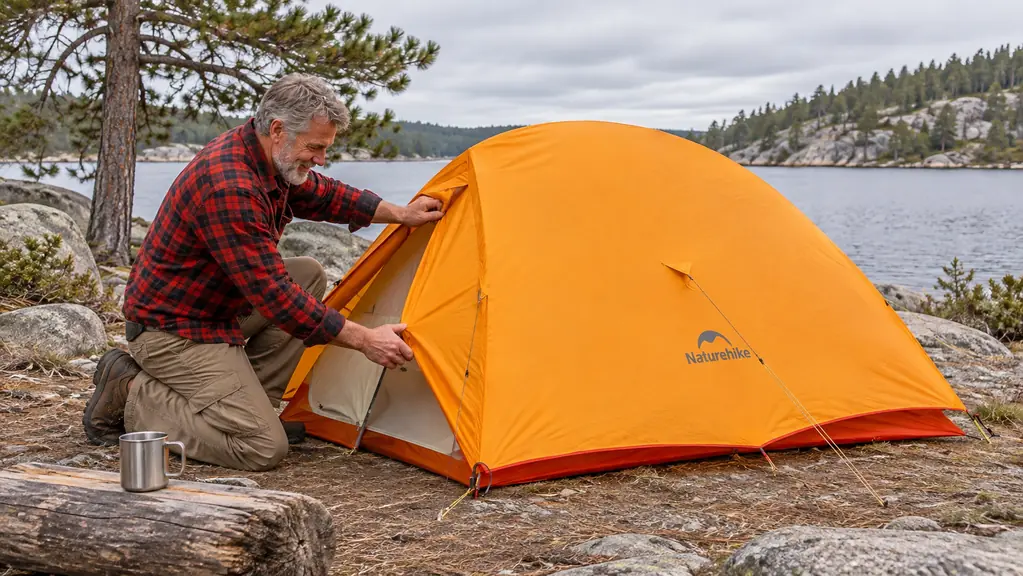
Pitching is genuinely fast. The poles come as one set and they clip to the body rather than threading through sleeves, and the whole thing goes up freestanding, so you can build it and then walk it into position instead of staking it first and hoping. On a flat pad I am done in about six or seven minutes, including the fly and the five wind ropes. My first night took longer because I was reading the instructions by headlamp, and that is on me, not on Naturehike.
The caveat is the height. This is a 41.3 inch tall tent at the peak, and the peak is in the middle. So you are clipping the top of the poles with your arms up and the bottom of the poles near your feet, and the bottom clips are the ones that cost me. I have a bad right knee from the lineman years, and the low clips near the corners mean a squat and a lean, four times over. It is not a deal breaker. It is the difference between pitching in six minutes with a grunt and pitching in six minutes comfortably.
If your back is worse than mine, the workaround that saved me is to build the whole thing lying on its side, clip everything while it is flat on the ground, and stand it up last. The freestanding design lets you do that. A tent that has to be staked first would not give you the option, and that is one of the better things about this one.
Staying Dry In A Sierra Thunderstorm
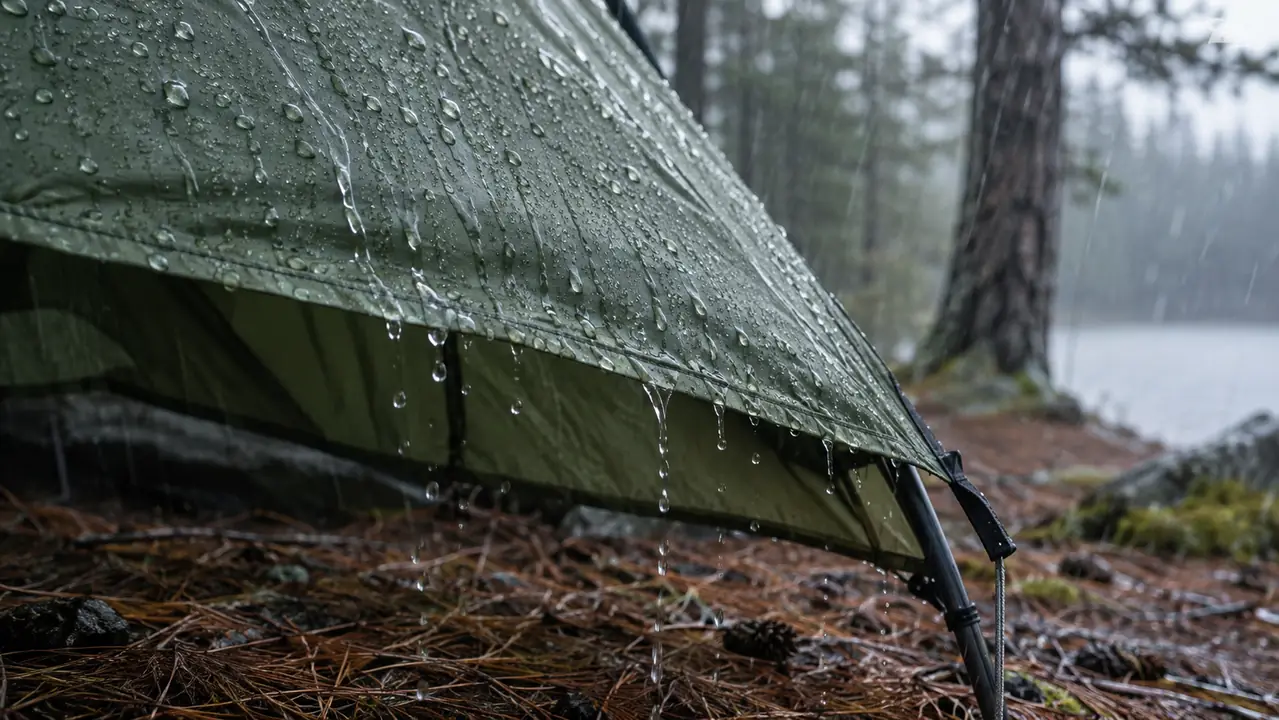
The fly is 210T polyester with a waterproof coating rated at 3000mm, and I will translate that. Three thousand millimeters is roughly the point at which fabric stops letting water through under the weight of steady rain rather than a mist. It is not an expedition number. For Sierra summer storms and coastal drizzle it is more than enough, and the Shaver Lake trip proved it. Three hours of hard rain, water running under the tent, and the inside stayed dry except for one corner where I had pitched on a slope and my bag was pressed against the wall.
That last part is the bit nobody tells you in a review. Almost every leak I have ever had in a tent was contact, not failure. Your sleeping bag presses the fabric, the fabric wets through, and by two in the morning your foot box is damp. It happens in tents that cost several times what this one does. The fix is pitching level and not touching the walls. The Naturehike is not at fault in that story. My pitch was.
The floor held up fine. I use the footprint that comes with it, which is one of the reasons I picked this model over the versions that ship without one, and I would not skip it. A floor that abrades against granite is a floor that starts leaking in year two, and a footprint is a lot cheaper than a new tent.
Three hours of hard rain at Shaver Lake, water running under the tent, and the inside stayed dry except the one corner where my bag touched the wall.
The Vent Window And Why It Matters More Than It Sounds
There is a vent window above the front door on this version, and that is the upgrade that made me choose it over the older design. In a three season tent, condensation is the enemy you actually fight. Not rain. You breathe out a surprising amount of water overnight, it hits the cold fly, and by morning your bag is damp at the foot. Every camper knows the feeling of packing up a sleeping bag that smells like a wet dog that was never there.
The Sequoia trip was the test. Near freezing, fly on, door zipped because it was cold, and I still woke up with less condensation than I expected. Not none. Less. The vent moved air through the top of the tent and that made the difference between a damp foot box and a wet one. If you camp in the mountains in September, this is the feature you will actually notice, and it is the one I would not give up to save a few ounces.
Space: The Honest Part
The tent measures 82.7 inches long by 49.2 inches wide by 41.3 inches tall. Forty nine inches is the number to sit with for a minute. A standard sleeping pad is around twenty five inches wide. Two of them side by side is fifty inches. Do the arithmetic and the problem shows itself: two adults on two pads fill the floor exactly, with nothing left over and no room for error.
With Carol along we make it work. We are not large people and we have been married long enough that we do not need elbow room. But there is no floor space left for a duffel, a water bottle, or a pair of boots. Everything lives in the corners at your head and your feet, and the walls slope in, so those corners are smaller than they look on the floor plan. Getting dressed in the morning is a sequence, not a movement.
By myself, which is most of my trips, this tent is close to perfect. One pad, one bag, room to sit up and change, and space beside me for a duffel and a lantern. If you are buying this for solo use with occasional company, you will be happy with it. If you are buying it as a dedicated two person tent for a couple who each want their own corner and their own gear pile, you will be disappointed, and I would look at something wider.
Packing It, Carrying It, Living With It
Packed it measures 15.7 by 5.1 by 5.1 inches and weighs 4.3 pounds. That is a bundle about the size of a loaf of bread, and it drops into the Tacoma's back seat footwell or the top of a pack without an argument. For car camping, weight is not the point. For the short walk in sites I use, it absolutely is, because I am the one carrying it on a bad knee and I notice every pound.
The carry bag is generous enough that you do not have to fold the tent like a flag to get it back in, and that matters more than any claim about pack size. Anyone who has wrestled a tent back into a too small stuff sack at seven in the morning with cold hands knows exactly what I mean.
The zippers have been the surprise. Two seasons, twenty odd nights, and no snags, no separated coils, no teeth that stopped meeting. On tents I have owned before, the door zipper was always the first thing to fail. The pole clips have held. One wind rope stretched out and I replaced it, which is a two minute job and not a complaint about the tent. The seams still look like seams. Nothing has gone chalky or started peeling.
What I Would Change
Two things. First, I would move the bottom pole clips up two or three inches so a person with a bad knee is not squatting to the dirt four times per pitch. That is a small design change and it would not cost anything in stability. Second, I would put a small mesh pocket somewhere near the head end. There is nowhere to put glasses, a headlamp, or a phone except on the floor, and on the floor means you find it with your knee at two in the morning.
Neither of those is a reason to skip the tent. They are the things I notice every trip, and the reason I am not giving it a perfect score. A tent that does everything I want on a Sierra weekend and still fits in a truck footwell is doing the job. It just is not doing it perfectly, and I would rather tell you that than pretend otherwise.
What I Liked
- Pitches freestanding in about six minutes once you know it, including the fly
- Stayed dry through three hours of hard rain at Shaver Lake
- 4.3 pounds packed at 15.7 by 5.1 by 5.1 inches, small enough for a walk in site
- Footprint included, and the vent window above the door genuinely cuts condensation
- Zippers, pole clips and seams have held up over two seasons
Where It Falls Short
- 49.2 inches wide fits two pads and nothing else
- The low corner clips ask for a squat, which hurts if your knees or back are bad
- 41.3 inch peak means you crouch, not stand
- Condensation still forms if your sleeping bag touches the wall
- No pocket or shelf for glasses and a headlamp
Who This Is For
This is for the camper who wants one tent that does a bit of everything and does not want to think about it again. Car campers with a truck or a hatchback who take a couple of walk in trips a year. Solo campers who want room to sit up and change clothes without crawling. Older campers who care more about pitch time and pack size than about having a palace. Backpackers doing two or three night trips in three season conditions who would rather carry four and a bit pounds than eight. And couples who are comfortable with each other, because comfortable is what this floor plan asks for.
Who Should Skip It
Skip it if you are two adults who each want a corner and a place to put a duffel. Skip it if you are tall and want to stand while you dress, because 41.3 inches at the peak will not allow it. Skip it if you camp in real winter or above treeline where the wind is a different animal entirely, since this is a three season tent and I would not push it past that. And skip it if dropping to a squat at ground level is off the table for you, because the corner clips do ask for one each time.
One more honest note before you order. If you are weighing this against the version without the footprint and the vent, take this one. The vent is not a marketing line, it is the difference between a damp sleeping bag and a dry one on a cold September night, and that feature alone is worth choosing this model for. I have recommended it to two neighbors and neither has come back to complain, which for my neighborhood is a strong endorsement.
4.3 Pounds, Up In Six Minutes, Dry In The Rain
Two seasons and twenty odd nights in the Sierra, and it still goes in the truck on every trip. Check today's price and the current listing on Amazon before your next weekend.
Amazon Check Today's Price on Amazon →