
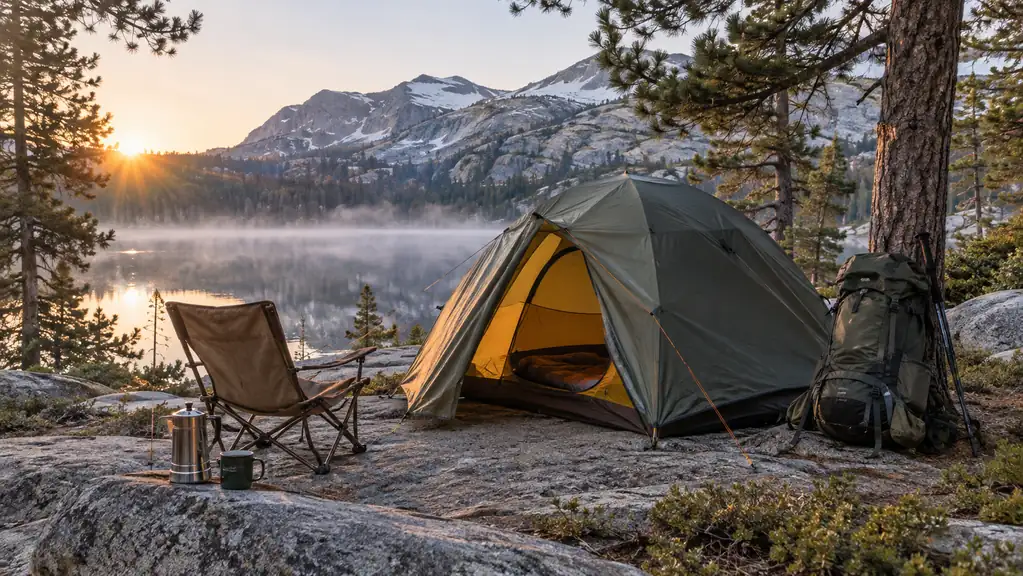
Nobody buys a tent because they want a tent. They buy one because they want to sleep well somewhere that is not their own bed, and the tent is the only thing standing between them and the weather. I have pitched the Naturehike Cloud-Up 2 in a Sierra thunderstorm at Shaver Lake, on a gusty shoulder above Huntington Lake, and on a Central Coast beach where the sand was wet enough that the stakes held out of pure spite. Call it forty nights across a couple of years. My back is 61 years old and my right knee is older than that, so I notice things about a tent that a younger camper walks right past.
The short version, before the long one. The Cloud-Up 2 is a free-standing, three-season, two-person tent that weighs about 4.3 pounds and packs to roughly 15.7 by 5.1 by 5.1 inches, which is a loaf of bread with ambitions. It sets up with clips on a pole set, it stayed dry through rain that turned a neighboring site's tarp into a wading pool, and the footprint comes in the bag instead of as an extra purchase. It is not a palace. Two adults fit. Two adults and all their gear do not, and I will get to that.
The Quick Verdict
Goes up in minutes, stayed dry through two hours of hard Sierra rain, and packs small enough to live permanently in the truck. Snug for two big people once the gear comes inside.
Amazon Check Today's Price →The tent I keep reaching for when the sky turns the color of a bruise
Free-standing, 3000mm waterproof coating on the fly and floor, footprint included in the bag. Three-season, about 4.3 pounds packed.
Amazon Check Today's Price on Amazon →How I've Used It
I bought this tent for a specific job. Carol and I had been hauling a heavy dome tent out of the Tacoma for years, and the ritual of dragging it out, wrestling it upright, and then bending over it to thread poles had started to cost me the first hour of every trip. My lower back does not bend the way it used to and my right knee does not kneel at all. So the job description was simple: a tent I could stand next to, pitch without getting down on the ground, and carry from the truck to a walk-in site in one trip.
Most of our camping is car camping out of that 2014 Tacoma with the camper shell, the kind where the truck is thirty feet away and the cooler counts as luxury. A few times a summer we walk in about a mile to a site on the Sequoia side, and twice I have taken the Cloud-Up 2 on a short overnight with a pack. It has ridden in the truck bed, strapped to the top of a pack, and once lashed to the shell rack when the bed was full of grandkid gear.
The trips that tested it were not the pretty ones. There was a June afternoon at Shaver Lake when the sky went the color of a bruise and the rain came in sideways for two hours. There was a night above Huntington Lake with wind that flattened everyone's chairs and made three campsites move their tents behind the trees. And there was the beach, where the ground is sand and a stake is a suggestion. Those three nights are why I trust this tent more than I expected to at this size and weight.
One trip I remember clearly. Third week of June, two summers back, we pulled into Shaver Lake around four in the afternoon with the clouds already stacking up over the ridge. I had the Cloud-Up 2 out of the bag and standing before Carol had the chairs unfolded, and I say that as a man who is not fast at anything anymore. The family two sites over was still reading the paper instructions out loud to each other. That is not me bragging on my skills. It is the clip system doing the work while I stood there with a cup of coffee getting cold.
Setup: What It Actually Takes
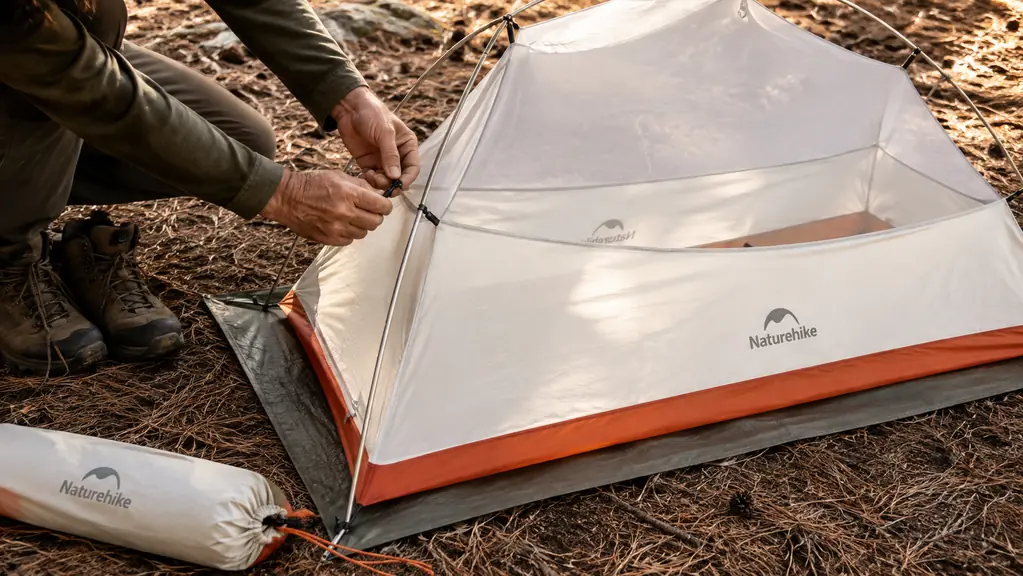
The first thing to know is that this is a clip tent, not a sleeve tent. The pole set goes together, then the tent body clips onto it. If you have ever fed a pole through a fabric sleeve while the wind pushed the whole thing sideways, you know exactly why the clip system is worth having. On a good day I am at five minutes from bag to standing, and that includes laying out the footprint first.
The order I use: footprint down, pole set assembled flat on the ground, body clipped on and lifted upright, fly over the top, then the five wind ropes if the sky looks serious. The fly closes with a zipper and the corners are straightforward. The only part that costs me time is bending to stake the corners, and that is my knee complaining, not the tent being difficult.
Height matters more than the spec sheet suggests. At 41.3 inches at the peak I cannot stand in it and never expected to. What I can do is kneel at the door and reach everything inside without crawling in, and the door opening is one I can get through on my hands and knees without turning sideways. For a body that does not fold, that is the whole argument.
How It Handled Rain and Wind
The fly and floor are 210T polyester with a waterproof coating rated 3000mm and up. I am not going to pretend that number means much by itself, because a rating on fabric is not the same thing as a dry night. What I can tell you is what happened. At Shaver Lake the rain came hard for about two hours and then settled into a steady drizzle until morning. I ran a finger along the inside of the fly and along the seam over my head. Nothing came through.
Before this tent I had a heavier dome with a sleeve and pole design, and I spent one August night at Huntington kneeling in the mud while the wind kept pushing the sleeve back down the pole. I finally got it up, then lay awake listening to the fly slap against the body until it got light. The Cloud-Up 2 has not given me a night like that yet, and I do not think it is luck. It is clips and ropes doing jobs that sleeves and hope used to do.
The wind night was the more interesting one. Above Huntington the gusts come across the open side of the lake and there is not much between you and them. I had all five wind ropes out and the stakes set deep. The tent flexed. It moved. It made noise. But nothing collapsed, no pole bent, and I did not spend the night holding the roof up with one hand, which is a thing I have done in other tents.
The ventilation window above the front door is the detail I did not expect to care about. A two-person tent with two people in it on a still night becomes a small humid climate. Having that window up there made a real difference, and the inside of the fly stopped dripping condensation onto our faces by two in the morning. Small feature. Changed how I sleep.
Space, Doors, and Getting Old
The floor is 82.7 inches long and 49.2 inches wide. Two people who like each other fit fine. Two broad-shouldered people on full-width pads will touch shoulders. Carol and I use two regular pads and there are a few inches between us and the walls, which is what you want, because touching the wall is how you end up damp on a cold night.
Peak headroom is 41.3 inches. That is sit-up height for me in the middle and crouch height at the ends. I read for twenty minutes before sleep with my head near the center and it is fine. If you are six foot four, this is not your tent, and I would rather tell you that now than have you discover it at eleven at night.
One number that matters to me more than floor area is the door. The opening is wide enough that I get in on my hands and knees without rotating my shoulders, which sounds like nothing until your knee stops bending past a certain point. I keep a small camp pillow at the head end and my boots just inside the door on a folded corner of the footprint. Two adults, two pads, a pillow and one pair of boots is about the honest capacity of this thing.
Gear is where the honest math happens. Two packs go in the corners at your feet or tucked under the edge of the fly, and there is no big vestibule to swallow them. Car camping, I leave the duffels in the truck, so this has never been a problem. On walk-in trips the packs come inside and the floor gets tight fast. If you want a tent that holds two people plus two full packs plus boots, this is a one-person-plus-gear tent wearing a two-person label.
What Wears First
Forty nights is not a lifetime, but it is enough to see what is going to go. The zipper on the front door is the part I watch. It has stayed smooth, and I help it by not yanking when the fabric is under tension. Force a zipper around a corner with the tent pulled tight and you will be the person whose door only closes halfway.
The pole set clips on, and the clips are the reason I expect the body to outlast the poles. Nothing has bent so far. I check the pole ends every fall because that is where a split usually starts, and it takes ten seconds. I also dry the tent in the garage after every wet trip, which is the single thing that separates a tent that lasts from one that smells like a basement by August.
The footprint has taken the worst of it, which is exactly what a footprint is for. It has a couple of small abrasion spots from granite and it has kept the tent floor off the rocks. If it ever wears through, replacing a footprint is easier than replacing a floor, and the fact that it came in the bag rather than as a separate item is one of the reasons I would buy this Naturehike again.
The two scuffs are both near the foot end, and both came from the same granite flat above Huntington where I did not clear the ground as well as I should have. That was my fault and not the footprint's, and now I spend an extra thirty seconds kicking the sharp stuff aside before I lay anything down. The tent floor under those spots still looks new, which is the argument for keeping the footprint in the bag instead of leaving it home to save a few ounces.
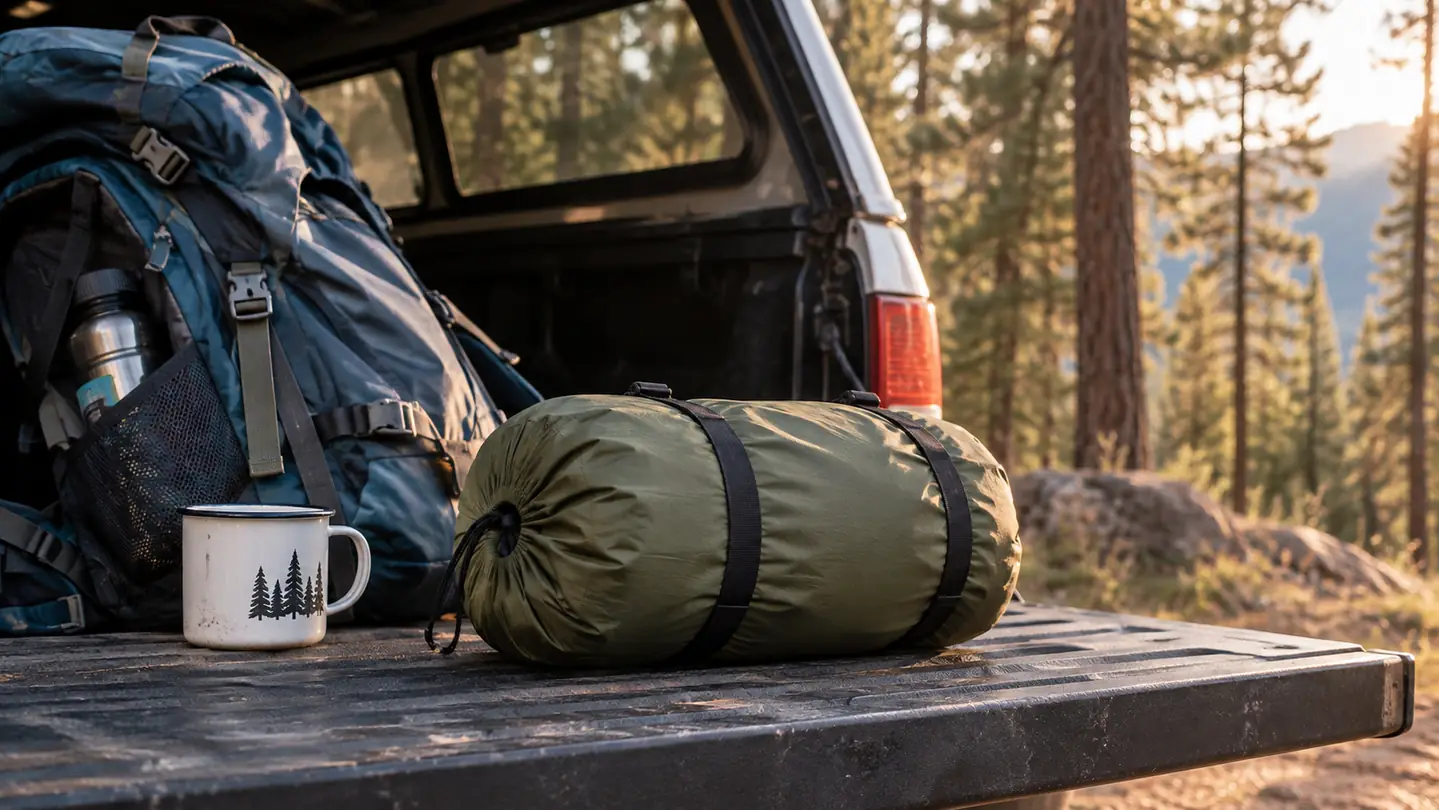
Packing it back up is the part nobody reviews. It goes back into the carry bag with about the same effort it came out, which is not always true of tents this size. The bag has room and the roll does not have to be perfect. In the truck it lives in the corner of the bed under the shell and does not eat the space a bigger tent would.
What I Liked
- Free-standing with clips, so it goes up in about five minutes and can be picked up and shifted after staking
- The 3000mm waterproof coating on the fly and floor held through two hours of hard rain at Shaver Lake
- Footprint comes in the bag instead of costing extra
- Packs to 15.7 by 5.1 by 5.1 inches, small enough to live permanently in the truck bed
- Five wind ropes and a clip attachment that stayed put on a genuinely gusty night
- The ventilation window above the front door cut condensation enough to matter
Where It Falls Short
- Snug for two adults once two full packs come inside
- 41.3 inch peak means no standing, and crouching at the foot end
- One front door, so the person on the far side climbs over
- Needs the wind ropes in real weather, which adds a few minutes
- Three-season tent, not something to plan a snow trip around
I ran a finger along the inside of the fly and along the seam over my head. Nothing came through, and Carol's bag was touching the inner wall the whole night.
Who This Is For
This tent suits the camper who wants a small, light two-person shelter that goes up fast and comes down faster. Car campers who want a second, lighter tent for the nights they do not want to wrestle the big one. Couples doing short overnights and weekend trips where the pack is light and the walk is short. Older campers, specifically, because the Naturehike Cloud-Up 2 asks almost nothing of your knees: the pole set assembles on the ground, the body clips on from a crouch, and nothing requires you to crawl inside to thread a pole.
It also suits anyone whose tent lives in the vehicle. At 4.3 pounds and the size of a loaf of bread, it disappears into a truck bed and stops being a decision. If you camp out of a vehicle more than you backpack, that convenience is worth more than a few saved ounces.
Who Should Skip It
Skip it if you are two large adults who bring hard-sided gear inside. Skip it if you are over about six foot two, because 82.7 inches of floor gets short once your head is on a pad and your feet are in a sleeping bag. Skip it if you camp in snow or expect freezing rain, since this is a three-season tent and I would not push it past that.
And skip it if your trips are long carries rather than short ones. There are lighter shelters for real distance, and if that is your question, the side-by-side against a dedicated backpacking tent covers the trade better than I can here. For me the trade runs the other way: I will take a pound and a footprint and a tent that stands up in wind over a shelter I have to babysit all night.
If your back is tired of threading poles, this is the shortcut
Clips on in minutes, packs to 15.7 by 5.1 by 5.1 inches, and kept me dry through two Sierra storms and one wet beach.
Amazon Check Today's Price on Amazon →