
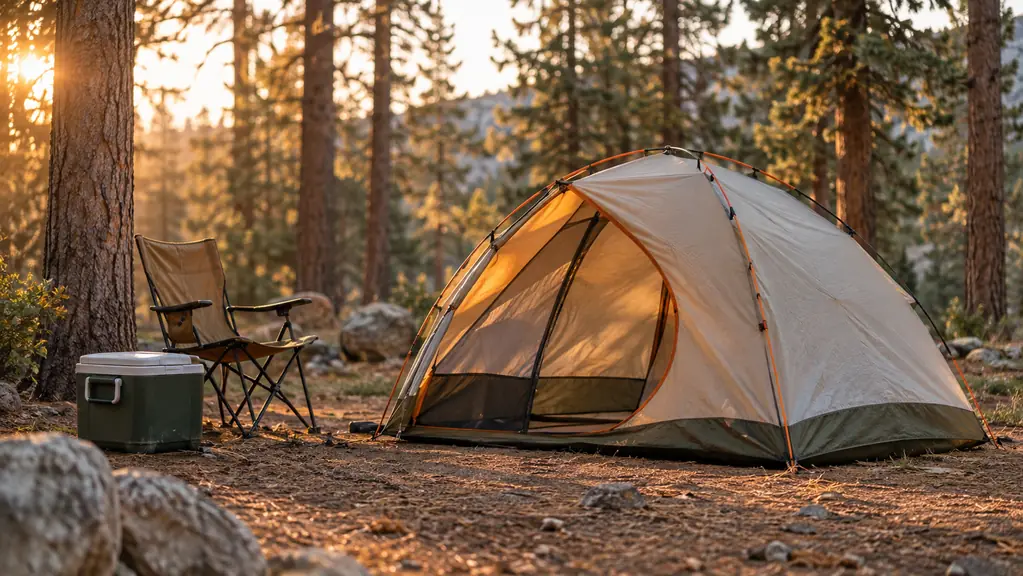
I am 61 years old, retired from the utility line trade, and I have a lower back that lets me know about it every morning. So when I tell you that a lightweight tent changed how I camp, understand that I am not talking about saving ounces for a trophy. I am talking about whether I can get up off the ground after I pitch the thing.
Most of my trips now are short. Two nights at Shaver Lake. One night at Huntington Lake on the way to somewhere else. A quick walk-in site in the Sequoia area. And for those trips, a heavy tent is a bad trade. The Naturehike Cloud-Up 2 is the tent I keep coming back to for exactly this kind of trip, and here are ten plain reasons why a light free-standing tent earns its place in the truck.
The tent that goes up before your coffee gets cold
Free standing, 4.3 pounds, and it packs into a bundle smaller than a sleeping bag. If your overnights are short, this is the shape of tent that fits them.
Amazon Check Today's Price on Amazon →It goes up in the time it takes to boil water
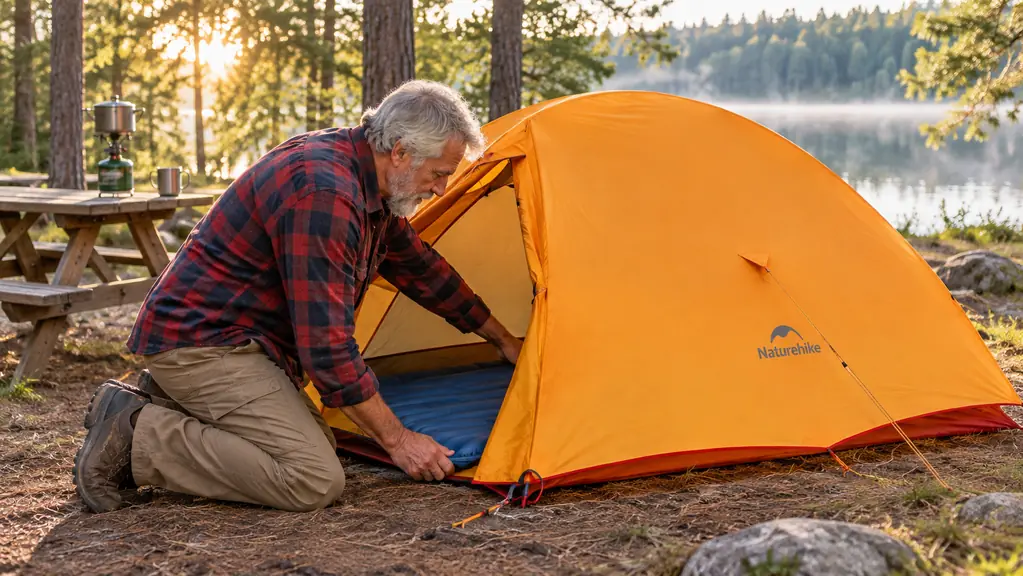
The Naturehike Cloud-Up 2 is free standing with clip attachments on the poles. That means you lay the tent out, feed the poles, and clip rather than thread. There is no crawling around threading a long sleeve of fabric onto a pole in the dark. I have pitched it in the last twenty minutes of daylight more than once, and I have pitched it by headlamp. The clip system is the whole reason. My old tent took me a solid fifteen minutes and a fair amount of language my wife did not care for. This one does not.
4.3 pounds is light enough that you stop negotiating with yourself
Four point three pounds. That is the whole number. My old three-person dome weighed nearly twice that, and every single trip I would stand at the truck and have the same argument with myself about whether I really needed it. Now I just pick it up. Carol carries the food, I carry the tent, and neither of us is grumbling. The weight is not a record-setting figure, and it does not need to be. It just needs to be under the threshold where you stop resenting it.
It packs down to 15.7 by 5.1 by 5.1 inches, which is smaller than you think
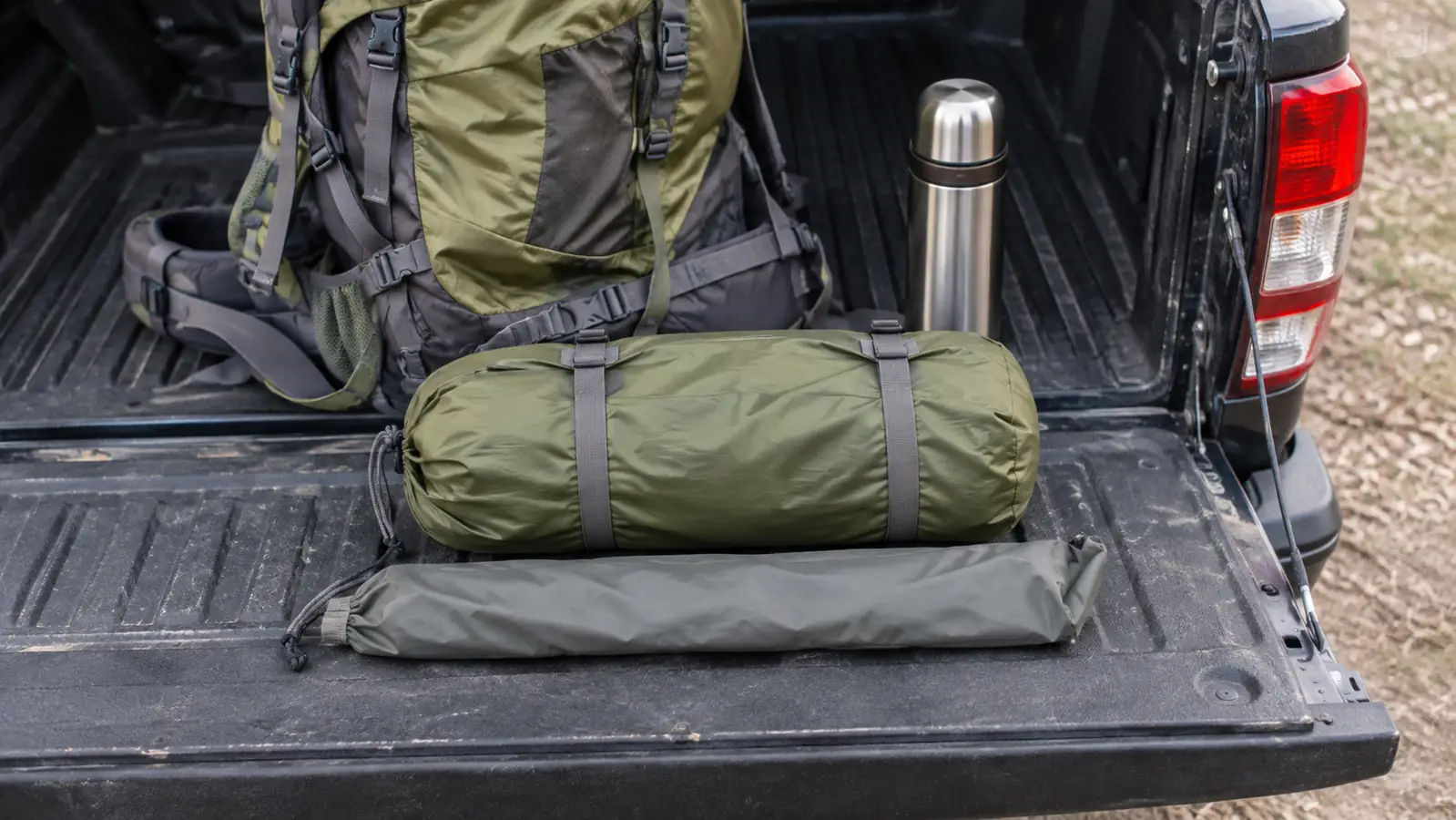
Here is the thing about a short overnight: you are not carrying a week of food. What fills the truck is the bulky stuff, and a tent that packs to roughly sixteen inches long and five inches square slides into the gaps. Mine rides behind the seat of the Tacoma under the camper shell, and I still have room for the cooler and the chairs. If you have ever played tetris with a tent bag in a crowded vehicle, you know why this matters.
A 3000mm waterproof coating means you stop watching the sky
The fly and floor are 210T polyester with a waterproof coating rated 3000mm and up. What that means in plain English is that it will handle steady rain, not just a sprinkle. I got caught in an afternoon thunderstorm at Huntington Lake last summer and stayed dry. The floor did not wick. I have been in tents where you wake up at 2 a.m. with your hip in a puddle and there is nothing to be done about it. This is not that tent.
The vent above the front door cuts the morning condensation
This is the upgrade that matters most to me and the one nobody talks about. The Cloud-Up 2 Base has a ventilation window above the front door. If you have camped in a Sierra campground in August, you know the routine: you wake up, and the inside of the fly is soaked, and everything you own feels damp. That vent moves air. It is not a magic fix, but my fly is noticeably drier in the morning than it was with my old tent, and I am not packing up wet gear into the truck.
The door is big enough that an old knee can manage it
I have one bad knee from thirty years of climbing poles. Getting in and out of a tent is not a small consideration for me. Some lightweight tents have doors sized for a contortionist, and you end up doing a kind of sideways fold to get in. This one is workable. I get in on my good knee, and I do not have to pretzel myself. If you are past fifty and still camping, this detail will matter to you more than any spec sheet number.
82.7 by 49.2 by 41.3 inches is real room for two
Eighty-two point seven inches long, forty-nine point two wide, forty-one point three high. That is enough for two adults to sleep without their shoulders jammed together, and enough headroom to sit up and pull on a shirt. When the grandkids come along on a summer trip, two of them fit in here comfortably, which is all I ask. A lot of tents in this weight class are basically a sleeping bag cover. This one is a tent.
Three-season coverage lines up with when you actually camp
This is a three-season tent. It is built for spring, summer, and fall, which is when every trip I take happens. I am not snow camping at 61. I have no interest in it. A four-season tent would be heavier, hotter, and more costly, and it would solve a problem I do not have. Buying for the trips you actually take is the single most useful piece of gear advice I can give anybody, and this Naturehike tent is honest about what it is.
It comes with the footprint, so you are not buying a second thing
The footprint is included. That sounds small until you go to buy one separately, which I have done more than once after discovering the ground cloth was sold as an add-on. The box also has the carry bag, five wind ropes, and the pole set with its own storage bag. You can pitch this tent the day it arrives and not go hunting for a missing piece. I appreciate gear that arrives complete.
For a one-night trip, easy beats rugged every time
Short overnights are not expeditions. You are out for a night, maybe two, close to the truck, and the thing that ruins the trip is not a missing mountaineering feature. It is arriving tired and fighting your shelter in the dark. A tent that clips up quickly, packs small, keeps the rain out, and lets you stand up in the morning is the correct tool for that job. That is the whole argument. The Naturehike Cloud-Up 2 fits it.
What I'd Skip
I would skip a heavy four-season tent for this kind of camping. I would skip anything that requires threading poles through sleeves in the dark, and I would skip a tent so weight-obsessed that the door is too small to get through with a bad knee. I would also skip paying extra for a footprint you can get bundled. None of those trades buy you a better night on a two-night trip near the truck.
The thing that ruins a short trip is not a missing mountaineering feature. It is arriving tired and fighting your shelter in the dark.
The one honest complaint I have is that the packed bundle is a long narrow shape, which is a little awkward in a full truck bed. And on a hot still night, the single vent will not do much. Those are real limits, and I would rather tell you about them than pretend otherwise. For a short Sierra overnight, they have not once been the thing I remembered about the trip.
Pack it Thursday, be camped by Friday dinner
Free standing, three-season, footprint included, and light enough that you stop arguing with yourself about bringing it. Read the Naturehike listing and decide for your own trips.
Amazon Check Today's Price on Amazon →