
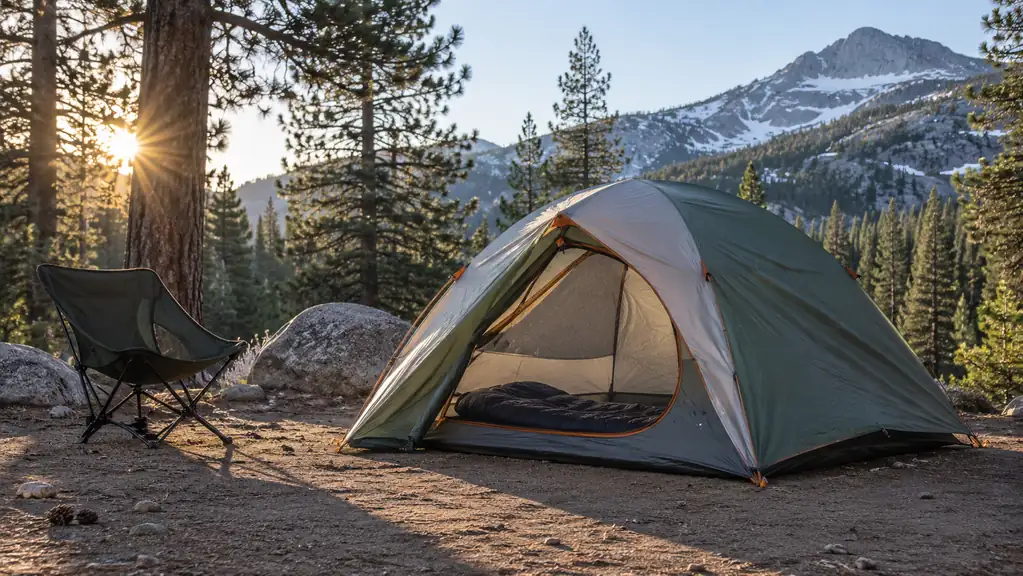
Two tents, two different reasons to buy one. The Naturehike Cloud-Up 2 is the tent I reach for when I want to sleep well and not think about my lower back in the morning. A Night Cat backpacking tent is the tent I point a first-timer toward when they are not sure they even like sleeping on the ground yet. Both of them keep the rain off on a normal summer night. The real gap between them is about who you are, how many nights you actually camp, and what you want to still be using five years from now.
Here is the short answer. If you camp more than a handful of nights a season, buy the Naturehike. It weighs 4.3 pounds, the footprint comes in the box, the shell is 210T polyester rated to 3000mm+, and the poles clip to the body so I am not on my knees threading anything. Peak height is 41.3 inches, which means I can sit up and pull my boots on like a person. If this is your first tent, or a tent for the grandkids, or something for one festival weekend, the Night Cat makes more sense, because the money you save is money you have not risked on a hobby you might drop by August.
| Naturehike Cloud-Up 2 | Night Cat Backpacking Tent | |
|---|---|---|
| Price tier | Mid tier, and the footprint and pole set are bundled in, so there is no second purchase. | Budget tier. Less money at the register and less to lose if camping does not stick. |
| Commitment risk | You will feel it if you quit the hobby after one season. | Low. Easy to write off, hand down, or keep as a spare. |
| Packed weight | 4.3 pounds as shipped, footprint included. | Varies by model. Weigh the exact SKU you are buying before you commit. |
| Footprint | Included in the box, listed right in the product title. | Usually a separate purchase in this tier. Budget for one. |
| Waterproof rating | 3000mm+ coating on 210T polyester, published as a number on the listing. | Rarely published as a number, so there is nothing to compare against. |
| Setup | Free standing, poles clip to the body, most of it done standing up. | Model dependent. Check whether it stands on its own or needs staking out. |
| Peak height | 41.3 inches, enough to sit up and dress. | Check the listing for the model you pick. |
| Floor size | 82.7 by 49.2 inches. | Check the listing for the model you pick. |
| Longevity | Two Sierra summers on mine with no seam or zipper failures so far. | Fabric and poles are where the money was saved. Expect a shorter service life under hard use. |
| Best for | Regular campers who want one tent across several seasons. | A first tent, a festival, or a two-night July kit for the grandkids. |
Where the Naturehike Cloud-Up 2 Wins
The footprint is the first thing I would look at. It is in the box, named right in the product title, and that saves you a separate purchase and a separate item to forget on the garage floor. I lay mine down first at Shaver Lake, tent on top of it, and the floor of the tent stays clean enough that I am not sweeping pine needles out of it before I roll it up. On damp ground it is the difference between a dry floor and the cold, clammy one you notice at two in the morning. The trip that sold me on it was a June weekend where the site we drew sat in the shade all day and the ground never dried out once. Without something underneath, that is exactly the setup where moisture wicks up through the tent floor and you wake with a damp sleeping bag and no idea why. With the footprint down first, the floor was dry to the touch both mornings.
The coating is rated 3000mm+, which is a lab measurement of how tall a column of water the fabric will hold before it starts to pass through. You do not need to memorize the figure. You need to know it is a real number printed on the listing rather than a soft claim about being water resistant. The shell is 210T polyester, a fine lightweight weave, and mine has come through two summers of Sierra afternoon storms without wetting out.
Two details matter to a 61-year-old with a stiff lower back and one bad knee. The poles clip to the body instead of the body sliding through sleeves, so most of the work happens standing on your feet. And the tent is free standing, so once it is up I can pick the whole thing up and move it two feet left when I realize I pitched it in the low spot where the water runs. Inside, the peak is 41.3 inches. That is enough for me to sit up and get dressed without doing it sideways, and it is the reason Carol stopped complaining about the old tent.
Where the Night Cat Wins
Here is the honest case for the Night Cat. It sits in a lower price tier, and for a lot of people that is the correct call. If you have never slept on the ground in a tent you had to carry, you do not know yet whether you will do it again next summer. Spending less on the first tent and more on the second one is a smarter sequence than buying mid-tier gear and finding out in September that you are a hotel person after all.
There is also the question of who is using it. A tent that goes to a scout trip, a festival, or out with the grandkids for two nights in July does not need to be the tent you keep for a decade. It needs to keep the weather out for the weekend and not cost much, and in that job a budget tent is genuinely the right tool. I would rather see a family camping in an inexpensive tent than staying home because the good one was too much money.
How Each One Pitches, and How Much Bending It Takes
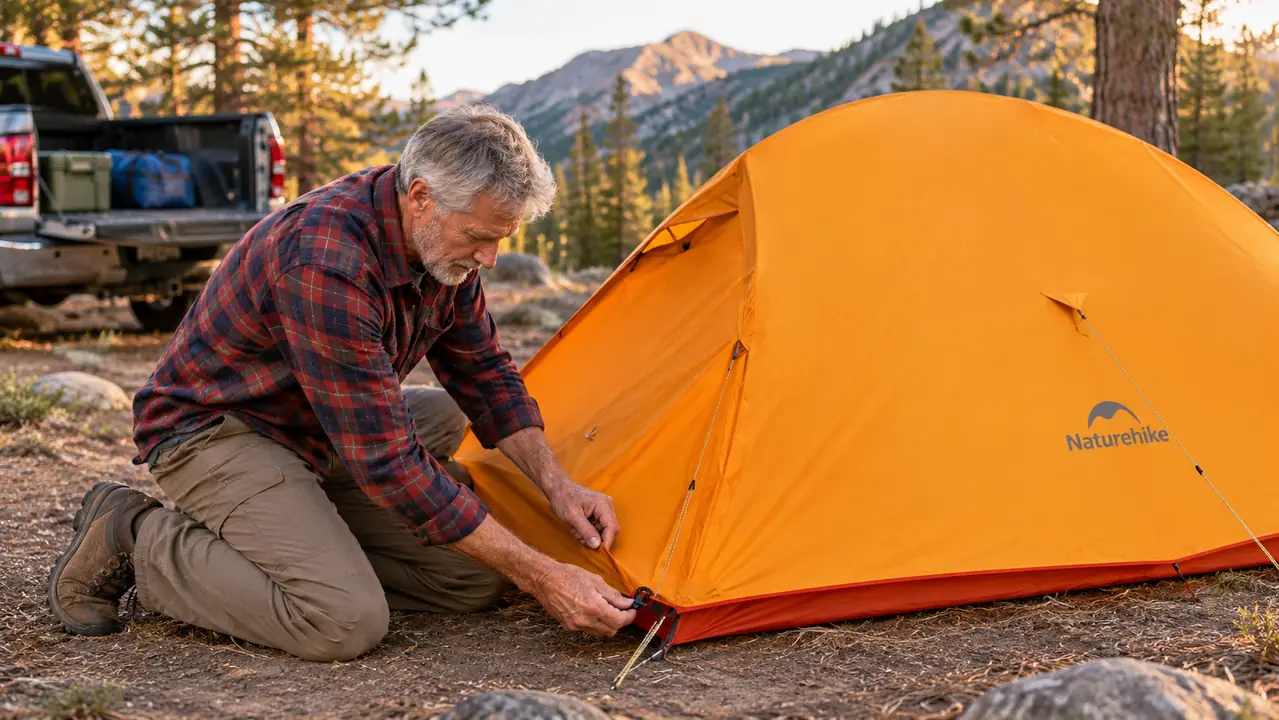
Setup is where the Cloud-Up earns its keep for me. Stake the corners, raise the poles, clip the body on, throw the fly over, then the five wind ropes that come with it. My first pitch took about ten minutes because I was being careful with someone else watching. Now it is five or six, and most of that is standing there deciding where to put it. The ventilation window above the front door is a small feature that matters on a cold morning, because it moves the damp air out instead of letting it collect on the inside of the fly.
Before this tent I owned one that required feeding the poles through fabric sleeves, and I want to describe what that is actually like, because it is the whole reason I care about clips now. You push a long flexible pole through a narrow tube while the tent lies flat on the ground, and somewhere around the third section the tent starts to fight you. In wind it is worse, because the fabric whips and the pole catches. I did that on a gusty afternoon at Huntington Lake a couple of summers back and it took twenty-five minutes, both knees on the ground, and the tent still went up crooked and had to be redone. The Cloud-Up is a different job. I am on my feet the entire time except for reaching down to the corners.
With the Night Cat, read the listing carefully before you pick a model. That brand name covers more than one tent and the setup style is not identical across them. The question I would ask is whether it stands up on its own or whether it has to be staked out to hold its shape, because on a hard gravel or wooden pad you may not be able to drive a stake at all. Ask that before you buy, not at the campsite at dusk with the light going.
Staying Dry in Sierra Weather
Huntington Lake in July means a thunderstorm in the afternoon most days. I have sat through them in the Cloud-Up with the fly guyed out and stayed dry, and the floor stayed dry because the footprint was underneath it. All five wind ropes get used when the sky turns that particular color. This tent does not shrug off a serious storm the way a heavy canvas cabin tent does, and it is not meant to. It does what a three-season backpacking tent is supposed to do, which is get you through the night and dry out by lunch.
One storm is worth describing, because it is the one that stopped me worrying about this tent. August, Huntington Lake, the sky went from blue to black in about forty minutes and the rain came in sideways with small hail mixed into it. I had the fly on and all five wind ropes out and staked, and I sat inside for two hours listening to it. The fly shed everything. There was a little condensation on the inside of the fly by morning, which is what that front vent is for, and no water had come through the shell. The floor under my sleeping pad was dry. The family two sites over spent that night in their truck.
On the Night Cat, weather performance in that tier depends on the specific model and on how well you guy it out. Pitch it tight, use every stake point the listing gives you, and do not expect a budget tent to have the same margin as a mid-tier one when the wind gets serious. That is not a knock on it. It is a plain description of what you are buying, and it is the same thing I would tell you about any tent in that range.
The number that decided it for me was not weight and it was not price. It was that I can put this tent up while standing on my own two feet.
Packing and Carrying It
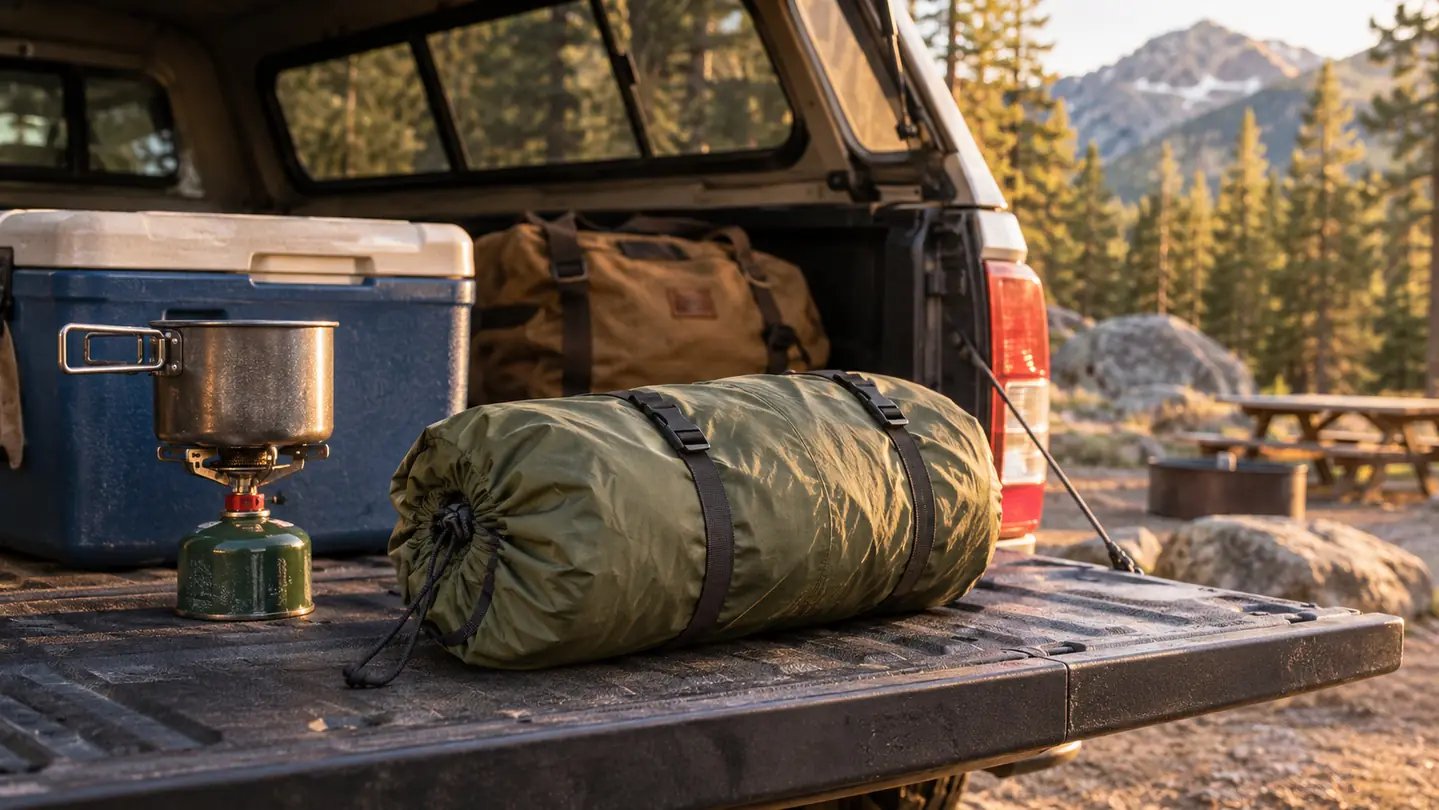
Packed, the Cloud-Up measures 15.7 by 5.1 by 5.1 inches. That fits in the camper shell of my Tacoma beside the cooler with room for the duffels, and it fits in a pack without taking over the whole thing. For a short walk-in site, which is most of what Carol and I do now, that is the entire point. I can carry it a quarter mile in from the gate without my knee filing a formal complaint.
The walk-in site we use in the Sequoia area is about a quarter mile from the parking pullout, up a gentle grade, and it is exactly the kind of trip where a heavy tent stops being funny. I carry the tent, Carol carries the pads and the food, and we do it in one trip each way. A tent in a stuff sack that measures 15.7 by 5.1 by 5.1 inches sits low and close against my back, and that matters more than the number on the listing. A bulky tent of the same weight pulls you off balance on a grade, and with a bad knee that is the part I feel the next morning, not the pounds.
Watch the same math on the other side. Two-person tents in the budget tier are often heavier in the pack than the listing number suggests once you add stakes and the groundsheet that was not included. Add up what actually goes in the bag before you compare anything. The Cloud-Up's 4.3 pounds is the tent as it ships, footprint and all, which makes the comparison simpler than it usually is.
4.3 pounds, footprint in the box, and it goes up standing
Check the current price on the Naturehike Cloud-Up 2 and see exactly what the listing bundles in today.
Amazon Check Today's Price on Amazon →Who Should Buy Which
Buy the Naturehike Cloud-Up 2 if you camp more than a few nights a season, if you are past fifty and want to sit up to get dressed, if you want the footprint included instead of bought later, and if you would rather buy once. Two adults fit at 82.7 by 49.2 inches, though Carol and I are not large people and I would call it snug for two grown men with gear bags inside.
Buy the Night Cat if this is your first tent, if the budget is the deciding factor, if it is headed to a festival or a scout weekend, or if you are outfitting the grandkids for a couple of July nights and you already know they will be rough on it. It will do what those trips ask of it, and it will not leave you feeling foolish if the tent spends most of the year in the garage.
If you are truly on the fence, answer one question first. How many nights did you sleep in a tent last year? Under five, save your money and buy the budget tent. Over ten, buy the one you will still be using in five summers, because the cheaper tent costs more once you have replaced it twice. I have watched people buy the good tent first, use it twice, and sell it in spring for less than they paid. I have also watched people buy the cheap tent twice in three years and end up worse off than if they had bought once. Neither of those is a disaster. Both are avoidable.
The real question is how many nights you slept out last year
If the answer is more than a handful, this is the tent I would buy again. Today's price and the full spec sheet are on the listing.
Amazon Check Today's Price on Amazon →