
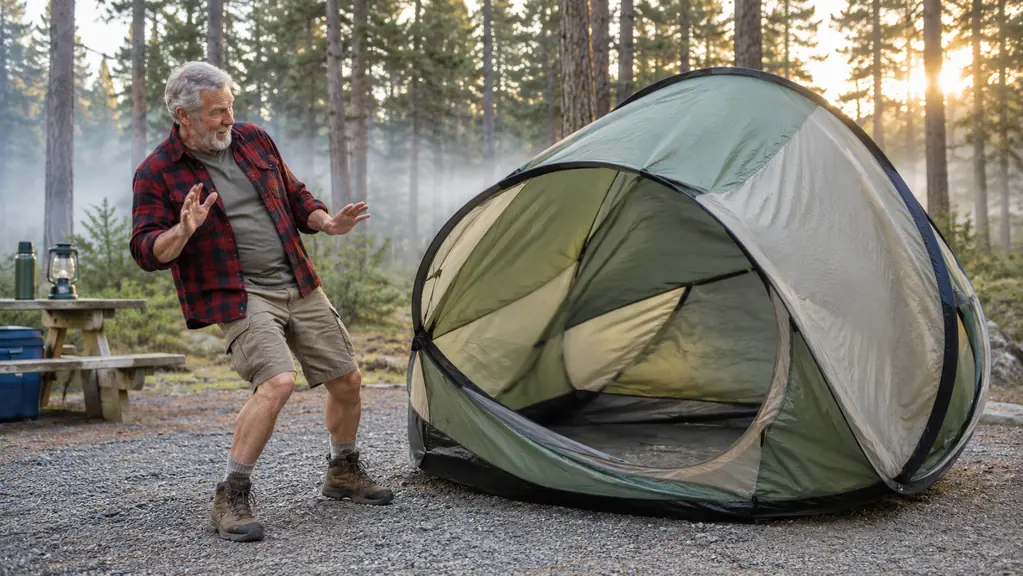
The first time I popped the Londtren 4 Person Pop Up Tent open in my driveway, my neighbor stopped watering his lawn and asked if I had bought a kite. It shot out of the bag, unfolded itself in about four seconds, and sat there on the gravel looking like a small square house. That was the good part, and it is genuinely good. The part nobody prints on the box is what happens the first time you try to fold the thing back down, or how a tent built around mesh behaves at two in the morning when wind comes over a Sierra ridge.
I am 61, retired off the utility line, and I camp mostly out of a 2014 Toyota Tacoma with a camper shell. Carol and I spend weekends at Shaver Lake and Huntington Lake, and a couple of summer trips a year include the grandkids. Thirty years of climbing poles left me with a stiff lower back and one bad knee, which is the reason a tent that goes up without me kneeling in the dirt got my attention in the first place. That is the whole reason I tried this Londtren tent. What follows is a season of use, and it includes the parts I do not care for.
The Quick Verdict
Goes up faster than any tent I have owned and sleeps a family without feeling like a coffin. Folding it down takes practice, and the four season label is doing some marketing work.
Amazon Check Today's Price →When your back picks the tent, this is the one to look at
Pre-attached poles, two mesh doors, and a 9.2 by 6.6 foot floor that stays wide all the way to the back wall.
Amazon Check Today's Price on Amazon →How I've Used It
I have had this tent up at Shaver Lake in June, at Huntington Lake over the Fourth of July, and once on a state beach south of Morro Bay in September. Four trips, three of them with Carol and one with the grandkids along. It has been rained on twice, once hard enough that the campground host walked the loop checking on the pop-ups, and it sat through a windy afternoon at Huntington that folded another family's shade canopy in half. Nothing ripped. Nothing came through the ceiling. The floor stayed dry on top, which is the part I actually care about.
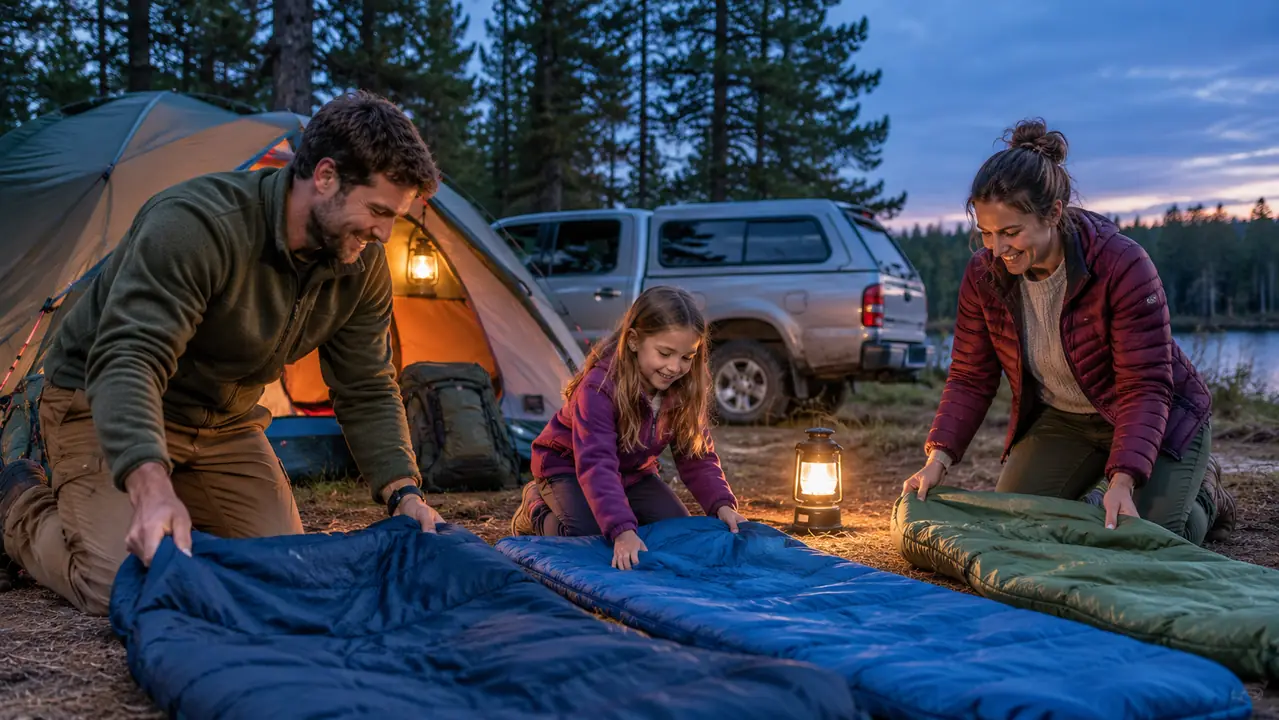
One trip is worth describing because it is the one that sold Carol. We pulled into Shaver Lake on a Friday in June around four in the afternoon, the lot filling up, the grandkids already out of their seats. I had the Londtren open and staked before Carol finished laying out the camp chairs, which has never happened with any tent we have owned. The grandkids picked their sleeping spots, front door and back door, and spent the evening running in and out of both. By the time the lantern went on, the tent was a playhouse. That is not a technical measurement, but it is the reason the tent stayed in the truck all summer instead of going back to the garage.
I want to be clear about what I am grading here, because a pop-up tent deserves different questions than a dome. I do not care how it looks. I care whether it stands up in one motion, whether the doors zip without snagging, whether the floor keeps water where it belongs, whether the inside is big enough that four people are not sleeping in each other's business, and whether I can get it back in the bag without a wrestling match. I also care how much room it eats in the truck bed, because a Tacoma with a camper shell fills up fast.
Two of those it does well. Two of those it does fine. One of them took me three trips to stop dreading, and I will get to that in a minute.
The Setup: Four Seconds Up, Six Minutes Down
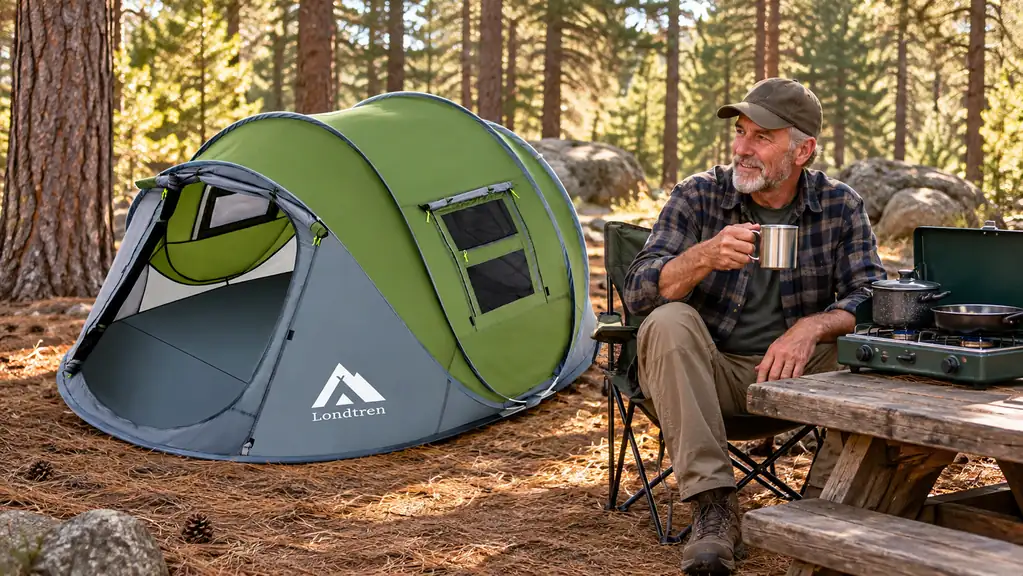
The Londtren arrives folded into a flat round shape inside a carry bag, with the poles already attached to the fabric. You take it out, unclip the strap, and let go. It opens itself. There is no threading fiberglass through sleeves, no hunting for the pole with the bend in it, no kneeling in the dirt on a knee that does not want to bend. I set it up alone in under a minute the first time, stakes included. For somebody with a bad back, that is not a small convenience, it is the entire reason to buy this kind of tent.
Getting it back down is a different job, and this is the part I would want a friend to tell me. The tent has to be folded into a figure eight, and the fabric has to be pushed in a particular direction or it will not lie flat. My first attempt took about twenty minutes in the driveway. By the third trip I was down to six or seven minutes. That is not a defect exactly, but it is a real cost, and if you are the camper who breaks camp at dawn in the rain, this is the moment you will resent. Read the folding instructions once, at home, on grass, before you need them.
Here is what that first folding attempt looked like. I had the tent open on the driveway, the neighbor still watching, and the instructions in my hand. I pushed one side in, the other side popped out. I tried the figure eight the wrong way and got a lopsided bundle that would not fit the bag. Carol came out with two cups of coffee and did not say anything, which was worse than saying something. The second try went better because I understood the tent wants both sides pressed toward the middle at the same time, not one after the other. By the end of that afternoon I had it in the bag, and I had learned the one thing the instructions do not say clearly: go slow on the first fold and the rest are easy.
Staking it out matters more than it looks. When the tent pops open it stands, but it stands loose. The included rope and stakes are what hold the shape, and on that breezy afternoon at Huntington I watched an unstaked pop-up two sites over start walking with the wind. Four corners and a couple of guy lines take two minutes. Skip them and you get to chase your tent across the loop in front of everybody.
The Floor Plan, the Doors, and the Airflow
The floor measures 9.2 by 6.6 feet, which comes to 60.72 square feet, and the shape is square rather than tapered. That last part matters more than the number. Plenty of four person tents are wide at the middle and pinched at the ends, so the fourth person sleeps with their feet jammed into a corner. This one holds its width the whole way back. Four sleeping bags fit side by side with a little room to spare. Three people with duffels fit comfortably. Two people and their gear would rattle around in it.
I measured the floor in the driveway with a tape because the listing numbers and the actual footprint are not always the same thing. Nine feet two inches by six feet six inches is what I got, which matches what Londtren prints, and the walls go up close to straight rather than sloping in. That is why the back corners are usable. At Shaver with the grandkids, we put two sleeping bags across the back and one on each side, and nobody had to sleep with their head under the slope. The back door got used more than I expected, mostly by the grandkid on that side, who could get up and out without stepping over anyone. In a tent with one door, that same kid would have woken the whole family twice a night.
It has two doors, front and back, both with mesh panels and both closing with a zipper. Two doors sounds like a small thing until you camp with kids. With one door, everybody climbs over everybody else in the dark, and somebody always ends up with a foot in their ribs. With two, the person on the far side has their own way out. The zippers have been the surprise of the whole tent. They have not snagged once in four trips, and I have owned tents where that sentence would be a lie.
Airflow is where the mesh earns its keep. With both doors open to the screen, you get a straight line of air through the tent. At Shaver in June, fly off and both screens zipped, the inside stayed noticeably cooler than the truck. Any tent heats up in the afternoon, and this one is no exception, but it drops fast once the sun goes behind the ridge. There is no clever vent system here, just two big mesh doors lined up across from each other, and it turns out that is most of what you need.
What the Waterproof Numbers Actually Mean
The body is 190T polyester and the groundsheet is 110G PE, with a water resistance rating of 190 mm. Let me translate that, because those numbers get thrown around like they settle an argument. A 190 mm rating is a steady rain rating, not a storm rating. It means the fabric turns back drizzle and the occasional hard shower. It does not mean you should pitch this on the coast for a three day blow. The 110G PE floor is the tougher of the two materials, and it did its job on a site that puddled around the edges by morning.
The state beach trip in September was the other test, and it was not rain. It was fog and salt air and a heavy dew that soaked everything outside by morning. The fly was wet on the outside, the inside walls had some condensation, and the floor stayed dry. I have camped in a cheaper tent where the groundsheet wicks water up like a paper towel, and you find out at three in the morning with a wet sleeping bag. This one has the 110G PE floor, which is a heavier sheet than the thin nylon on my old dome, and it felt dry under my hand when I checked it before coffee. That is not a glamorous test. It is the one that decides whether a tent comes back next season.
The listing calls it a four season tent, and I would not go that far. Four season, the way people who camp in January use the term, means a tent built to shed snow and hold heat. This is a mesh heavy summer tent with a waterproof coating. The mesh is exactly what makes it pleasant in July and exactly what makes it cold in December. What it really is, honestly, is a good three season car camping tent wearing a generous label. Worth knowing before you plan a late October trip around it.
The one weather night that mattered was at Huntington in July, when a thunderstorm came over the ridge and dumped for about an hour. Fly on, doors zipped. Water beaded on the polyester, the corners stayed dry, and the floor never got damp. Next morning there was condensation on the inside walls, which is normal with two people breathing in a sealed tent, and it dried off in twenty minutes of sun. No leaks. I have owned heavier tents that did worse.
The Small Stuff That Decides Whether You Keep It
The stakes that come with it are light, and they hold fine in soft forest floor but bend in rocky ground, which is most of the Sierra. I swapped mine for six heavier ones after the second trip and I would do it again. The ropes are thin but serviceable. The carry bag has enough slack that you do not have to fold the tent perfectly to get it in, and that matters, because a bag sized to a factory fold is why so many tents get left behind at the campsite.
Interior storage is thin. I never found a good place for a headlamp other than inside my sleeping bag, and my water bottle lived in the corner by the back door. If you are used to a dome with organizers hanging off every wall, this will feel plain. I stopped noticing after the first night, but I want to say it out loud rather than let you find out on your own.
The tent is free standing once it is open, which is handy on a platform or hard packed ground where a stake will not go. It also means you can pick the whole thing up and move it a couple of feet if you pitched it on a root. I did exactly that at Shaver. Small thing, but I have pitched tents that could not be shifted without pulling every stake and starting over.
What I Liked
- Opens in seconds with pre-attached poles, no threading and no kneeling
- 9.2 by 6.6 foot floor with a square shape, so the width holds all the way back
- Two mesh doors that line up for cross airflow and let a family exit without climbing over each other
- 190T polyester body and 110G PE groundsheet kept rain and groundwater out through a wet night
- Free standing, so it can be shifted a few feet after it is pitched
Where It Falls Short
- Folding it back into the bag takes practice, six or seven minutes even after a season
- Labeled four season, but the mesh makes it a three season tent
- Included stakes bend in rocky Sierra ground
- Interior storage is thin, so a headlamp ends up in the sleeping bag
- The 190 mm water resistance rating is a steady rain rating, not a storm rating
The tent goes up faster than anything I have owned. It just does not come down that way, and that is the part nobody puts on the box.
Who This Is For
If you are a family that car camps three or four times a summer, and you are tired of the twenty minute pole puzzle at the end of a six hour drive, this is a sensible buy. It is also a good pick for anyone whose back or knees make kneeling on the ground a bad idea. The pop-up mechanism is the whole point, and it works. The two doors and the square floor are the reasons it works for a family instead of just for one person.
It fits the camper who stays in established campgrounds, pitches on a flat site, and wants a roomy tent standing before the light goes. Three people with gear, or four with sleeping bags and not much else, will be comfortable in it.
Who Should Skip It
Skip it if you break camp early and often in bad weather. Folding this tent in the rain while it flaps at you is not a good time, and a plain dome that packs in three minutes will serve you better. Skip it if you camp in real cold, in snow, or on exposed ground where wind is the main event. The mesh and the light stakes are not built for any of that.
Skip it too if the tent has to ride on your back. It carries like a duffel, not like a backpacking tent, and there are far lighter options for walk in sites. This is a truck bed tent and it is honest about that.
If the pitch is the part you dread, this is the fix
Pre-attached poles, two mesh doors, 60.72 square feet of floor. The folding takes a few tries and then it stops being a problem.
Amazon Check Today's Price on Amazon →