
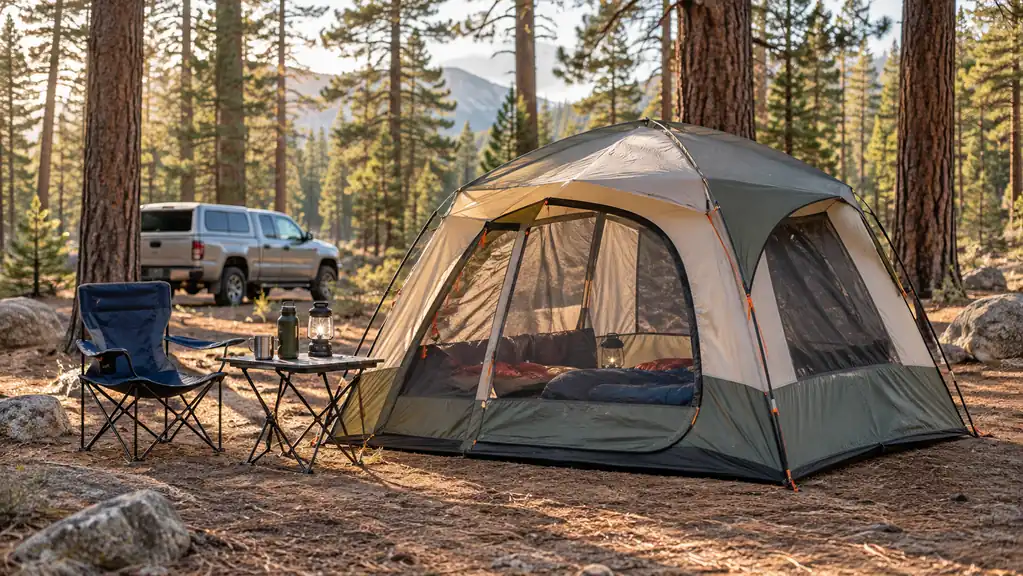
The first time I pitched the Londtren 4 Person Pop Up Tent, I had it standing on the dirt before I finished my coffee. That is the whole pitch, and it is why I kept bringing it. I am 61, retired out of the utility trade, and I have a lower back that lets me know every morning exactly how much bending I did the day before. A tent that goes up without a wrestling match is not a luxury for me. It is the difference between camping in July and staying home.
Carol and I have run this tent through two Sierra seasons now, from Shaver Lake in June to the Sequoia area in September, plus one Central Coast beach trip where the wind came in sideways. The grandkids have slept in it. It has been rained on hard enough that I lay there listening to it. So this is not a first-impression piece. It is what a Londtren pop-up tent does after you stop being careful with it.
The Quick Verdict
Fast to pitch, genuinely dry in steady rain, and roomy enough for Carol and me with gear to spare. The fold-down is a two-person job and the stakes are the weak link.
Amazon Check Today's Price →The tent that goes up before the coffee cools
Nine feet two inches by six feet six of floor, two mesh doors for cross breeze, and a frame that pops into shape on its own. Check the current price and the season's stock on Amazon.
Amazon Check Today's Price on Amazon →How I've Used It
Our routine is car camping out of a 2014 Tacoma with a camper shell, so weight in the truck bed is not the constraint it would be for a backpacker. I have carried this tent maybe forty yards from the truck to a walk-in site at Huntington Lake, and it is manageable. The bag has a shoulder strap and the whole thing rides like an oversized duffel.
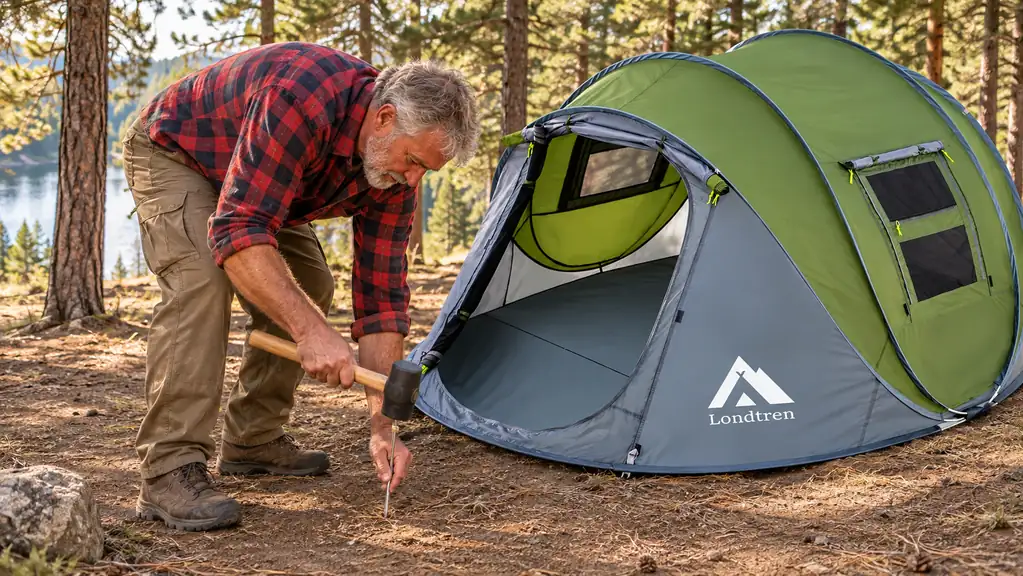
Setup is a pop-up frame, pre-attached poles, free standing, so there are no shock-corded pole sections to feed through sleeves. You unstrap it, unzip the bag, and the frame wants to open. You pull it up and out, and the corners settle. Then you stake the four corners and the vestibule, and you are done. My honest average is about ninety seconds to standing, and another three or four minutes to stake it out properly and get the rain fly tensioned the way I want.
The part nobody warns you about is the first open. The tent arrives folded and strapped, and when you cut that strap in the driveway it comes out of the bag with real enthusiasm. Open it outdoors the first time, away from the garage, and stand clear. That is not a defect. That is every pop-up tent ever made.
Before this tent I ran a six-person pole cabin tent that took me twelve minutes on a good day and twenty-five on a bad one, most of it on my knees. I tried a smaller two-person dome first, thinking less tent meant less work. It did not. Fewer poles, same kneeling, and I still had to thread the thing in the dirt. What I actually needed was a tent that eliminated the pole work entirely, and that is the only reason I went looking at pop-ups in the first place, back in the spring of the first season.
Setup, Height, and Why My Back Cares
The reason this tent works for me comes down to one number that is not in the spec sheet: how much time you spend bent over at the waist. With a pole tent, I am on my knees threading fiberglass through sleeves, then clipping, then crawling around the outside. With the Londtren, I stand up, lift, and step back. The bending is limited to staking, and I do that with a rubber mallet and one knee down rather than folded over.
One measurement I did actually take: the door opening sits high enough that I step in rather than crawl in, and that inch or two is the difference between a good morning and a bad one when my knee is acting up. I also stake the vestibule first, because once that is tight the rest of the tent squares itself against it. Do it in the other order, corners first, and you will fight the fabric for the last two stakes every single time.
The floor is 9.2 by 6.6 feet, which the listing puts at about 60.7 square feet. It is square rather than long and narrow, and that shape matters more than I expected. Square means the sleeping area sits in the middle with usable floor on the sides for duffels and shoes. In a long narrow tent, all that gear ends up pushed against the door and you climb over it in the dark.
I am six feet even. Lying on a pad, my head and feet both clear. Carol has room to read with a lantern between us and not elbow me. With the grandkids in there it is snug but not a fight, and I would call four adults a stretch unless two of them are small and forgiving.
Ninety seconds to standing. Three or four minutes to stake it out properly. My back noticed the difference on the first trip and has not complained since.
Rain, Wind, and the Huntington Lake Night
The tent is 190T polyester with a waterproof coating rated at 190 mm and a 110G PE groundsheet, and there is a vestibule over the door. I am not going to pretend a 190 mm rating is a mountaineering number, because it is not. It is a reasonable recreational rating, and the question is whether the tent is built so water does not find the seams and the floor first.
We caught a long, steady rain at Huntington Lake in August, the kind that settles in for three hours and soaks everything that is not covered. I stayed dry. Not a puddle on the floor, not a drip at the door. The vestibule is what did the work there, because it gives you a place to shed a wet jacket and take off boots without dragging the water inside. A wet exterior is normal. Water coming through is not, and it did not.
What I do now before any trip with weather in the forecast is simple. I set the tent up in the yard, hose the seams at the corners and along the floor line, and watch what happens. Two seasons in, the water beaded and ran off. The one place I keep an eye on is the floor seam at the door, because that is where wet feet come in and where a groundsheet takes the most abrasion. So far, so good. A cheap ground cloth under the floor is still the extra insurance I would take if you camp on gravel.
Wind is a different conversation. This tent is tall and square and it has a lot of sidewall to catch a gust. On the beach trip, with the wind coming in off the water, it held, but it moved, and I was glad I had run the guy lines and used every stake. If you are the camper who skips the stakes because the tent looks fine, this is the tent that will teach you otherwise.
The Two Doors and the Breeze
Two mesh doors, front and back, is the feature I did not know I wanted. In summer heat, a tent with one door becomes an oven by nine in the morning, because the air has nowhere to go. Crack both mesh panels and you get cross flow through the whole tent. On a warm evening at Shaver Lake, I have sat inside with both screens open and a book and been perfectly comfortable.
Both closures are zippers, and this is where I will be straight with you. The zippers have held for two seasons, no split teeth, no snagging tape. But the fabric around the door is where a pop-up tent takes its abuse, because you are always pulling the door open against tension. I have started being deliberate about it. Pull straight, do not yank at an angle, and the zipper will outlast the tent.
Packing It Down, and the Part Nobody Enjoys
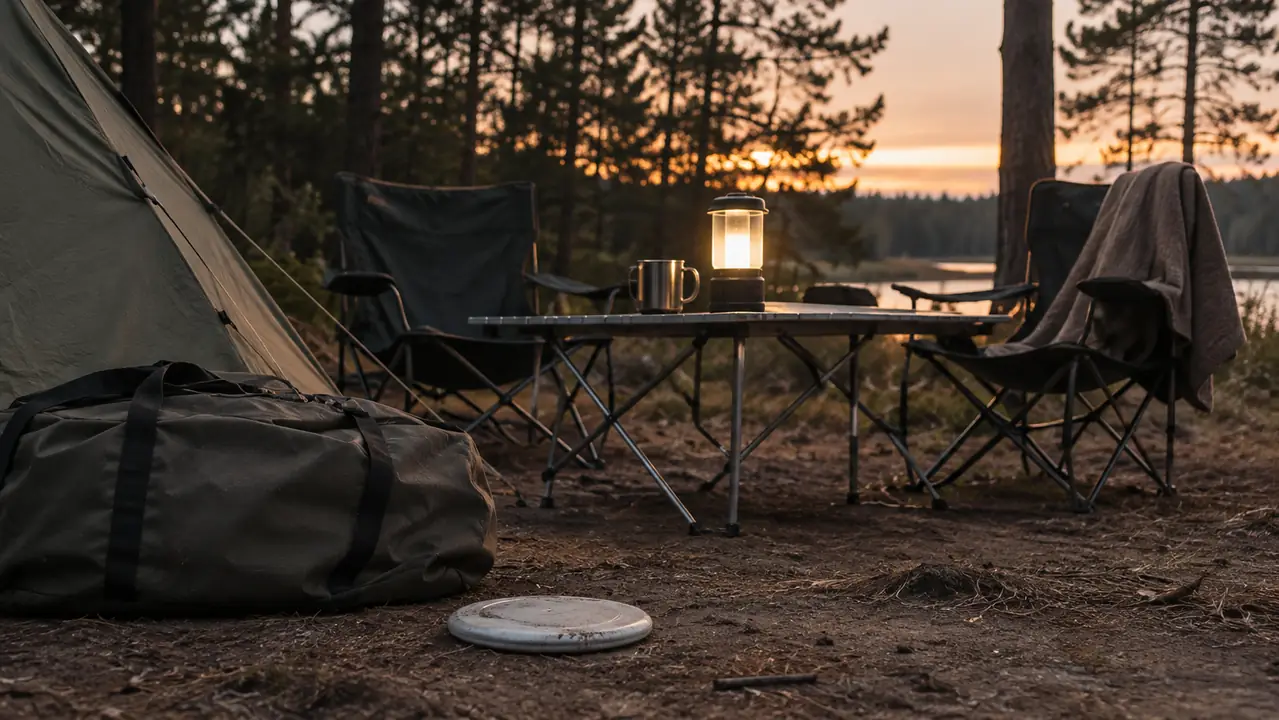
Here is the honest tradeoff. The Londtren goes up faster than any pole tent I have owned and comes down slower. Folding a pop-up back to a flat disc takes a specific motion, and the first four or five times you do it, it will fight you. The trick is to grab two opposite corners, fold inward until you have a figure eight, then fold the two loops together against the frame tension. Once you have it, you have it. Carol learned it in one trip. I learned it in three.
There is one habit that saves me ten minutes at the end of every trip. I fold it in the morning, not at the moment we are trying to leave. Fabric that has had the dew on it and then dried in the sun folds flatter and cooperates, and I am not doing the figure eight in the dark with the truck already running. If it rains on the last morning, wipe what you can and fold it anyway. Mildew comes from a wet tent sitting in a bag in a hot garage for a month, not from a damp one riding home in the truck bed.
Packing it back into the bag is easier with two people, one holding the disc flat while the other works the fabric in. The bag has some room, which is more than I can say for most tent bags. I have never had to fight it closed on a cold morning, which after enough cold mornings is the thing I judge a tent by.
One real gripe: the stakes. They are thin wire hooks, and on hard Sierra ground they bend. Not the tent's fault exactly, but budget for a set of sturdier stakes and a small mallet and your camping life gets easier. I replaced mine after the second trip and have not thought about it since.
What I Liked
- Pitches in about ninety seconds, standing up, with almost no bending at the waist
- Floor area of 9.2 by 6.6 feet gives real usable space on the sides of the sleeping area
- Two mesh doors create cross flow that keeps a summer morning from becoming unbearable
- Stayed dry through a three-hour steady rain, and the vestibule keeps wet gear out of the sleeping area
- Free standing frame with pre-attached poles means no threading and no lost pole sections
Where It Falls Short
- Folding it back to a flat disc takes practice, and the first attempts are frustrating
- Tall square profile catches wind, so staking and guy lines are not optional
- Included wire stakes bend on hard ground and are worth replacing
- Snug for four adults, comfortable for two adults with gear or two adults and two kids
- Door zippers need straight pulls, not yanks, to last
I stayed dry through three hours of steady rain at Huntington Lake. Not a puddle on the floor, not a drip at the door. The vestibule is what did the work.
Who This Is For
This tent is for the car camper who has done the pole wrestling and is tired of it. If you are pulling into a site at dusk with tired kids and you want a shelter standing before the light goes, the Londtren earns its place. It is also for anyone with a back or knee that has opinions about kneeling on the ground threading poles. That was my whole reason for trying it, and it is the reason I kept it.
It suits couples who want space for duffels and a lantern, families with two kids who do not mind being close, and weekenders doing a Friday-to-Sunday run at a drive-in campground. If you camp in hot weather, the two mesh doors are worth more than the spec sheet suggests. If you want one more angle before deciding, my comparison of this tent against an instant cabin tent covers the tradeoff between pop-up speed and stand-up headroom in more detail, and the case for getting off your knees at camp is in the piece on why pop-up tents save your back.
Who Should Skip It
Skip it if you backpack more than you car camp. It is not a light item and it does not pack down small, and you will resent it on a trail. Skip it if you camp in exposed, windy places regularly, because a tall square tent is the wrong tool for a ridgeline even when it is staked out well.
And skip it if you want stand-up headroom inside. This is a pop-up dome, not a cabin. You will be dressing seated, and that is fine for a weekend but it is not for everyone. If sitting up straight to pull on pants in the morning matters to you, a cabin-style tent is the honest answer, and I say that as someone who chose the opposite.
What Two Seasons Have Taught Me
Nothing has failed. The frame still pops, the coating still sheds water, the zippers still close, and the groundsheet has no holes in it despite being pitched on pine needles, gravel and sand. What has changed is my habits. I stake it every time now, not just when it looks windy. I pull the door zippers straight. I carry better stakes. And I open it in the yard once before each season to make sure the frame has no memory of sitting folded in the garage all winter.
That is the real long-term verdict on the Londtren 4 Person Pop Up Tent. It is not the toughest tent I have owned. It is not the lightest or the most weatherproof. It is the tent I actually pitch without dread, at 61, with a bad back and a bad knee, and a tent you use is worth more than a better tent you leave in the garage. Carol and I will be at Shaver Lake again in June, and this is the bag I will be pulling out of the truck.
Get off your knees and back to actually camping
Two seasons in, still dry, still popping open in under two minutes. If your back has been voting against the tent in your garage, this is the one to look at. Current price and availability are on Amazon.
Amazon Check Today's Price on Amazon →