
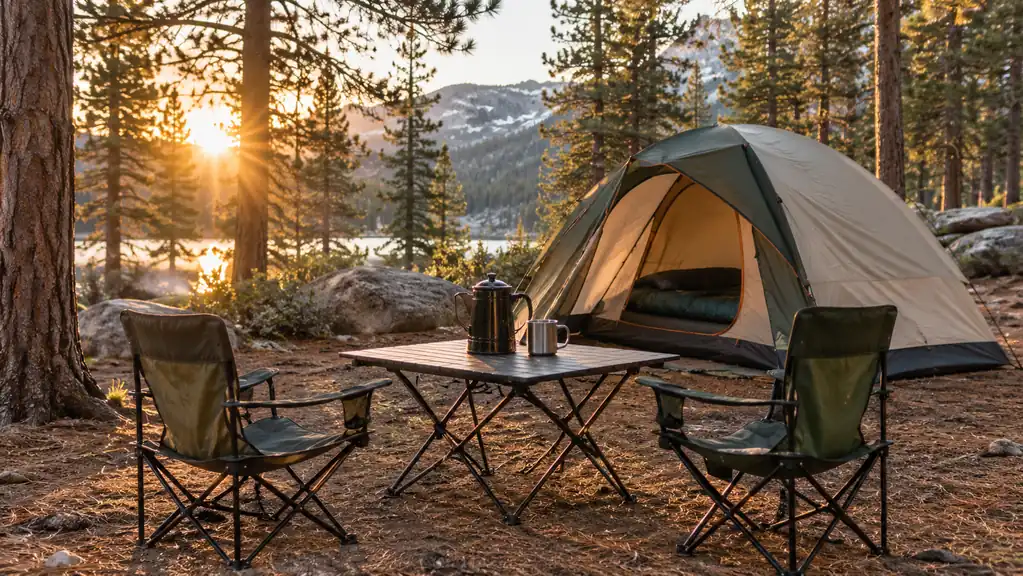
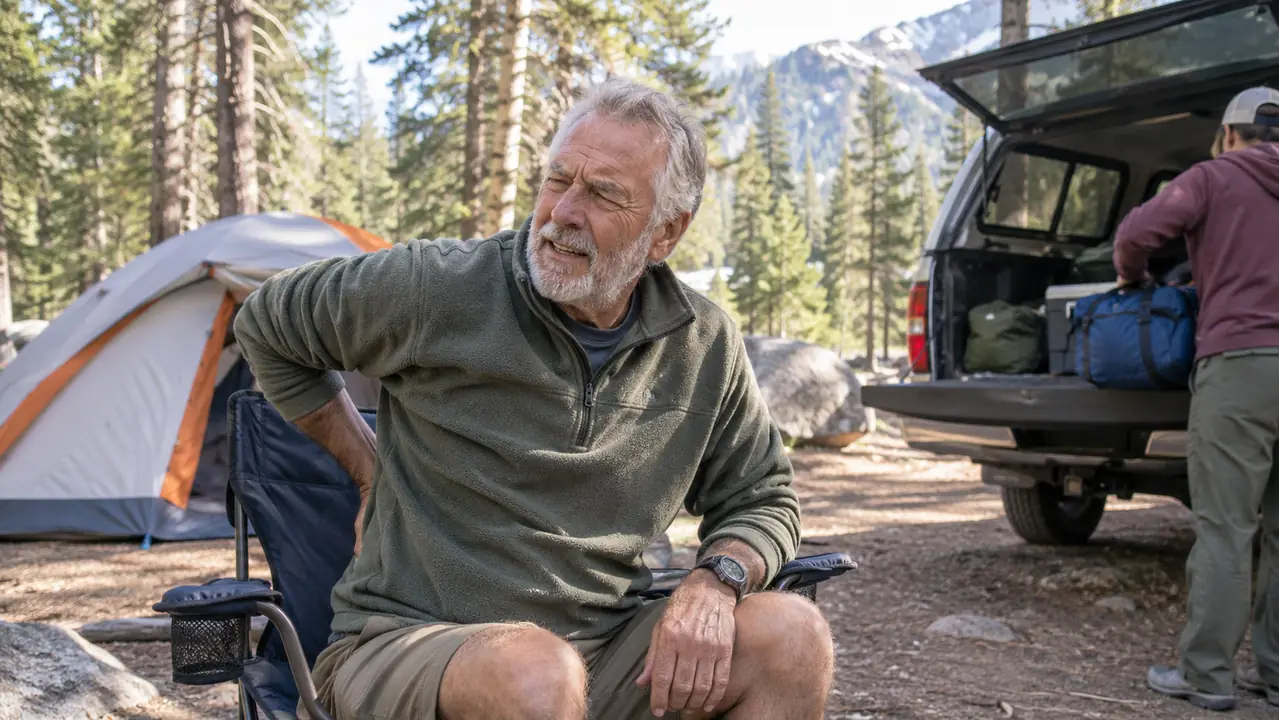
My lower back has been on light duty since my lineman years, and my right knee filed its own complaint somewhere around 2014. So when I say a tent can save your back, I am not talking about a spa weekend. I am talking about the twenty minutes of kneeling, threading and quiet swearing that used to come before I ever got to sit down at a campsite. Carol and I camp mostly out of the Tacoma, up around Shaver Lake and Huntington Lake and down into the Sequoia country, and a few times a summer we bring the grandkids. The tent I keep going back to is the Londtren four person pop up, and the reason has almost nothing to do with the tent and everything to do with the setup.
Ten reasons, roughly in the order they matter to me. If you are thirty five and flexible, a few of these will sound like nothing at all. If your back makes decisions for you now, they will sound like a Tuesday.
Ten reasons, and the first one is your lower back
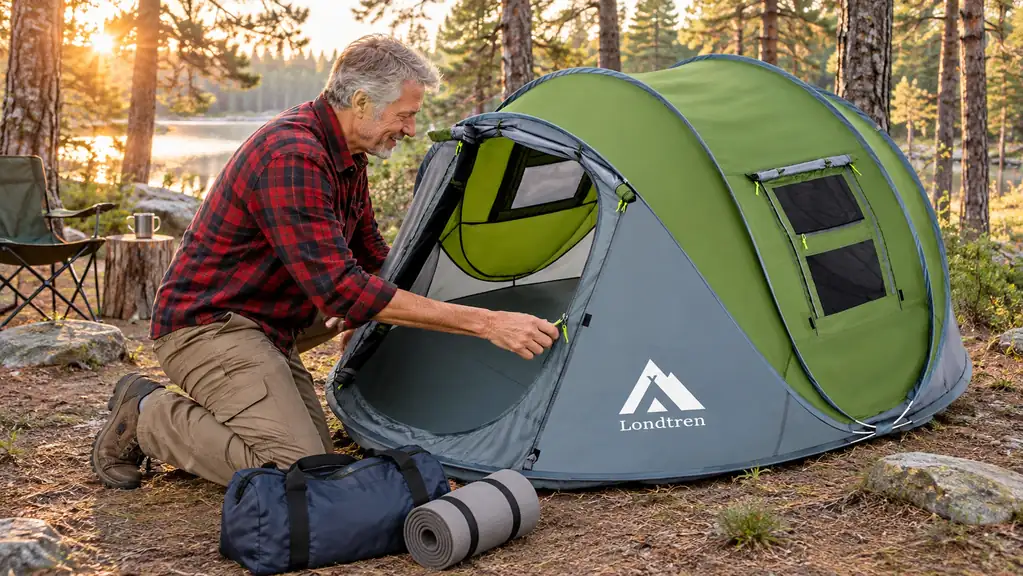
The Londtren four person pop up tent raises from a standing position, has two doors, and a 9.2 by 6.6 foot floor. It is the setup I stopped dreading.
Amazon See the Londtren pop up tent on Amazon →You put it up standing, not kneeling
Here is the part that actually matters. My old tent wanted me to lay everything out flat, thread two long poles through sleeves, then clip, kneel and wrestle. Getting down to the ground was never the problem. Getting back up was. The Londtren goes up with you on your feet, because the frame is built into the fabric and does the unfolding itself. I have had it standing before Carol finished pulling the cooler out of the truck. That is the whole review, honestly, and everything below is detail.
The poles are attached, so there is no pole bag to lose
The support poles come attached to the tent. That means no hunting through the truck bed at dusk, no discovering a bent shock cord while everybody else is already hungry, no standing in the dirt trying to remember which sleeve takes which pole. The stakes and rope come in the box too, which sounds like a small thing until the one trip you leave your own stakes on the garage shelf. Mine live in the Tacoma door pocket now and I have not thought about them since.
9.2 by 6.6 feet of floor is room to stop tripping
That works out to about sixty square feet, and it is the difference between a tent where two adults can move and a tent where two adults apologize to each other all night. Carol and I sleep with our bags beside us instead of jammed under our feet. When the grandkids come along it is tight for four, but it works for a night and nobody ends up sleeping against a wall. More floor than this and you are heating and drying space you do not use.
Two doors means nobody crawls over anybody
One door is fine until you are the one sleeping at the back. Then every trip out at 2 a.m. is a climb over a sleeping wife and a knee that does not bend the way it used to. This tent has two doors, one at each end, so I have my own way out and Carol has hers. My right knee has not had to swing over another human being in three seasons of camping. That is worth more to me than any feature on the spec sheet.
The zippers are the part you will touch a hundred times
The doors close with zippers, and the pulls are easy to find by feel in the dark. Sounds like a nothing detail until you have owned a tent with a zipper that grabs the fabric every time you close it in a hurry, and you end up yanking on it with a bad wrist at midnight. Mine have run clean. Brush the tracks out at the end of each trip and they will keep running clean, which is true of every zipper ever made.
I have had it standing before Carol finished pulling the cooler out of the truck. That is the whole review, honestly.
Mesh at both ends moves the air through
The front and back doors are screened, so on a warm Sierra evening you leave the panels open and get a cross breeze instead of a still pocket of hot air. In August that is the difference between sleeping and lying there listening to yourself be uncomfortable. And when the temperature drops at two in the morning, which it will, you close up and the mesh keeps the bugs on the outside where they belong. Huntington Lake in July is a good test of this and it passed.
190T polyester with a 190 mm rating held up in real rain
The walls are 190T polyester and the water resistance is listed at 190 mm. That is not an expedition number and I am not going to pretend it is. What it is, is enough for a Sierra thunderstorm that blows through in an hour, and enough for a wet morning that never quite commits to raining. I have sat through both and stayed dry. Seams are where any tent leaks first, so I still pitch it with one end into the weather and keep an eye on the low corner.
The 110 gram PE groundsheet keeps the damp where it belongs
The floor is a 110 gram polyethylene sheet, which is the stiffer, tougher kind of groundsheet rather than the crinkly bag feeling. It does not slide around under a sleeping pad. On ground that has been rained on all week, that layer is the thing standing between the moisture in the dirt and the bag you are sleeping in. This is also why I stopped hauling an extra tarp along, which I get to further down.
It is free standing, so you can pick it up and move it
Free standing means the tent holds its own shape without being staked down. Which means when you figure out you pitched it in the one spot where the afternoon sun parks, you can pick the whole thing up and walk it eight feet into the shade. I have also picked it up and shaken sand and pine needles out of it. Try either of those with a tent that needs six stakes just to stay standing while you think about it.
Sunday morning is not a project
Taking it down is the reverse of putting it up, and it costs about the same amount of time and bending. It goes into the truck, the cooler goes on top, and I am not the last man in the campground hunched over a pile of poles while everybody else is already at the diner. The listing calls it a four season tent. I have run it spring through October in the Sierra and it has been fine. I would not take it into snow, and I would not tell you otherwise.
What I'd Skip
Three things I would skip. First, the secondhand tent with the missing pole. You will spend an hour of every trip saving twenty minutes of setup, and your back pays the difference. Second, the extra ground tarp. The floor on this one is already a proper polyethylene sheet, so a tarp underneath mostly collects water and mud and gives you one more thing to fold and dry in the yard when you get home. Third, the upgrade to a bigger tent for two people. More floor means more to heat, more to dry, and a longer reach for the zipper at two in the morning. Buy the size you will actually fill.
The tent is not the point. The setup is.
Standing setup, two doors, a 9.2 by 6.6 foot floor and a floor sheet that keeps the ground where it belongs. If your back has been making your camping decisions for you, start here.
Amazon Check today's price on Amazon →