
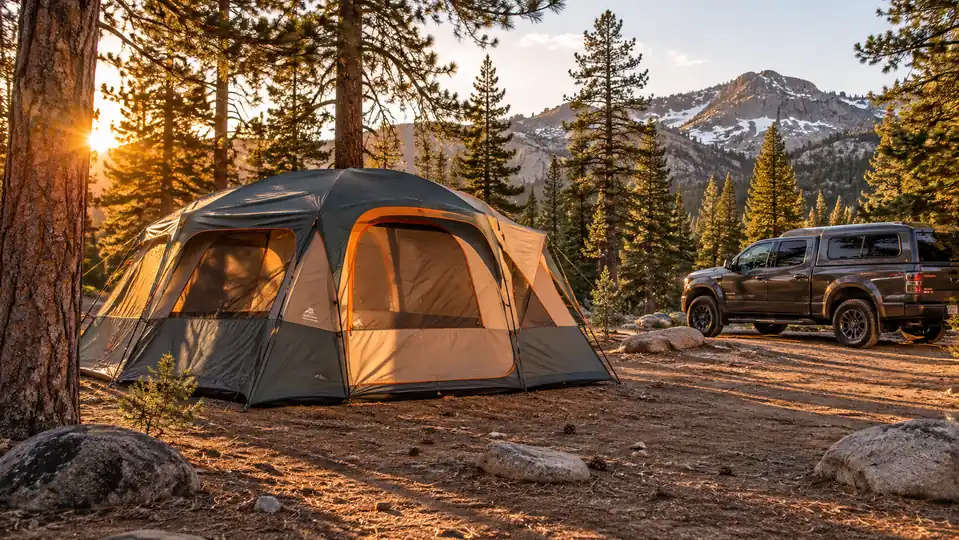
I bought a nine-person cabin tent at sixty-one years old because of two things: the grandkids and my lower back. The grandkids wanted to sleep outside at Shaver Lake. My back wanted no part of kneeling on granite while I fed fiberglass poles through fabric sleeves, and my bad knee, the one I wrecked climbing poles for thirty years, wanted even less. Carol looked at the box sitting in the bed of the Tacoma and asked whether I had thought this through. Fair question. I had thought about the setup and not much else.
What I brought home is the CORE Instant Cabin, the 14 by 9 three-room model that sleeps nine. The reason I picked it over the pole tents I have owned since the 1980s is the frame. The poles come already attached to the tent, folded into the bundle, so setup is mostly unfolding and letting the frame lock into place. The box says two minutes. I have never done it in two minutes and I am not going to pretend I have. Four minutes, alone, in a crosswind coming off the lake, with a knee that does not bend the way it used to, is my honest number. That is still faster than any tent this size I have pitched, and I have pitched a lot of them badly.
The frame is already attached to the tent. You unfold it and the poles lock.
A nine-person cabin goes up in one-person time, 78 inches of headroom at the center, two queen air beds across the floor. Check today's price on Amazon.
Amazon Check Today's Price on Amazon →Before You Start: Three Things That Save a Solo Setup
Before you unroll anything, get three things out of the truck: the bag of steel stakes and guylines that comes with the tent, a mallet, and something to kneel on. I use a five gallon bucket, because it doubles as a seat and I can stand up off it without making a noise. Back the truck so the tailgate is close to the site. The CORE weighs 27.6 pounds in the bag, which does not sound like much until you are carrying it by yourself, off center, over uneven ground, in the dark.
Then pick your ground. This tent is 14 by 9 with a 126 square foot floor, so it needs a real clearing, not a gap between two trees. Given a choice between shade and level, take level every time. A cabin tent with near vertical walls does not care much about a little sun. It cares a great deal about a slope, because you will spend the night sliding toward one wall and the door will not sit right in the frame.
Step 1: Unroll It, Square the Floor, and Stake the Corners Loose
Unzip the bag and walk the bundle out rather than dragging it. Unfold the tent until the floor is flat on the ground and the frame is loose on top of it. Point the door you plan to use most away from the direction the wind usually comes from at that site, because once this thing is standing it is a sail until the guylines are set.
Stake the four corners now, and stake them loose. Drive each steel stake about two thirds of the way in and leave slack in the webbing. You want the tent to have room to move while you raise the frame. If you crank the corners down tight first, the frame has nothing to give, and you will fight it for ten minutes and skin a knuckle doing it.
This is the part that costs me, not the lifting. Four corners means four trips down to the ground and four trips back up, so I do it once. I kneel on the pad or sit on the bucket, stake everything I can reach from that position, and stand up one time. A cheap foam knee pad lives in the Tacoma now, and it has been worth more to me than any piece of camping gear I have bought in the last five years.
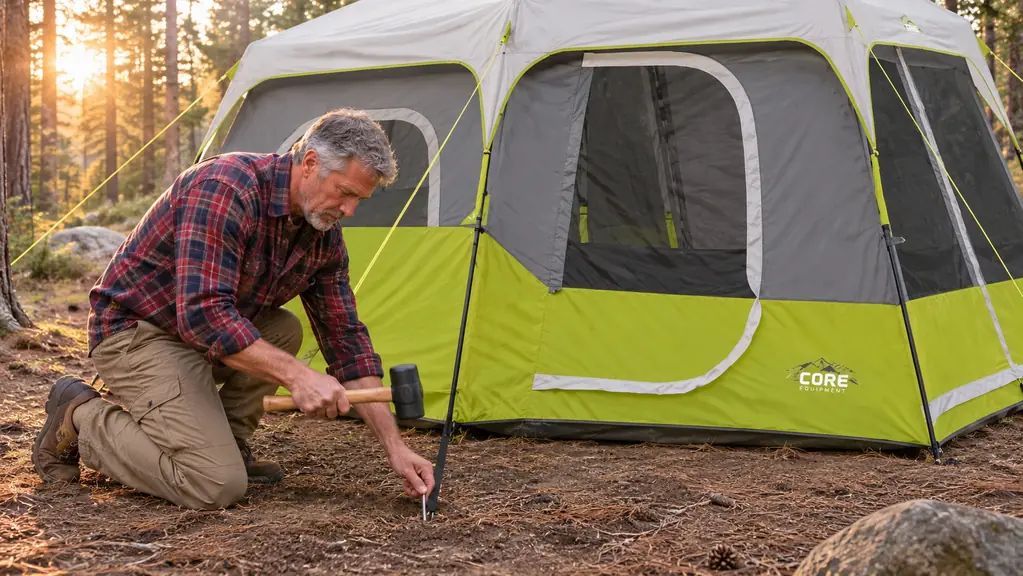
Step 2: Lift the Frame and Let the Poles Lock
Stand at a corner, take the frame with both hands and lift until the sections lock into place. Then go to the corner diagonally across from it and do the same. Then the last two. You can go around the square in order, but it puts a twist in the frame and the fabric pulls against you the whole way.
Do not stand in the middle and try to push the roof up. That is how you get a pole that locks crooked, and on a tent this size you cannot reach the far corner from the center anyway. If a leg binds halfway, stop and look at it. Nine times out of ten a fold of fabric is caught in the joint, and forcing it is how poles and zippers get ruined before their time.
Once the frame is locked, stand up. The center of this tent is 78 inches, so I can pull on a pair of pants in the morning without doing a routine on the floor. That sounds like a small thing. It is not a small thing at sixty-one with a back that remembers every pole it ever climbed.
Step 3: Push the Walls Out, Zip the Windows, Hang the Dividers
Go inside and push the walls out. A cabin tent has a lot of wall, and it will sit slightly puckered until you run a hand along the seams and push the fabric outward. Check that the floor is not folded under the bottom edge anywhere, because a fold there is the spot where water finds its way in.
Hang the room dividers now, while the tent is empty and you can walk the length of it. This is the three-room model, so the dividers are what turn one big 14 by 9 space into something the grandkids can call their own room. Then open and close every zipped window and both doors, once, all the way. Finding a stuck zipper at ten at night with a kid already inside is a bad way to end a good day.
A word on having two doors. Coming from a one-door tent, the second door sounds like a luxury, and it is, but it also changes how you set up. You can walk through the tent instead of crawling through it, which matters when you are the one checking seams and hanging dividers by yourself.
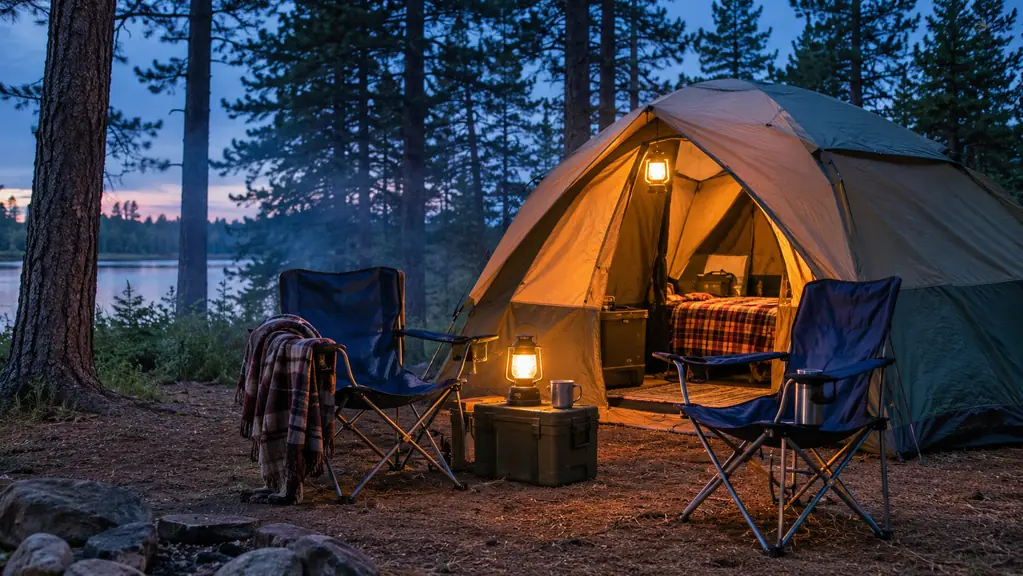
Step 4: Throw the Rainfly and Guy It Before Anyone Unpacks
Throw the rainfly over the top before a single sleeping bag goes inside. The fly on this tent is fully taped with sealed seams, and the fabric is rated at 1200mm, but none of that does anything if the fly is sitting in a heap in the truck when the weather comes through camp.
Hook the fly at the corners first, then work your way along the sides. Cabin tents have near vertical walls, which is wonderful for standing up and terrible in weather, because a wall like that takes rain straight on instead of shedding it. The fly is what keeps that wall from wicking water to the inside of the tent.
Then the guylines. The tent comes with guylines and steel stakes, and you should use all of them, not just the few that seem necessary on a calm afternoon. In the Sierra, the storm that hits at four in the afternoon was not in the forecast at ten in the morning. Run the lines out at a wide angle from the tent rather than straight down, and set them where the ground is solid instead of where it is convenient.
Step 5: Set the Lines, Load the Beds First, Then Everything Else
Walk the perimeter once and snug what has gone slack, which by now is most of it. Fill around the stake heads with dirt or set a rock on them if the ground is loose. Put a mat or an old towel inside each door, because the traffic pattern in a nine-person tent goes straight across the floor all weekend.
Load in a set order: beds, then duffels, then everything small. Two queen air beds fit across this floor with room left to walk between them, and once they are down you do not want to be dragging a cooler past them. Bags go in the corners. Small items go in the storage pockets, which exist so that headlamps and reading glasses and phone cables are not loose on the floor in the dark.
Last thing, and most people skip it: crack a window and leave the top of a door open a few inches, even if the evening is cool. A tent with that many bodies in it and no air moving will be wet on the inside by morning, and then the whole family blames the tent for something the tent did not do.
The box says two minutes. My honest number, alone, with a bad knee and a wind coming off the lake, is four. Four minutes to stand up inside a tent I can walk around in is still the best deal I have found.
What Else Helps
Take it down in reverse and do not rush the last part. Pull the guylines, unhook the fly, then unlock one corner at a time and let the frame fold while you guide the fabric down rather than letting it drop. Set the tent up again in the yard when you get home and let it dry all the way before it goes back in the bag. A tent stored damp for a winter comes out smelling like a basement, and the coating starts to go on you.
Know the limits before you buy. This is 126 square feet and 27.6 pounds, which makes it a car camping tent, not something you carry into the backcountry. It needs a clearing, it needs to be level, and if the walk from the truck is long you will want a second person for the carry. The nine person capacity is real in the sense that nine people can lie down in it. Four people with gear is the number that actually feels roomy, and that is how we use it with Carol and the grandkids.
One more thing about the CORE and wind. A tall cabin tent catches more of it than a low dome, so if the site is exposed, spend the extra four minutes on the guylines and take the fly all the way down to the stakes. I have ridden out a Shaver Lake blowup in this tent with every line set and slept fine. I would not want to try it with three of them set.
One person, one trip from the truck, a nine-person cabin standing before the coffee goes cold.
14 by 9 with 78 inches of headroom, two queen air beds across the floor, room to stand up and pull your pants on. Check today's price on Amazon.
Amazon Check Today's Price on Amazon →