
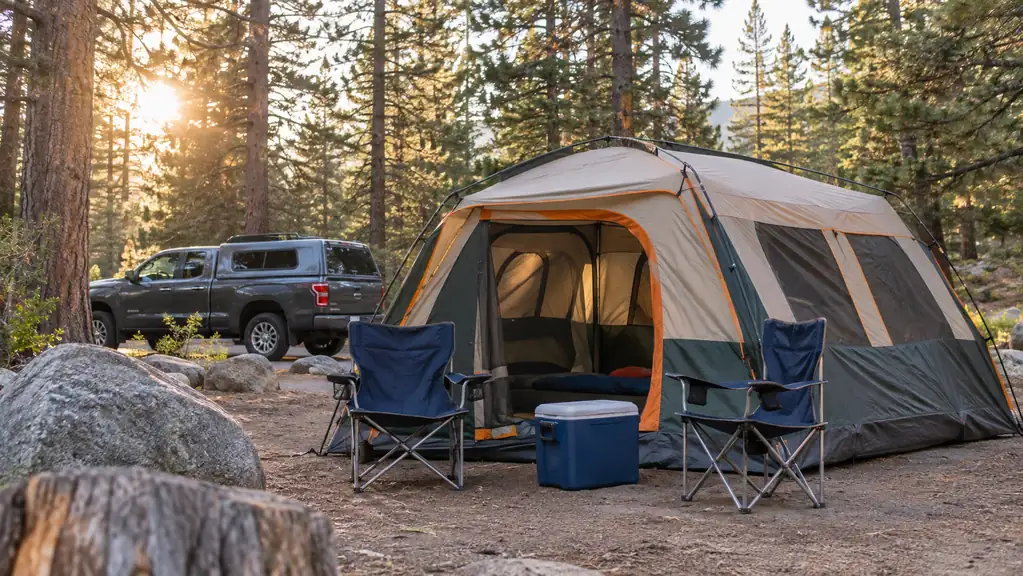
Twenty-some years of pitching tents has taught me one thing: the tent you fight with at nine at night in the rain is the tent you resent for the rest of the trip. I'm 61, I have a stiff lower back and one bad knee from my lineman years, and I do most of my camping in Sierra Nevada campgrounds out of a 2014 Toyota Tacoma. Setup time stopped being a convenience for me a while back. It's a physical thing now. That's the lens I used on the CORE Instant Cabin Tent, a 14 by 9 foot cabin with a 78-inch center height that CORE says goes up in two minutes.
What follows are ten reasons this tent suits the way a family actually camps, in roughly the order they matter to me. It is not a spec sheet read out loud. Some of these showed up on the first pitch in my yard. Others only surfaced after a few trips, when the novelty wore off and the weather turned.
Two minutes of setup, then three days of not thinking about your tent
Pre-attached poles, a 78-inch ceiling, and 126 square feet of floor. That is the whole pitch.
Amazon Check Today's Price on Amazon →It goes up in about two minutes, and my back notices
CORE builds this tent so the poles are already attached and lock into place. You unfold it, extend the poles, and the cabin stands up. My first pitch in the yard took right around two minutes, and that included stopping twice to re-read the directions. The tenth pitch took less. It was a warm Saturday in May, the lawn still wet from the sprinklers, and I had the whole thing standing before my coffee went cold. I had tried a cheaper dome tent first, the kind with a sleeve you feed the poles through, and gave up on it in the driveway one August because threading the last pole meant kneeling in gravel. If you have ever wrestled a tent to the ground while a grandkid asks whether it is done yet, you understand why this sits at the top of my list.
Nothing to sort, nothing to lose
A conventional cabin tent means a bag of separate poles, and a campsite at dusk means one of them ends up under the truck. The CORE frame removes that whole failure mode. Four poles, all attached, all folding out of the same structure. I have lost pole bags and rainfly stakes in my life. I have never lost a pole that was sewn to the tent.
A 78-inch ceiling means you can stand up and get dressed
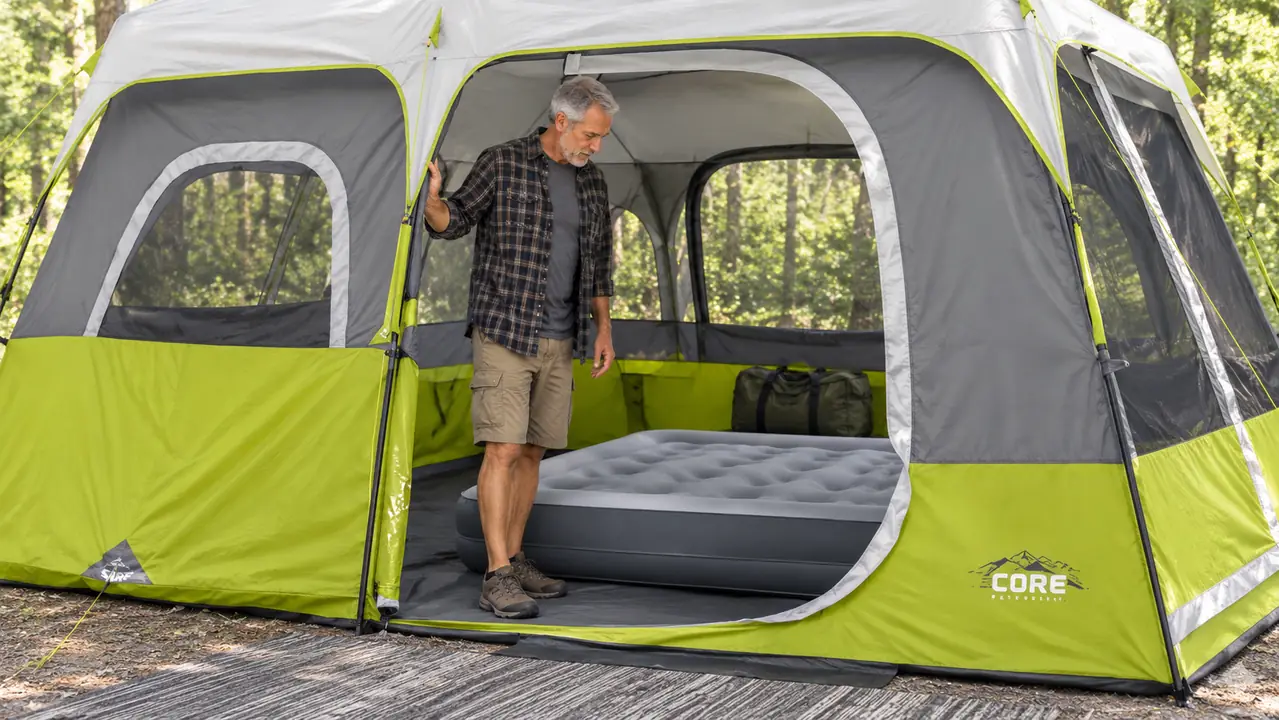
This is the number I care about most now. Seventy-eight inches at the center is taller than I am. I can pull on pants standing up instead of doing that sideways hop on my knees, and on a cold morning that difference is the whole trip. My knee does not forgive a bad start. On a 38-degree morning at Huntington Lake last September I was dressed and out the door in under two minutes while Carol was still hunting for her second sock in the sleeping bag. If you are 61 with a bad knee, or you camp with somebody who is, buy height before you buy anything else.
126 square feet holds two queen air beds
Fourteen by nine feet, 126 square feet of floor area, and the listing says it fits two queen air beds. For a family that means the grandkids on one side and Carol and me on the other, with a clear path to the door down the middle. Floor area is where a small tent lies to you. You buy a four person tent and find out the sleeping bags are touching the walls, and the condensation with them. Two inches of clearance at the wall is the difference between a dry sleeping bag and a damp one by morning.
Three rooms let you put the kids down before you go to bed
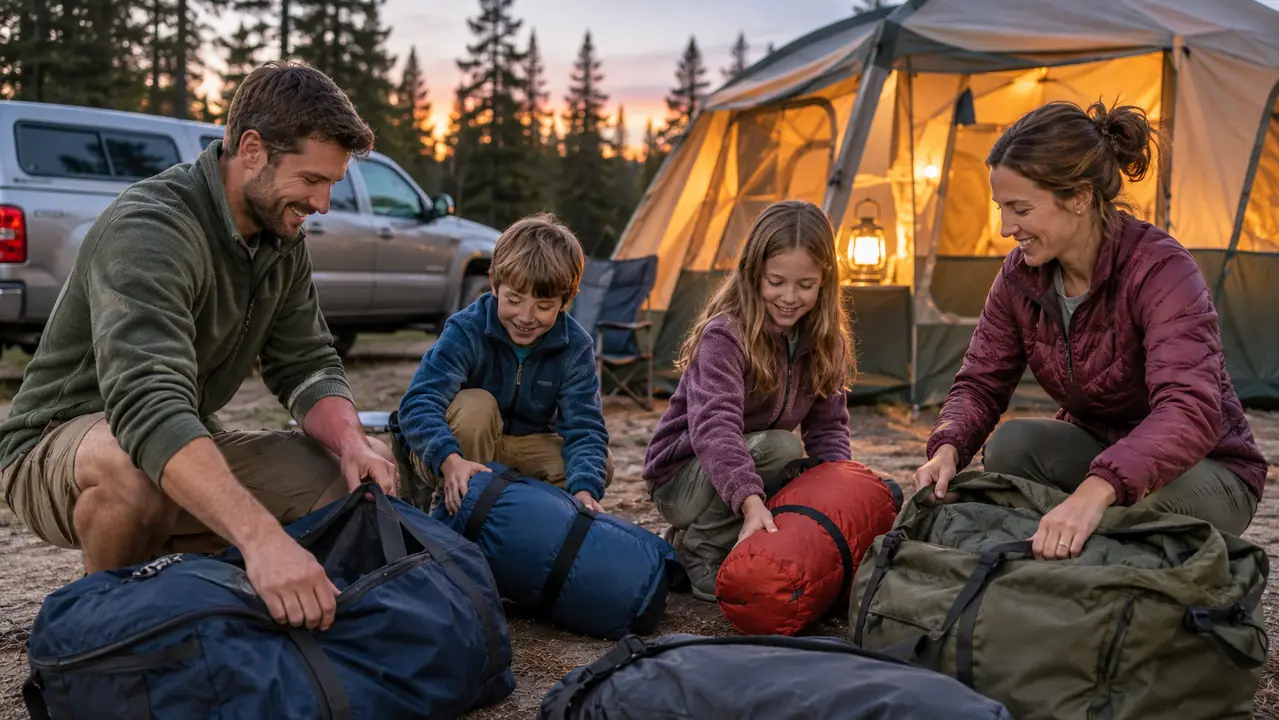
The multi-room layout is the part I underrated. You can divide the cabin into separate spaces, so the grandkids go down at their bedtime and the adults keep the lantern on in the other room without an argument. It also gives you somewhere to change clothes, and somewhere to stack duffels so nobody steps on a toothbrush at two in the morning.
Four attached poles, a 78-inch ceiling, and 126 square feet of floor. Nothing about this tent asks you to bend at the waist and hold your breath.
Two doors cut the midnight traffic jam
Two doors on a tent this size is not a luxury. It is the difference between a quiet night and a crawl over three sleeping people every time somebody needs the bathroom. With the rooms split, each side has its own exit, which also means you are not unzipping a door over a sleeping kid to reach the cooler.
1200mm fabric, a taped rainfly, and sealed seams
CORE rates the fabric at 1200mm water resistance, includes a fully taped rainfly, and seals the seams and zips the windows. I have sat through Sierra thunderstorms where the water came sideways under the trees. The first real test came on a July trip outside Shaver Lake, when an afternoon storm rolled in hard enough that the campground host came around checking on the older tents. We stayed dry through about two hours of it, and the only damp spot was a corner where I had not pulled the rainfly taut. A three season tent is not a cabin, but taped seams and a real rainfly are what separate a damp night from a wet one. The guylines and steel stakes come in the bag, so you are not improvising with rocks at dusk.
Pockets keep the small stuff off the floor
Storage pockets are the least exciting line on any listing and one of the most useful. Headlamp, phone, glasses, the paperback, all within reach and off the floor where a bare foot will find them. In a tent with three rooms and four people, the floor becomes a junk drawer by day two unless there is somewhere else to put things.
Free-standing and rectangular, so you can move it after it is up
A free-standing rectangular cabin can be picked up and shifted once it is standing. That matters more than it sounds. You pitch it, notice the site slopes, and walk the whole tent two feet to the left before you stake anything down. Try that with a tent that has to be staked and tensioned first and you will be starting over from the beginning.
27.6 pounds is fine when the truck parks beside the site
The tent weighs 27.6 pounds. In a Tacoma with a camper shell, that is nothing at all. If you are carrying it a quarter mile into a walk-in site, it is a real load, and you should count that against the size. For car camping, which is most of what my family does, it is the right trade: a little weight for a lot of room.
What I'd Skip
Two things I would want you to hear before you buy. First, the nine person number is a ceiling, not a promise. CORE's own listing says it comfortably fits four people with gear, and that matches what I saw. Put nine adults in here and you will be sleeping in shifts. Second, this is a three season tent with a big rectangular footprint. It wants a level pad, and in gusty weather you want the guylines out and the steel stakes driven in properly, because a tall cabin catches wind the way a tarp does. I learned that one the hard way at a site near Sequoia where the pad looked flat and was not, and the whole tent leaned a hand's width toward the fire ring by morning. And if most of your trips are walk-in sites rather than car camping, look at something smaller and lighter first.
The right tent is the one you stop thinking about by day two
CORE built this one so the setup is finished before the kids stop arguing about who sleeps where.
Amazon Check Today's Price on Amazon →