
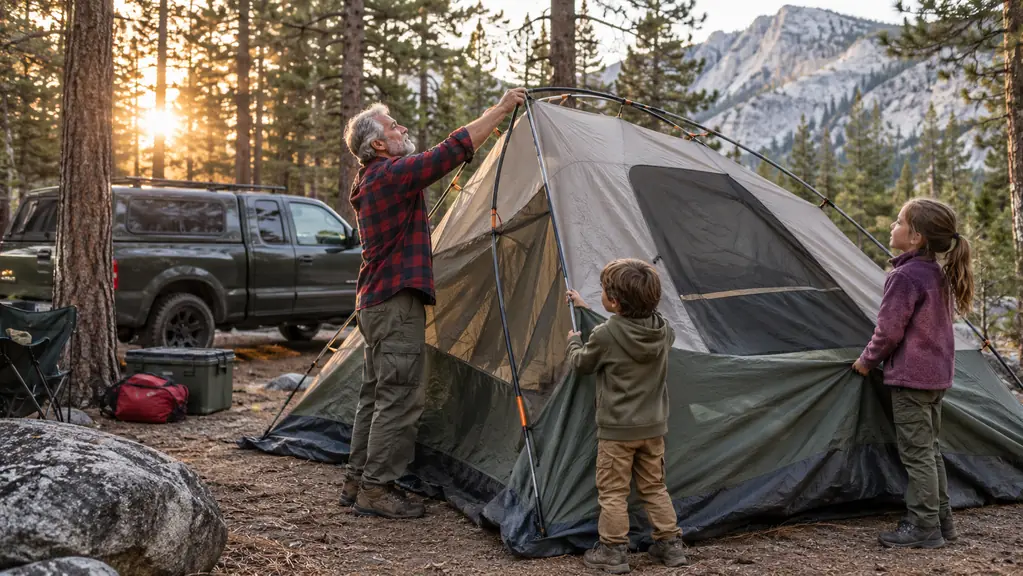
Two tents own the search results when you type in cabin tent you can stand up in: the CORE Instant Cabin and whatever Coleman Instant Cabin happens to be on the shelf that season. I have pitched both. Not in a showroom, not in a parking lot for ten minutes, but on real ground at Shaver Lake and Huntington Lake with a wife who wants the beds made before dark. Here is the short answer. The CORE is the roomier tent, the one that goes in the truck when the grandkids come along. The Coleman is the lighter, quicker, cheaper one that goes when it is just Carol and me and I want to be off my knees fast.
If you want the one line verdict: the CORE Instant Cabin is the better tent for a family, and the Coleman Instant Cabin is the better tent for two people who want to be done setting up. That sounds like a dodge. It is not. Those are two different jobs and the two tents are built for different ones. Below is what I actually found, dimension by dimension, including the two places the Coleman genuinely beats the CORE and the one place the CORE makes you work for it.
| CORE Instant Cabin | Coleman Instant Cabin | |
|---|---|---|
| Setup time | Pre-attached poles lock into place, about two minutes for me, plus the rainfly | Instant hub frame goes up in a minute or so, a touch quicker in my hands |
| Floor space | 14 by 9 feet, 126 square feet, 78 inches at the center | Smaller floor and lower center height on the 4 and 6 person models |
| Rooms | Laid out as three rooms with dividers | One open room on most models |
| Doors | Two doors, one on each side | One door on most instant cabins |
| Weather protection | 1200mm H2O Block fabric, fully taped rainfly, sealed seams, fully zipped windows | WeatherTec welded floor and inverted seams, keeps out ordinary rain |
| Packed weight | 27.6 pounds, and that is for a 9 person tent | Lighter on the smaller sizes, easier on a walk-in site |
| Price | More tent, and the current price reflects it | Usually the cheaper way into an instant cabin |
| Best for | Families who want space and separate sleeping areas | Couples and solo campers who want fast and light |
How I Compared Them, and What I Was Actually Looking For
I am 61, retired off the utility line, with a lower back that reminds me of it every morning and a right knee that does not like kneeling in gravel. So I judge a tent by a few things that never make the brochure. How long does it take to stand up. Can I do it alone. How much bending does the door require. Does the floor stay dry when the rain comes sideways at two in the morning. Do the zippers still run in year three. And how much of the truck bed does it eat on the way home, since the Tacoma has a camper shell and the grandkids bring a lot of stuff.
I set both tents up on the same weekend, on the same site, and slept in each one. I timed the pitches with a watch, which made me feel foolish and turned out to be useful. I did not test either tent in snow. These are three season tents, both of them, and pretending otherwise would be unfair to the tents and to you.
Where the CORE Instant Cabin Wins
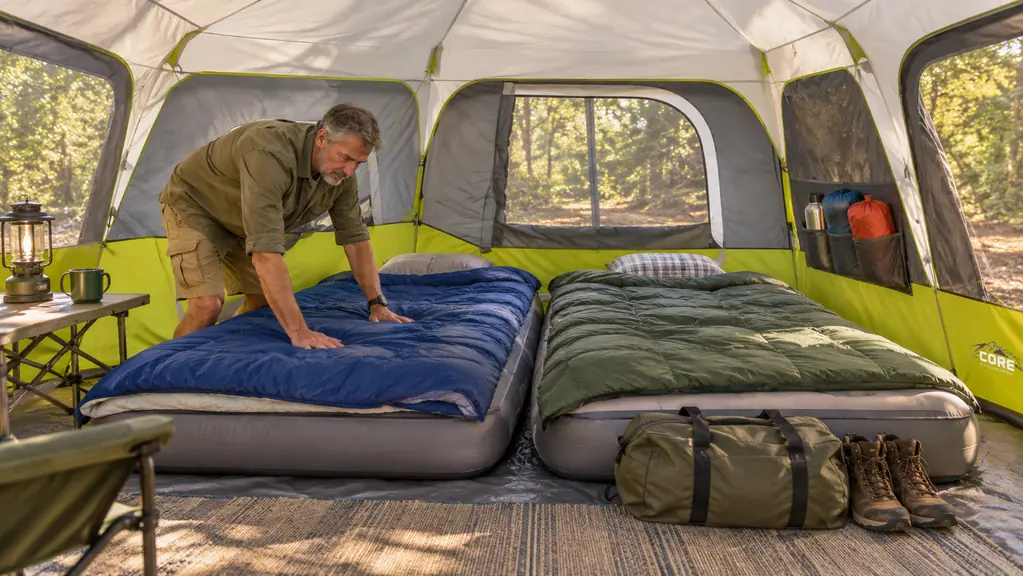
Space is not close. The CORE is 14 by 9 feet, which works out to 126 square feet of floor area, with 78 inches of center height. That last number is the one that changes a trip. At 78 inches I can stand up and put my pants on in the morning without doing a squat, and Carol can hang a light from the ceiling without asking me to reach for her. The floor fits two queen size air beds with room left over for a duffel and a cooler at the foot.
The tent is laid out as three rooms. That matters more than I expected once grandkids are involved. The back room becomes their room, the middle is where the bags and the shoes land, and the front stays clear enough that you can walk in and out without stepping on a sleeping bag at midnight. It also means you can hang a divider between you and a child who woke up at five in the morning, which on one trip was worth more to me than anything else the tent does.
Two doors, which sounds like a small thing until you are the person on the far side of a full tent who needs the bathroom at three in the morning. Both grandkids can leave through their own door without climbing over anybody. The windows zip fully closed, and on a warm night you can open them and get a cross breeze instead of the still air you get in a tent whose mesh never really seals.
Where the Coleman Instant Cabin Wins
The Coleman instant frame is the quicker of the two in my hands and I will not pretend otherwise. Both tents have their poles pre-attached, so neither one is a feed the pole through the sleeve job like the canvas tents I grew up with. But the Coleman goes up in about a minute and the CORE takes me closer to two. If you get caught out in weather and want a roof over your head, a minute is not nothing.
The Coleman instant cabins I have carried are lighter than the CORE, especially in the smaller sizes. The CORE is 27.6 pounds. That is not unreasonable for a tent this size, but it is a two handed carry from the truck, and if your site is a quarter mile walk-in from the parking lot you will feel every one of those pounds. A couple doing two nights will notice the difference more than a family that drives right up to the site.
The Coleman Instant Cabin is usually the cheaper way into an instant cabin tent. I am not going to quote numbers because they move around, so check today's price on both before you commit. The CORE costs more because it is more tent. Whether that trade is worth it comes down to whether you need the rooms and the standing height, and that is a question only you can answer.
See the CORE Instant Cabin's Current Price and Size Options
14 by 9 feet, 126 square feet of floor, 78 inches at the center, three rooms and two doors. This is the one that goes in the truck when the grandkids come along.
Amazon Check Today's Price on Amazon →Setup With a Bad Back, Step by Step
Here is the honest sequence for the CORE, because this is where the marketing language and the real experience part ways a little. You unroll it, you find the four pole assemblies, and you pull each one out until it locks. That locking step is where I have to kneel or squat, and with a knee that does not squat well I do it from the camp chair or I sit on the ground and scoot. Two poles, then the other two, and the tent is standing.
The roof is up before the tent is staked, which is the good part. I can stand inside, look at the sky, and decide which way I want the doors facing before I commit to a stake. The guylines and steel stakes come with it, and in calm weather you can get away with four stakes at the corners. In wind coming off the lake you want all of them, plus the rainfly, and the rainfly is what takes me the extra few minutes.
The Coleman is the same idea with less of everything. Fewer steps, less kneeling, and I can have it standing before Carol has the sleeping bags out of the truck. If your back is the deciding factor and you do not need the room, that is a real argument for the Coleman and I would not talk you out of it.
Rain, Seams, and the Morning After
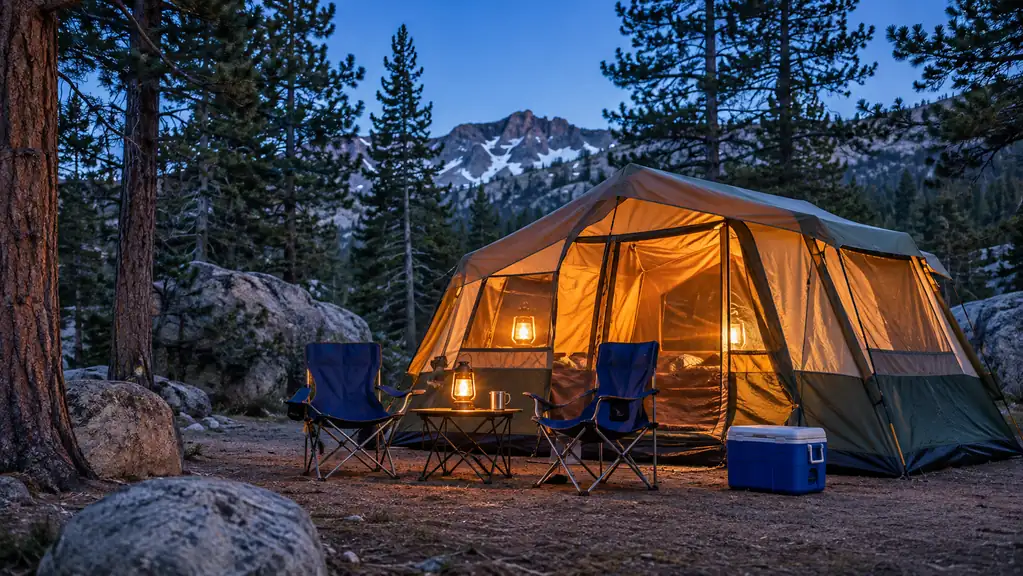
The CORE uses what the company calls H2O Block fabric rated at 1200mm, with a fully taped rainfly, sealed seams, and fully zipped windows. In plain terms: the fabric is coated to a spec that handles steady rain, the seams where water usually creeps in are taped shut, and the windows close all the way so rain does not come in through mesh. I sat through one long Sierra thunderstorm in it and came out to a dry floor.
The Coleman uses its WeatherTec system, welded floors and inverted seams, and it has kept me dry in ordinary rain too. Neither tent is a winter shelter and neither will shrug off wet snow. Both will fog up inside if you close every window with four people breathing in them, which is a physics problem and not a tent problem. Crack a window or leave one zipped open a hand's width under the rainfly.
Two minutes to stand it up, 126 square feet of floor, and 78 inches at the center. My back cares about the first number. Carol cares about the other two.
Packing Up, and How It Fits in the Truck
Taking the CORE down is faster than putting it up. Pull the locking tabs, the poles collapse, and the whole thing folds flat enough to roll. At 27.6 pounds it takes a real slice of a Tacoma bed, especially with grandkid gear in there. I load it first, along the cab side, and stack the soft bags on top of it.
The Coleman folds smaller and weighs less, which matters at the end of a trip when nobody wants to wrestle anything. If you are packing for two and you want the bed of the truck to stay usable, that is a point in the Coleman's column.
One thing I would tell anybody about either tent: set it up in the yard once before you leave. Not to learn the poles, but to find the one stake you are going to lose and the one zipper you are going to fight. Ten minutes at home saves twenty in the dark.
Who Should Buy Which
Buy the CORE Instant Cabin if there are more than two of you, if kids are involved, or if you are the person who ends up hosting the whole camp in your tent when it rains. The 126 square feet and the three room layout are the reason. Buy it if you are tall, or if you have a back that does not want to fold itself into a low tent. It is the more comfortable tent of the two and it is not close.
Buy the Coleman Instant Cabin if it is you and one other person, if you move campsites more than once on a trip, or if the tent has to come out of the car and travel a distance to the site. It pitches quicker, carries lighter, and is usually easier on the wallet. What you give up is floor area, standing height on the smaller models, and a second door.
If you are in the middle, and I was for a while: think about which failure bothers you more. A tent that is a little heavy and a little slower to pitch, or a tent that is a little tight on a rainy afternoon with four people in it. My answer changed the year the grandkids started coming along.
The Tent I Take When the Grandkids Come Along
Two minutes to stand up, 126 square feet of floor, and enough rooms that nobody sleeps on top of anybody else. Check today's price and the size options before your next trip.
Amazon Check Today's Price on Amazon →