
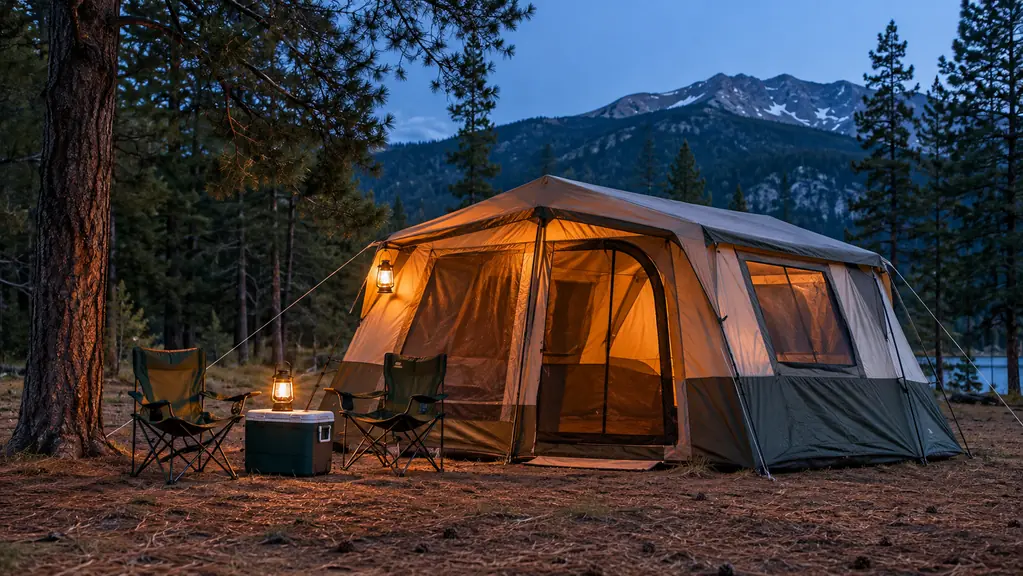
The wind came off Shaver Lake a little after ten that night, the kind that starts high in the pines and builds until the whole hillside is moving. I was flat on my back in my sleeping bag, waiting for the tent to start snapping. It never did. Carol said something about the lake, rolled over, and went back to sleep. I stayed awake a while longer, listening to a tent that was not moving, and decided the CORE Instant Cabin had earned its place in the truck.
Let me back up. I am sixty-one, retired off the line, and my lower back and my right knee have opinions about everything. For years I camped in a dome tent that went up on twelve poles, and every one of those poles had to be fed through a sleeve by feel, in the dark, on my knees. Twenty minutes if the weather was kind. Forty if it was not. By the time that tent was standing I was too stiff to enjoy my own fire.
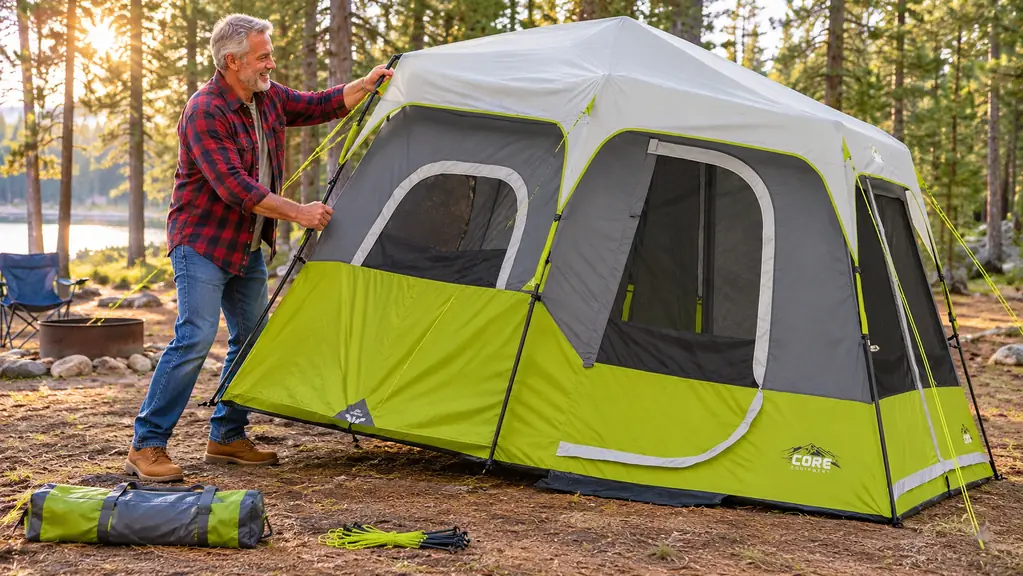
So when I bought the CORE, the promise on the box was two minutes. I set it up in the driveway first, because I did not want to learn a new tent at Huntington Lake with the light going. Four poles, all of them pre-attached and folded into the frame. You stand the whole thing up, spread the corners, and the poles lock into place. That is the entire job. No sleeves to feed, nothing to thread, no kneeling. The first pitch took me about four minutes because I read the directions twice. The second one took under three.
What sold me was not the speed, though. It was the height. The center height is 78 inches, so I can stand up in the middle of it and pull my trousers on like a person instead of folding myself in half on the floor pad. The footprint is 14 by 9 feet, 126 square feet, enough for two queen air beds with a walkway down the middle. There are two doors, which matters more than people think. Nobody climbs over anybody at two in the morning, and I can get out on my own side without stepping on Carol.
For a family the math is different. CORE rates it for nine people, and I would call nine a row of sleeping bags shoulder to shoulder. Four people with gear and a cooler is the honest comfortable number, which is about what we run when the grandkids come up with us for a few days in July.
Two minutes is what the box says. My first pitch took four, and that was with Carol reading the directions to me out loud.
The tent I stopped worrying about at three in the morning
Four pre-attached poles, 78 inches of headroom, and a rainfly that has not let me down yet. It lives in the Tacoma now, and it goes up before the coffee is cold.
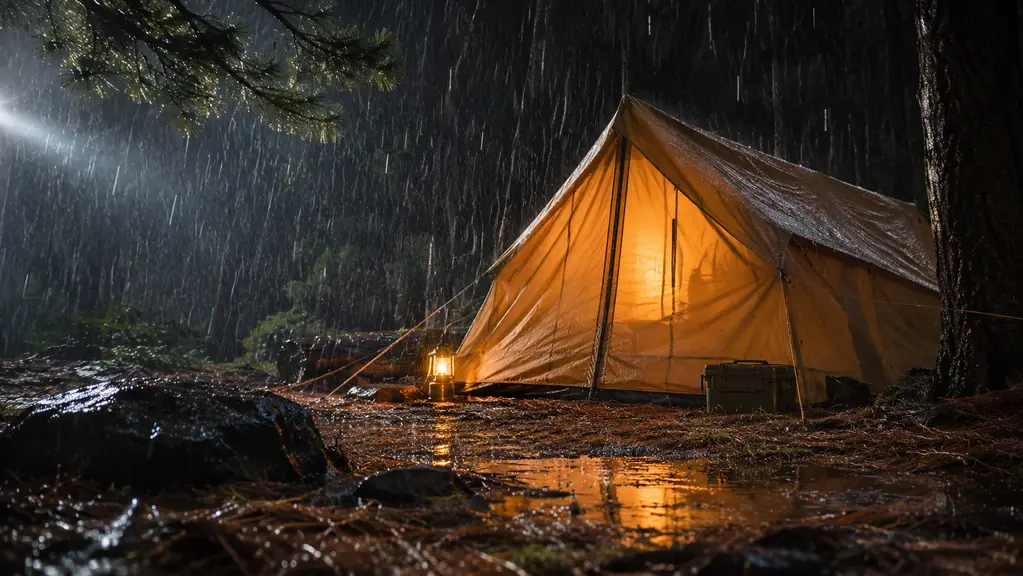
Amazon Check Today's Price on Amazon →Two summers later we got caught in a real one. The rain came sideways off the lake for about four hours and the wind got under the rainfly twice. The fabric is rated to 1200mm with H2O Block, the rainfly is fully taped, the seams are sealed, and the windows zip shut all the way instead of leaving a gap. I zipped everything down, set the guylines, and went to bed expecting a wet foot by morning. At three I put a hand down by the corner and found nothing. The floor was dry. So were the sleeping bags, and so was the paperback Carol had left open on the floor.
Now the part nobody puts on the box. It weighs 27.6 pounds, and the bag is long, roughly the length of a duffel. It slides into the Tacoma bed under the camper shell with room left for the cooler, but it is not going behind the seat and it is not going on your back for a mile. It takes two hands to carry and a little patience to fold back down, and the fold is easier when the ground is flat and dry than when it is not. I have done it in the rain. I did not enjoy it.
What I would say is that this is a car camping tent, and it is a very good one for people whose setup years are behind them. If you are hiking in, this is not your tent. If you are pulling into a site off the highway and you want to be sitting down within five minutes of arrival, it is exactly your tent.
What I'd Tell You If We Were Sitting at My Kitchen Table
Practice once in the yard before you leave. Not because it is hard, but because the first time you should learn where the poles lock and which corner goes up first while you are standing on your own lawn with a cup of coffee, not in the dark at a campground with a headlamp in your teeth. After that one practice run, the tent goes up in about the time it takes to boil water for coffee.
Buy it for the standing room and the setup, not for the sleeping count. Nine people in a 14 by 9 cabin is a youth group sleeping in a row. Two air beds and a couple of duffels is what it actually feels like inside, and that is a comfortable tent for a family of four or a couple who wants to spread out. Bring a small mat for your knees when you stake the guylines, and set the guylines even when the sky looks fine, because the one night you skip them is the night the wind comes off the lake.
And keep the rainfly on the tent, not in the truck. It is included, it is taped, and it is the reason I stayed dry that night while the water was running off the roof in sheets. Fold it back for the view in the afternoon if you want, but put it back on before supper. That is the whole of what I know about this tent, and it is enough to keep it in the truck for another season.
One practice pitch in the yard, then go
Four poles that lock into place, a rainfly that has already proven itself in a four hour Sierra rain, and 78 inches so you can stand up to get dressed.
Amazon See the CORE Instant Cabin on Amazon →