
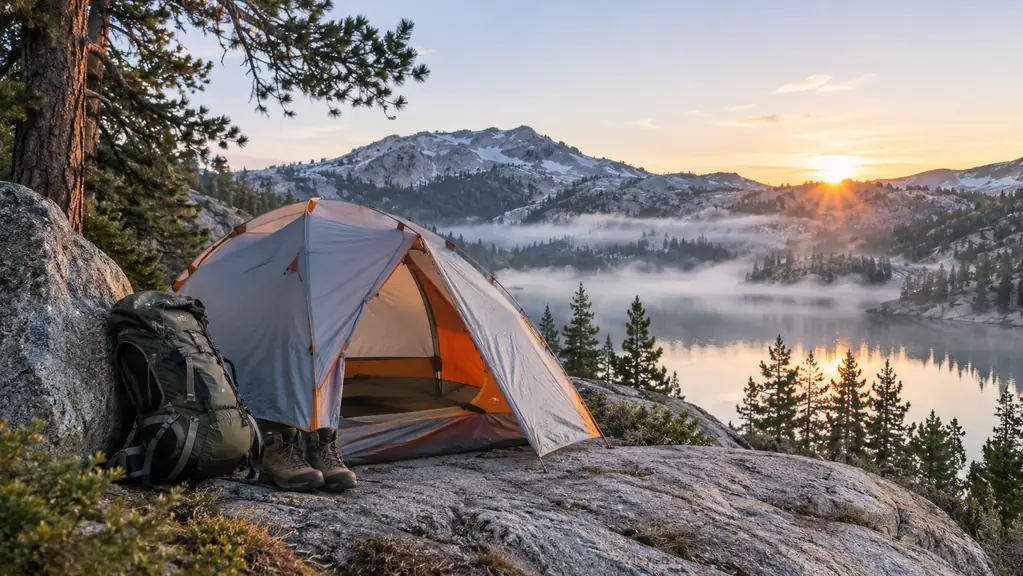
There is a moment on every trip when you are standing in a trailhead parking lot with an empty pack, a tent in its bag, and one decision to make. It goes inside, or it gets strapped to the outside. Get it wrong and you will feel it for every mile, usually as a lump against your spine or a bag that swings out and catches a branch. I have made that mistake more than once, and my lower back has been keeping score since my lineman days.
The tent I pack now is the Naturehike Cloud-Up 2, a two-person three-season free-standing tent that weighs 4.3 pounds and stuffs down to 15.7 inches by 5.1 inches by 5.1 inches. I chose it partly because the footprint comes in the box, and partly because the numbers turned out to be honest. I measured the stuff sack on my workbench with a tape measure and it does come back to those dimensions when you pack it the way I am about to describe. Pack it lazy and it comes out fatter. Pack it right and it disappears into a 50 liter pack alongside a sleeping bag and a stove.
The tent that goes back in the bag without a fight
4.3 pounds, 15.7 by 5.1 by 5.1 inches packed, footprint included. If your current tent only fits on the outside of your pack, this is the swap that ends that.
Amazon See the Cloud-Up 2 on Amazon →Why the Cloud-Up 2 Packs Down Small in the First Place
Two things do most of the work. The first is the fabric. The Cloud-Up 2 uses 210T polyester with a waterproof coating rated at 3000mm and up, which is a light cloth for the job and therefore a cloth that folds flat instead of ballooning when you press it. The second is the pole setup. The poles clip to the tent body rather than threading through sleeves, so the body lays out flat on the ground and the poles travel in their own storage bag instead of being coiled up inside the tent bundle.
Those two things together are why a four pound tent fits in a space roughly the size of a loaf of bread. The ventilation window above the front door matters as well, but it matters for condensation rather than for packing. I bring it up because a wet tent packs worse than a dry one, and that comes back around in step two.
A dry tent packs to the size on the label. A wet tent packs to whatever size it feels like.
Step 1: Break It Into Its Pieces Before You Stuff Anything
Everything in the Naturehike carry bag comes apart, and it should stay apart until the last thirty seconds. Laid out in front of you there should be five things: the inner tent, the fly, the pole set in its storage bag, the wind ropes, and the footprint. The first time you do this, do it in the driveway. Not at a dark trailhead with a headlamp in your teeth.
Separating the pieces does two jobs. It lets you fold each one flat, which is the only route to an even bundle, and it lets you leave behind what you do not need. On a dry forecast I often leave the footprint in the truck, since it is the heaviest single item that is not structural. On a wet one the footprint comes and earns its place.
One caution that cost me a morning once: count the wind ropes when you pull them out. There are five, and they are the item most likely to be left pegged in the ground at the last campsite. If you carry spares, keep them in the pole bag so the small hardware all lives together.
Lay the pieces out on something, not on the ground. Last October I spread a poncho on the granite at Huntington Lake around seven in the morning, temperature somewhere in the low thirties, and the poncho earned its keep. Granite holds grit, grit holds moisture, and a damp fly laid on damp rock picks up both. A cheap ground cloth or even a split trash bag gives you a clean, dry surface to fold on, and it stops the pieces sliding apart while your fingers are still stiff. Small thing. It buys you a bundle that starts out dry.
Step 2: Fold the Fly and Inner Tent Flat, Do Not Roll Them
Rolling is what makes a fat bundle. When you roll, you trap air in the middle and then chase the roll around the floor while it unrolls itself. Folding is calmer and it produces a rectangle you can actually compress.
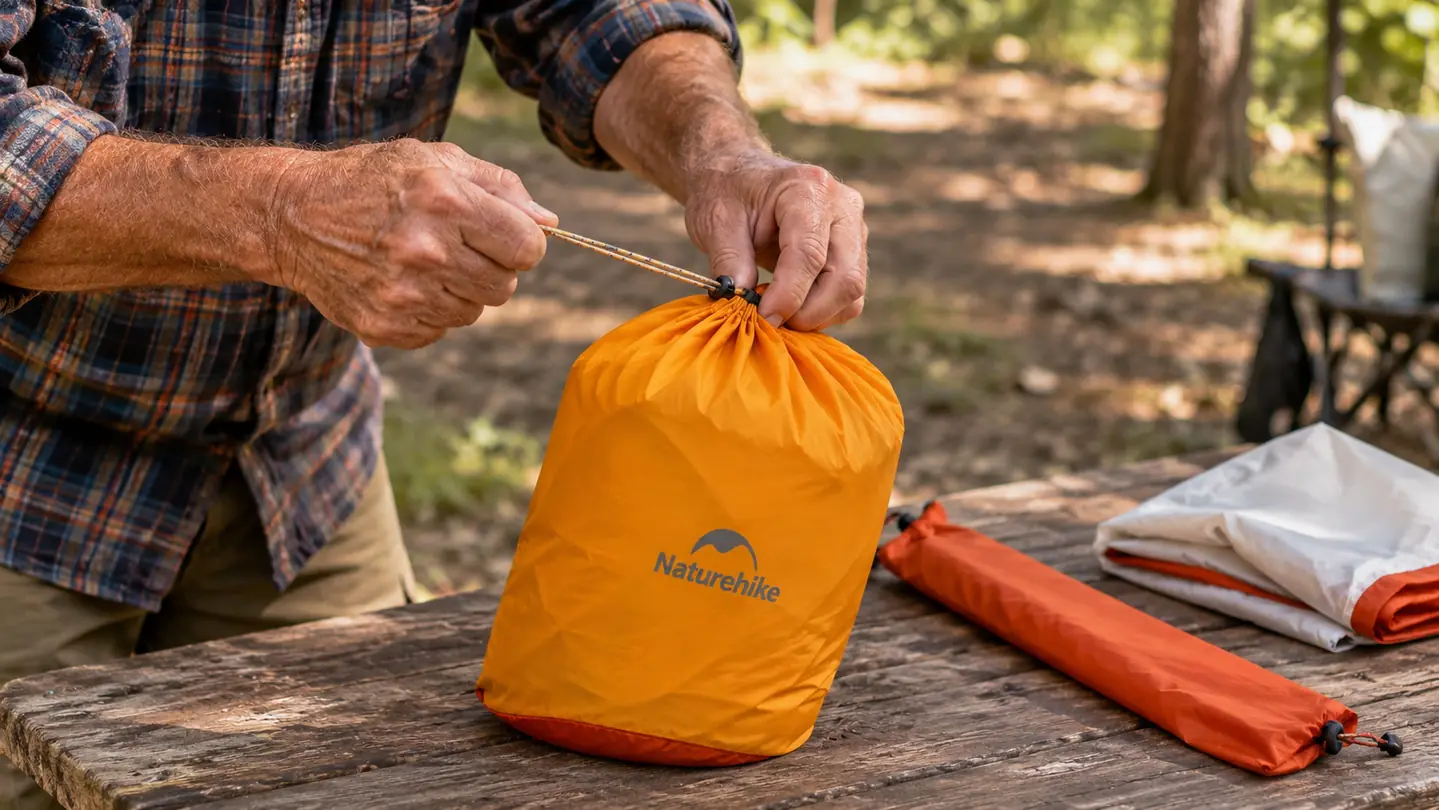
Lay the fly out flat and fold it in thirds lengthwise, then in half twice across. Do the same with the inner tent, separately, pressing the air out with the flat of your hand as you go. You are not being neat for the sake of neat. You are trying to build a stack the same width as the stuff sack, because a stack wider than the sack will bunch at the mouth and stop halfway in.
Here is the measurement that taught me the lesson. My first attempt at folding the fly in half lengthwise gave me a stack a shade under twenty inches across, and the sack opening is nowhere close to that. It bunched at the mouth and went nowhere. Folding in thirds instead brought the stack down to roughly sixteen inches, which slides in with a little room to spare. If your folded stack is wider than the sack, you are folding in the wrong number of sections. You are not stuffing too slowly.
If the fly is wet, and on a Sierra morning it usually is, shake it out and wipe it down with a bandana first. Packing a wet fly against a dry inner tent is how you end up with a damp sleeping bag on night two. When there is no choice, keep the fly in its own bag or a plastic liner and deal with it at lunch.
Step 3: Stack the Two Flats, Then Roll Once From the Foot End
Set the folded inner tent on top of the folded fly, line up the edges, and roll the pair together from the foot end toward the door, pressing down with your forearms as you go. One tight roll. Not three loose ones.
Here is where most people lose the game. They get a good bundle rolled and then try to shove it into the sack from the top down. Do it the other way. Turn the stuff sack partly inside out, work the sack down over the bundle, and pull it into place rather than pushing the tent up into the sack. It takes about fifteen seconds and it saves you ten minutes of swearing with cold hands.
The first time I tried it, at a walk-in site near Shaver Lake, the whole thing took close to twenty minutes and I finished with the sack inside out and the tent sitting on the ground beside it. Now it takes about ninety seconds. All of that difference is in the approach. Work the mouth of the sack down over the bundle a few inches at a time, then pull the sack right side out and snug the drawstring. The cord lock takes up the last of it.
Once the bundle is in, pull the drawstring and kneel on it once to flatten what is left. That last compression is worth an inch and a half. Do not overdo it. A bundle under enormous strain is a bundle whose seams are doing work they were not built for, and it is also a bundle that will not come out of the sack on a wet morning when you need it to.
Step 4: Keep the Poles Out of the Bundle Entirely
The poles go in their own storage bag and stay out of the tent sack. This is the single change that made the biggest difference for me.
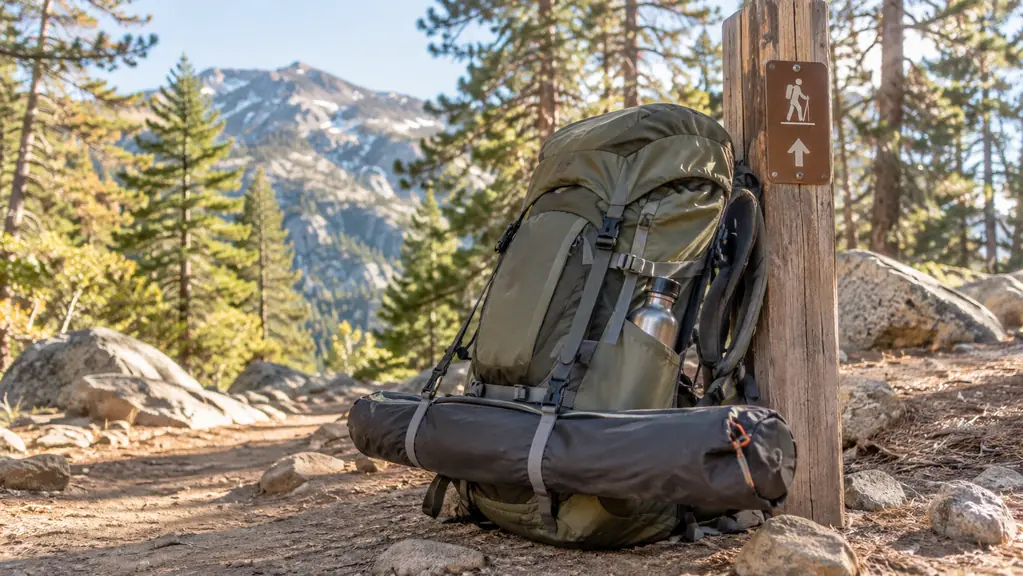
A stuff sack with poles inside cannot bend, and a pack that cannot bend is a pack that fights your back on every switchback. The pole bag, by contrast, is long and thin and lies flat against the side of the pack, which is where it wants to be anyway. On our truck trips the pole bag lives in the side bin of the camper shell. On foot it rides in an outer side pocket or strapped to the compression webbing.
The wind ropes go in with the poles. Small hardware goes in with the poles. If it is metal or it is a stake, it does not go in the tent sack, because the last thing you need is a stake head wearing a hole in the fly over four hundred miles of trail.
Step 5: Load the Pack in the Order Your Spine Wants
Packed small is only half the job. Packed small and in the right place is the other half.
Heavy items go against your spine at shoulder-blade height. The tent bundle, at 4.3 pounds, is the heaviest single object I carry, so it goes right there, standing vertically, wrapped in whichever clothing I want wrinkled least. The sleeping bag goes in the bottom compartment. Food, stove and fuel go on top of the tent bundle and slightly higher. The pole bag goes outside, low, on the side with the compression strap.
I learned this the hard way on a short overnight out of a Sequoia trailhead. I had the bundle strapped flat across the bottom of the pack, low and wide, which felt solid standing in the parking lot. By the second mile my shoulders were doing the work my hips should have been doing and my lower back had gone tight as a fence wire. Standing the same bundle upright against my spine at shoulder-blade height fixed it on the next trip. Same weight, same pack, completely different walk.
Then tighten everything down and lift the pack by the haul loop. If the load sags when you lift, tighten again. If something is pressing into your back, take it out and turn it. Two minutes in the parking lot is worth an hour on the trail, and when you have one bad knee, that stops being a saying and becomes a rule.
What Else Helps
Split the load when there are two of you. Carol takes the fly and the footprint in her pack and I take the inner tent and the poles, and both packs get better for it. The Cloud-Up 2 is a two-person tent, so the honest way to carry it is with two people. On the short solo overnights I do a few times a summer, the whole 4.3 pounds goes in my pack and the pole bag comes out again for the walk in.
Two habits I keep every season. First, I pitch the tent once in the yard before the first trip, because a tent you have not pitched in eight months is a tent you will fumble at dusk. The free-standing frame and the clips make that a short job, and it lets me check the zippers and the seams while I can still see them in daylight. Second, I line the pack with a trash compactor bag. The Naturehike fly is rated to 3000mm and up and it has kept me dry through some Sierra thunderstorms, but a pack liner weighs almost nothing and covers the one night the fly goes away wet.
Packing the tent small is a five minute skill. Loading it against your spine is the part your back remembers in the morning.
None of this is complicated. It is just the difference between a pack you forget you are wearing and a pack you argue with all day. If you want the longer view on how the tent has held up, the reviews linked below cover the seams, the zippers and the weather.
Stop strapping it to the outside of your pack
Two-person, three-season, free-standing, 4.3 pounds, packed size 15.7 by 5.1 by 5.1 inches. Footprint included.
Amazon Check Availability on Amazon →