
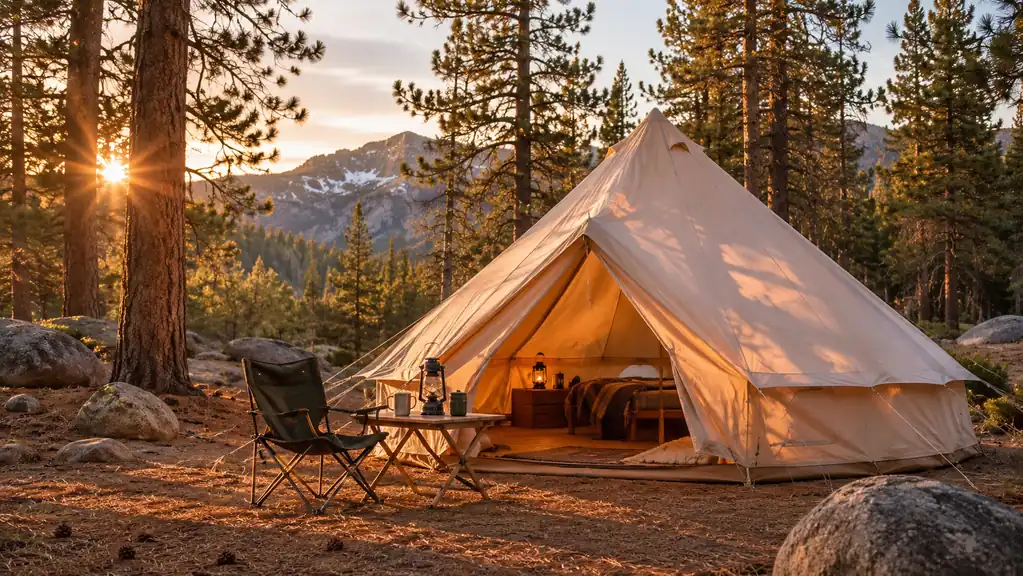
I have pitched a lot of tents badly. The worst was a dome tent at Huntington Lake the year a front came through and flattened it at two in the morning with Carol and me inside, laughing because there was nothing else to do about it. After thirty years of climbing poles for a living, my lower back and my right knee had also stopped forgiving me for the bending a dome tent demands. What I wanted was simple. A tent I could stand up in, that a sixty-one-year-old man could pitch without kneeling in the dirt, and that would not fold up in weather. The WHITEDUCK Regatta Bell Tent is what I ended up with, and I have now used it across three seasons of real trips, not one photographed weekend.
The Regatta is a canvas bell tent with a 132.67 square foot floor, rated for six people, and it comes in at 60.6 pounds in the bag. It has two doors, three windows with mesh, roof vents, a sewn-in groundsheet, a stove jack, and a listed wall height of 2 feet 7 inches. That wall height is higher than most bell tents and it is the single number that sold me. WHITEDUCK builds it as a free-standing tent rather than something that depends on guy lines alone to hold its shape. It is not a lightweight backpacking shelter and it was never meant to be. It is a canvas home you drive to.
The Quick Verdict
A stand-up canvas tent a stiff-backed camper can pitch alone in about twenty minutes. It stayed dry through two Sierra storms and I would buy it again. The 60.6 pounds and the drying ritual are the price of admission.
Amazon Check Today's Price →The tent I re-pitch every June without dreading it
Two doors, three mesh windows, a sewn-in floor and a stove jack for the cold trips. Check today's price and the current options on Amazon.
Amazon Check Today's Price on Amazon →How I've Used It
Three seasons, six trips. Shaver Lake in June with Carol and the grandkids, on a site with more pine needles than dirt. Huntington Lake in September, just the two of us, the trip where the weather turned. A stretch in the Sequoia area in early October when the mornings came in around freezing. Two shorter weekends at a Central Coast state beach where the wind off the water never let up. Plus one night in the yard at home, which I will explain shortly. I keep a running note on my phone of how long setup takes, because I am that kind of person and because my back keeps score whether I write it down or not.
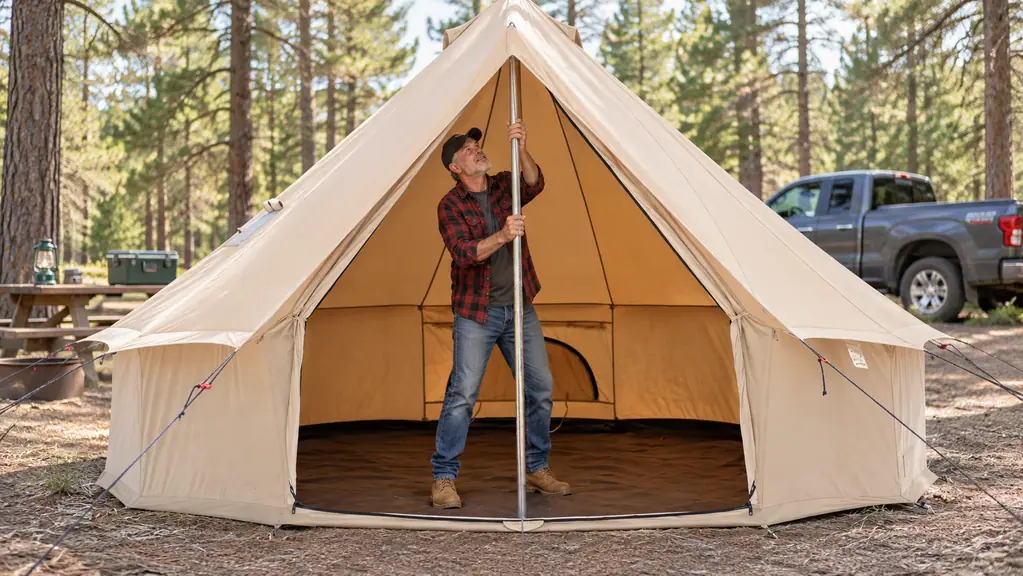
The routine has not changed much since the second trip. I back the Tacoma up to the site, pull the bag out of the shell, and stand the bundle on end. The four corners of the sewn-in groundsheet get staked first, because everything else follows from the floor being square. Then the center pole goes up and the canvas rises with it, and the door poles go in after that. Guy lines last. Carol takes the far side. The grandkids, when they are along, are handed the job of passing me stakes, which they do with enormous seriousness.
Inside it holds two cots, a folding table, a cooler and a duffel per person without anyone stepping on anyone else. On the grandkid trips we add two sleeping pads and a canvas bag of books. The floor stays dry because it is one piece rather than panels zipped together down the middle. That is the kind of detail you do not think about until you have spent a night on a damp floor in some other tent.
Pitching It Alone With a Stiff Back
I have pitched this tent alone four times now, and the honest number is nineteen to twenty-four minutes from bag to last guy line. The first attempt took thirty-five, with Carol reading the instructions aloud and me second-guessing the door poles. What makes it work for me is the 2 foot 7 inch wall height. I can duck through the door instead of crawling, and I can reach the roof vents standing up. My knee does not have to fold under me at any point in the process. The only kneeling is for the stakes, and I do those from a low stool.
The 60.6 pounds is real and I will not pretend otherwise. I do not shoulder the bag and stroll across a parking lot with it. I drag it out of the truck bed and walk it to the site in one piece, then stand the bundle upright before I open anything. On a short walk-in site that is two trips and a certain amount of muttering. On a drive-up site, which is most of what Carol and I do these days, it is a non-event.
One piece of advice if you plan to do it alone the first time. The canvas wants to slump while you are fitting the door poles, so either bring a second person to hold the center pole or fit the doors before you fully tension anything. Carol held the pole on our first pitch and it turned a frustrating twenty minutes into a calm one. The second time I did it solo without drama because I already knew the order. That order is the whole trick with this tent, and once you have it in your hands the WHITEDUCK poles and sleeves line up without a fight.
How It Handled Rain and Sierra Wind
The Huntington trip in September is where I stopped worrying about it. Rain came in sideways around nine at night and kept at it for four hours. The canvas carries a PFC-free water repellent treatment, and canvas behaves differently from nylon in weather. It takes a few minutes of rain to swell the weave tight, then it sheds. For those first minutes I stood under the door and watched water bead and run off the roof. Nothing came through the seams over our heads and nothing came up through the groundsheet.
The Central Coast wind was the better test, because wind is what kills a tent in my experience, not rain. A bell shape leans instead of fighting. It moved, it settled, it came back. The free-standing frame meant I could shift the whole thing six inches to get the door out of the gust and it held its shape while I did it. A nylon dome in that same wind would have been slapping all night and I would have been out there at three in the morning re-staking in my socks.
The one thing that surprised me was condensation, not leakage. Two people breathing in a closed canvas tent on a cold night puts moisture on the inside of the walls, and by morning the canvas above the cots was damp to the touch. That is not the tent failing. That is weather doing what weather does. Cracking the roof vents and leaving one mesh window open a finger's width fixed it on every following trip, and the walls were dry by the time coffee was on. If you seal a canvas tent up tight and then wonder why the ceiling is wet, you sealed it up tight.
Two things I still do every time regardless. I pick a site with something between the tent and the prevailing wind, and I stake out every guy line even when the forecast is dull and empty. The tent has never given me a reason to doubt it. I have given myself plenty of reasons over the years, and staking everything is cheap insurance.
The Stove Jack and Cold Mornings
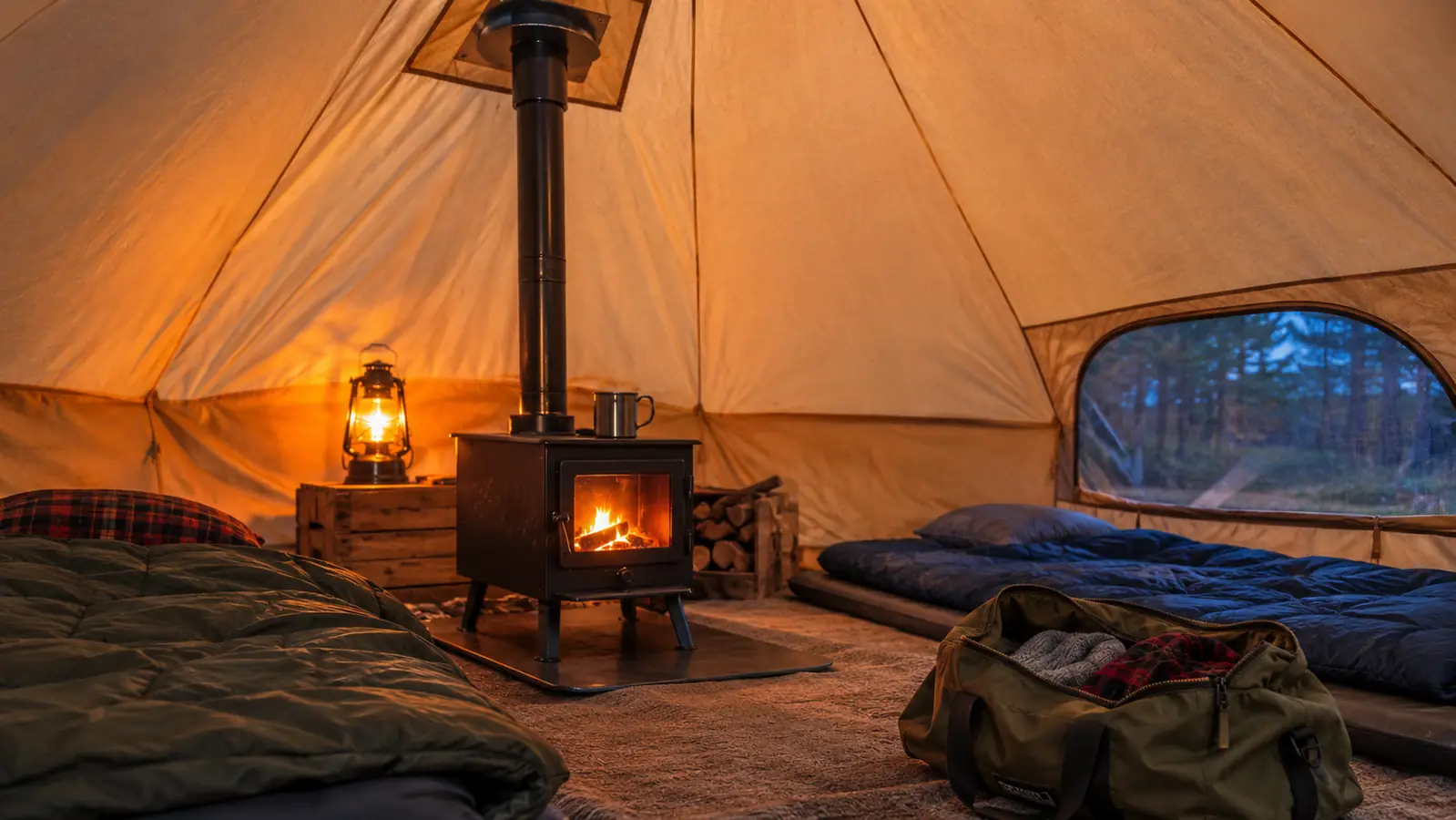
The stove jack is the feature that separates this from a summer-only canvas tent for me. It is a panel set into the roof built to accept a stovepipe from a small wood stove. On the Sequoia trip in October the mornings came in cold enough that the water bottle beside my cot had a skin of ice on it. I ran a small packable stove for about forty minutes each morning and the tent went from painful to pleasant. Carol read in her sleeping bag with her glasses on and no gloves, which is the real measure of a successful morning.
To be clear, and this matters: the stove is not included. Nothing in the package is a stove. You are buying a tent with a jack in the roof and you supply the heat yourself, which also means you supply the judgment about how to run it safely. Roof vents and mesh windows help you manage air. I keep the vents open whenever there is anything burning and I do not go to sleep with a fire I have not thought through. If that last sentence sounds fussy, good.
In July, the jack is just a patch in the ceiling you do not think about. In October, it is the reason the trip happens at all. If you camp mostly in summer and never in the cold, do not pay attention to this section. If you camp in the mountains in shoulder season, it is worth more than the weight it costs.
Space, Doors and Windows
The 132.67 square feet and the six-person rating deserve a straight answer. Four adults on cots fit comfortably with gear. Six adults would be a negotiation. Six people including children, which is how we actually use it, is exactly right, and the taller 2 foot 7 inch walls are why. On a cot near the wall I can sit upright without my head in the slope of the roof, and my back notices the difference by the second morning.
Two doors sounds like a small thing until you have lived with one. We use one door for boots and coffee and the other for the sleeping side, which keeps the mud on one half of the floor and the traffic off the other. Three mesh windows and the roof vents move a surprising amount of air on a hot afternoon, and closing them down for a cold night takes a minute.
The accessory pockets near the door hold glasses, a headlamp and the truck keys. At two in the morning, hunting for a headlamp by feel in a canvas bag is a special kind of misery. It is a small feature and I use it every single night.
What Wears First
Zippers, in my experience, are what fail on a tent before anything else does. The two doors on this WHITEDUCK have run smooth through three seasons, including a lot of sandy coastal use where grit gets into everything. I brush the zipper track out before every trip and I do not force a zipper that is binding. So far it has not given me a reason to complain, and the sleeves on the door poles still hold tension without a wobble.
The real maintenance cost is drying. Canvas has to be bone dry before it goes into storage, and that is a genuine commitment. I pitch it in the yard at home after every wet trip, which is the one night in the yard I mentioned. Skip that step once and you will meet mildew, and mildew does not come out. Because the groundsheet is sewn in, you cannot take the floor out to dry separately, so the whole tent goes up.
Beyond that, the guy lines are the part I expect to replace first, and the storage bag is the least impressive piece in the whole package. The stake loops have held. The canvas has held. The poles have held. Nothing has torn, and nothing has leaked, and after what I paid attention to on that Huntington trip, that is the headline.
What I Liked
- Tall 2 foot 7 inch walls mean an older camper can duck in and sit up on a cot instead of crawling
- Pitched solo in nineteen to twenty-four minutes after the first attempt
- Stayed dry through a four-hour sideways Sierra rain with no seam leaks
- Stove jack makes cold shoulder-season mornings genuinely comfortable
- Two doors and three mesh windows keep traffic and air where you want them
- Sewn-in groundsheet with no center seam to leak
- Holds its shape in coastal wind and can be shifted without collapsing
Where It Falls Short
- 60.6 pounds is a two-hand drag, not a shoulder carry
- Must be pitched and fully dried after every wet trip or mildew sets in
- No stove included with the stove jack
- Six-person rating is optimistic for six adults on cots
- The storage bag is the weakest item in the package
Nineteen minutes to pitch it alone, and I never once had to kneel in the dirt to do it.
Who This Is For
This is for the camper who drives to the site and stays a while. Families with kids who want a base camp with a floor, a table and room to move on a rainy afternoon. Older campers, specifically, who are tired of crawling in and out of a low dome tent and tired of their knees announcing it the next day. Campers who do shoulder-season trips in the mountains and want the option of heat. And anyone who has watched a nylon tent walk across a campsite in wind and decided they are done with that particular show. If you are the person in your group who always ends up pitching the tent, this is the WHITEDUCK model that stops that job from being the worst part of the weekend.
Who Should Skip It
If you hike in more than a few hundred yards, this is not your tent. 60.6 pounds and a canvas bundle do not belong on a trail. If you camp once a year in July and drive home Sunday, the drying ritual will feel like a chore you did not sign up for. If you want a shelter you can stuff wet into a bag and deal with next month, buy nylon. And if you are not going to stake every guy line and pick a halfway sheltered site, no canvas tent will rescue you from that, this one included. It is a good tent. It is not a magic one.
Three seasons in, and I still pitch it first thing every June
Free-standing canvas, 132.67 square feet, two doors, three mesh windows and a stove jack for the cold ones. Check today's price and current options on Amazon.
Amazon Check Today's Price on Amazon →