
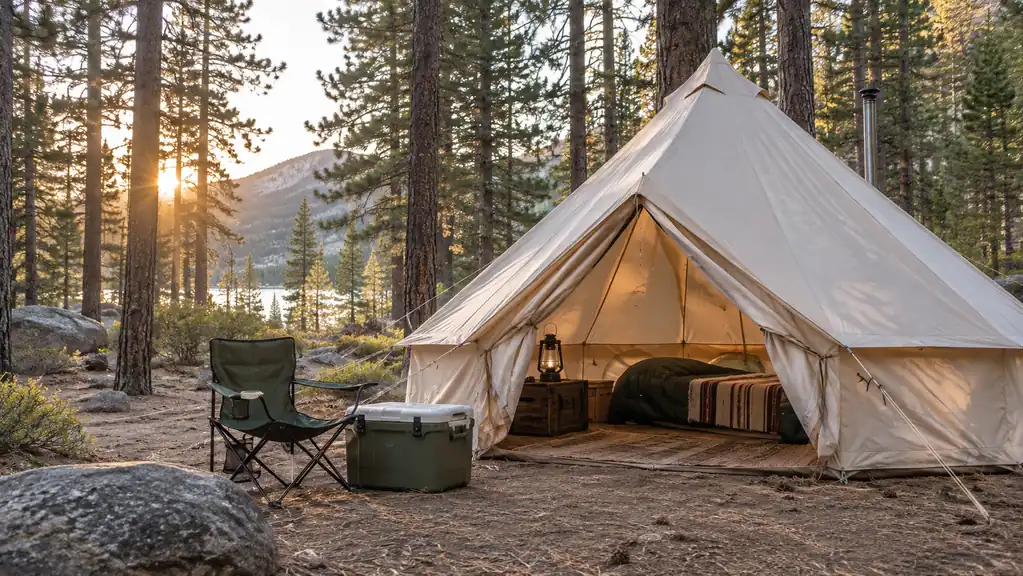
I have spent a lot of July nights in nylon. Shaver Lake, Huntington Lake, a few trips down into the Sequoia country, and most of them started the same way: tent up fast, tent hot by nine in the morning, and me lying there at six-thirty listening to the walls flap and feeling the air go stale.
That is the part nobody explains when you buy your first tent. A synthetic tent is a sealed box. It keeps weather out and it keeps everything else in. Canvas is a different animal, and it is the reason I started looking hard at the WHITEDUCK Regatta bell tent for summer trips with Carol and the grandkids. Below are ten plain reasons canvas runs cooler in the heat, and what each one looks like on a real trip instead of on a spec sheet.
The tent I would put up first in July
Canvas walls, roof vents, three mesh windows and two doors. If your summer camping is car camping, this is the one to look at.
Amazon Check Today's Price on Amazon →The walls breathe instead of sweating
Cotton canvas is a woven fiber, not a coated sheet of plastic. Air moves through the weave and moisture moves with it. I have woken up in a synthetic tent with the ceiling wet and the air thick enough to chew. The same night in canvas ends with a dry ceiling and air that smells like pine instead of last night's coffee. That breathability is the reason the other nine items on this list work at all. Everything below is just helping air go where the fabric already wants it to go.
Roof vents give hot air somewhere to go
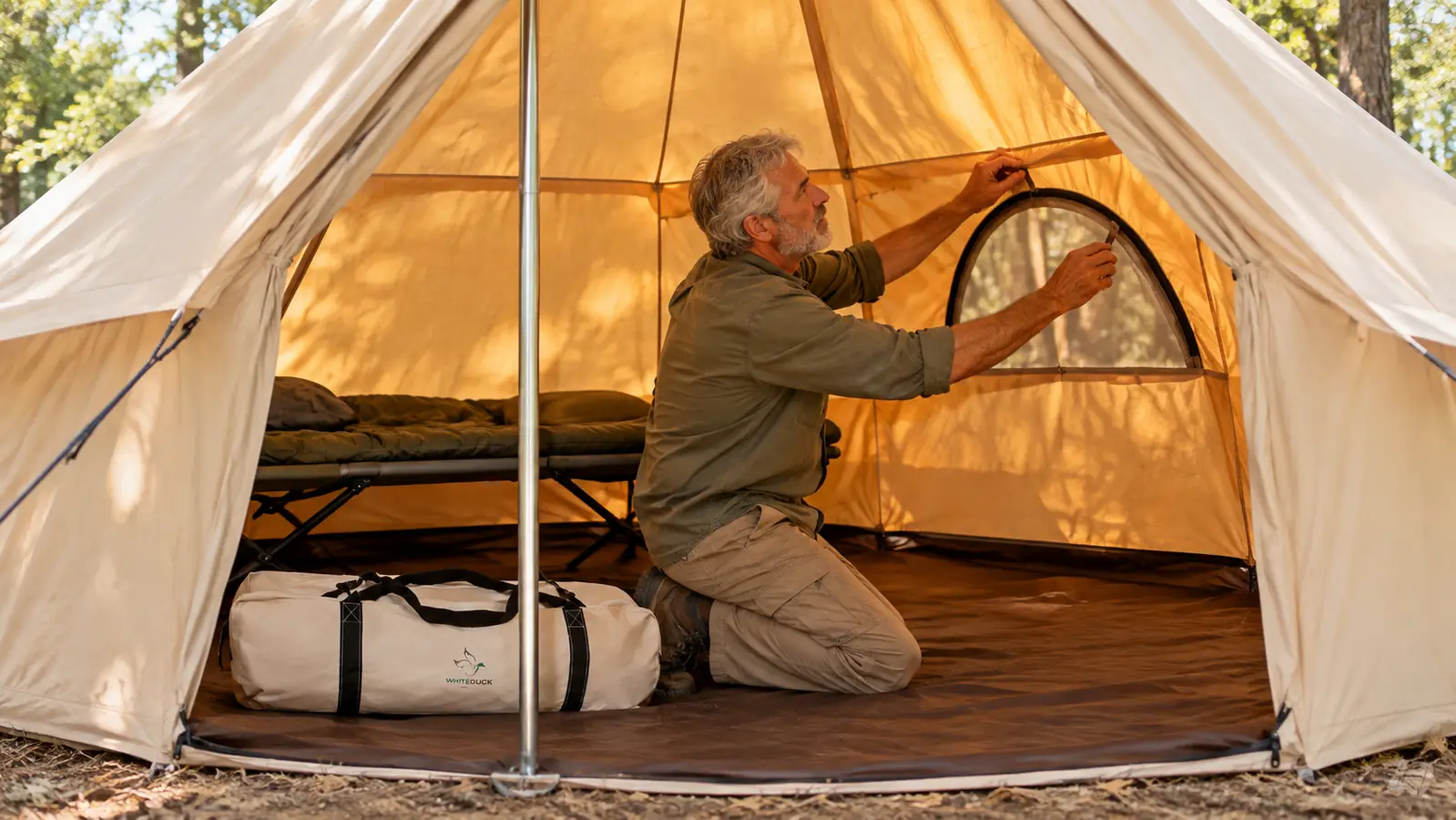
Heat rises. In a sealed tent it rises and then sits there, right above your head, all night. The WHITEDUCK Regatta comes with roof vents, and cracking them at dusk does more for the temperature inside than any fan I have dragged out there. I open them when the sun drops and close them when the evening cool turns into a chill. It is a thirty second job and it changes how the tent feels by ten at night.
Three mesh windows pull a cross breeze
Mesh windows do two jobs. They let air through and they keep the mosquitoes outside, which matters more in the Sierra than people expect. Three of them, plus the doors, gives you enough openings to find the direction the evening breeze is actually coming from and work with it. My method is simple: sit in the tent around five, feel which cheek gets cold first, and open the window on that side. It is not engineering, but it works.
Two doors let you chase the shade
Two zippered doors is not a luxury, it is temperature control. Morning sun comes up on one side of the tent and bakes it. With two doors you open the one in the shade and keep the sunny one shut, and you get airflow without turning the inside into an oven. With one door you take whatever the tent gives you. I am 61 with a bad knee, and the second door also means I am not climbing over Carol and a grandkid to get out at two in the morning.
The walls stand taller than most bell tents
Wall height is the number I look at now and never looked at twenty years ago. This one lists 2 foot 7 at the wall, which runs taller than the average bell tent, and that shows up where it matters: your head is not jammed against hot fabric at eye level. Taller walls also leave room for air to move between your cot and the canvas instead of being trapped in a low pocket. My back notices the difference when I stand up in the morning.
The peak does the venting for you
A bell shape is not just for looks. The sides slope in and the peak sits high, so warm air has a long climb before it reaches the top and a short trip out the vents once it gets there. In a low, flat-roofed tent the hot air pools about a foot above the mattress. In this one it collects up at the apex where nobody is sleeping. Small thing to write down, large thing to lie under in August.
The fabric is treated to take the sun
UV protection is listed on this tent, and in Sierra sun that is not a marketing line, it is what keeps canvas from going brittle and chalky after a few seasons. Fabric that has cooked stops breathing the way it should, and then all the benefits above start leaking away. I have watched cheap tents go hard and stiff in two summers at Huntington. The WHITEDUCK canvas has held up because the treatment is part of the build, not something you spray on later.
The floor is sewn in, so cool air stays put
The groundsheet is sewn in rather than clipped, which means no gap running around the base of the tent. Cool air settles low in the evening, and a gap at the floor is exactly where it leaks out while warm ground air comes in. It also keeps the bugs and the dust where they belong. When the temperature drops at ten thousand feet, the last thing you want is a breeze running under the wall and across your ankles.
Canvas takes longer to heat up in the morning
Nylon goes from comfortable to unbearable fast. Sun hits it and the inside temperature climbs within minutes. Canvas has more mass, so the same sun takes longer to make the interior unpleasant. That buys you an extra hour of sleep, or an extra hour of coffee before the tent turns on you. I cannot put a number on it, I can only tell you what enough mornings of waking at first light and lying there deciding whether to get up has taught me.
Six people and 132 square feet of not touching each other
Body heat is real heat. A tent rated for six with a floor area of 132.67 square feet gives everybody room to spread out, and spreading out is how you stay cool. Cram four people into a two person tent and you will sweat no matter what the fabric does. The Regatta is a car camping tent at 60.6 pounds, which is exactly the trade I want at this stage. I am not carrying it up a mountain. I am backing the Tacoma up to the site and pitching it properly.
What I'd Skip
None of this makes canvas a free lunch. The Regatta weighs 60.6 pounds and packs down to the size of a duffel, so if your trip means a mile of trail and a pack frame, skip it and take the nylon. If you break camp every morning and move, skip it too, because canvas rewards you for staying put. And if you cannot commit to pitching it out to dry before you store it, skip it. Canvas that goes away wet comes back smelling like a basement, and no amount of roof venting fixes that.
I would also skip the idea that it pitches itself. It is a real tent with real poles and a stove jack, and the first time up took me longer than I want to admit in front of Carol. By the third trip it was routine. What I would not skip is the shade. Where you put the tent does more for summer comfort than the fabric does, so pick your spot before you unroll anything.
Three mesh windows, two doors and a set of roof vents did more for a July night at Shaver Lake than any fan I have ever carried out there.
Ten reasons, one tent, one summer trip
Canvas walls that breathe, a peak that sends heat up and out, and a floor that seals. If you camp from the truck, this is worth a hard look before the season starts.
Amazon Check Today's Price on Amazon →