
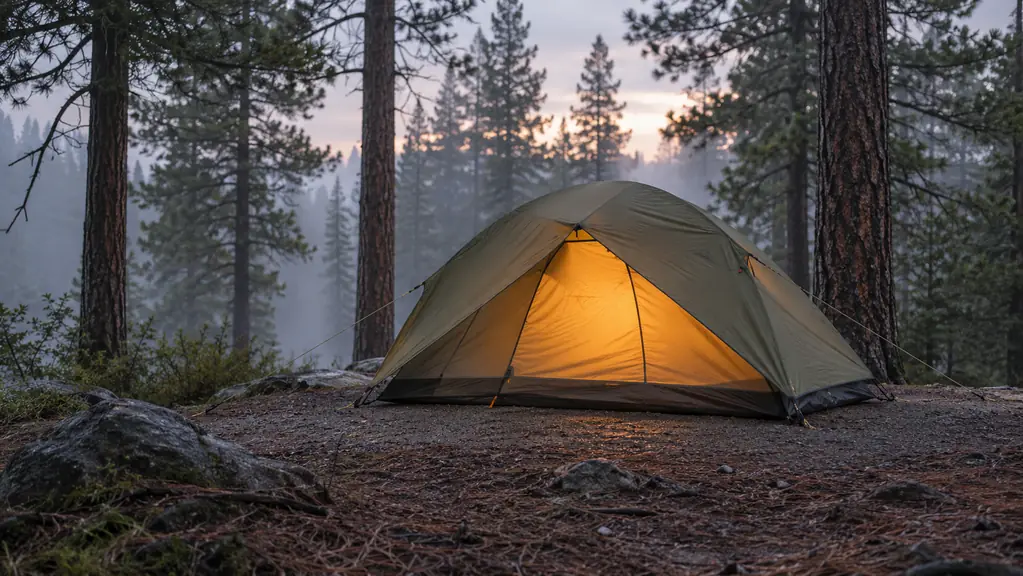
There is a particular sound a tent makes when the rain finally wins. It starts as a soft patter on the rainfly, then it changes to a flat tap on the canopy right above your head, and somewhere around two in the morning you feel one cold line of water find the inside of your sleeping bag. I have had that night. More than once.
Almost every time, the tent was not the problem. I pitched it in the low spot because the low spot was flat. I staked the rainfly loose because I was tired and it was getting dark. I let the fly press against the body all night and then wondered why the ceiling was damp in the morning. The Coleman Sundome is the tent I keep coming back to for car camping with Carol and the grandkids. It is a three-season dome, three person, 49 square feet of floor, 9 pounds, and it goes up in about 10 minutes once you know the routine. It is water resistant rather than waterproof, and that one label explains most of the complaints you read about it. What it does well is give you a simple shape with a full rainfly over the top, and a simple shape is a whole lot easier to keep dry than a complicated one.
Get the fly on before the weather gets there
Three-season dome, three person, 49 square feet of floor, full rainfly included, and a pitch you can learn in one afternoon in the driveway. That is the Coleman Sundome, and it is the tent I still hand to friends who want a dry night without a fight.
Amazon Check Today's Price on Amazon →Step 1: Choose Ground That Already Wants to Drain
Flat ground is a trap. In a Sierra campground it is usually flat because it is a low spot, and a low spot is exactly where the water is headed at eleven at night. So the first thing I do is walk the site before I unload anything out of the Tacoma. I want a patch that sits a little higher than the ground around it. Not a lot. A few inches of rise is plenty. I want to see pine needles and gravel under my boots, not bare hardpack. Hardpack sheds water in a sheet, and that sheet goes wherever gravity tells it to, which is usually straight under my tent.
Look up as well as down. Dead limbs come down in the same wind that comes with rain, and a tent does not stop a limb. I want to be near the trees, not under the biggest one. I also stay off the bottom of a slope and away from the low edge of a paved pad, where water runs off the asphalt and pools. Up around Shaver Lake I watched one site turn into a shallow pond in about twenty minutes while the site forty feet up the hill stayed dry all night. Same rain. Different ground.
Then there is the ground cloth. If you use a tarp under the tent, fold it or trim it so it stays inside the footprint of the floor. A tarp that sticks out past the edges catches rain and channels it under the tent, which is the opposite of the thing you were trying to do. With a stiff lower back, getting down to spread a tarp is the worst part of my setup, so Carol lays the tarp while I feed poles out of the bag. Divide the bending. Your spine will thank you at bedtime.
Step 2: Pitch the Body Tight and Stake the Rainfly Like It Matters
The Sundome goes up with long poles that run the length of the tent and clip to the body, and the listing calls the sleeves snag-free. Snag-free matters more than it sounds. When you are pushing a pole through a sleeve in the dark, a snag is how poles get bent and how tempers get short. Feed them steady, keep your hand ahead of the pole tip so it cannot catch, and do not force anything. If it binds, back up an inch and try again.
Ten minutes is real, but it is ten minutes after your third or fourth time. The first pitch of any new tent is a twenty minute job while you work out which pole goes where and which corner is which. Do that first pitch in the driveway at home, in daylight, with a cup of coffee sitting on the tailgate. That one afternoon saves you a genuinely bad evening in the mountains.
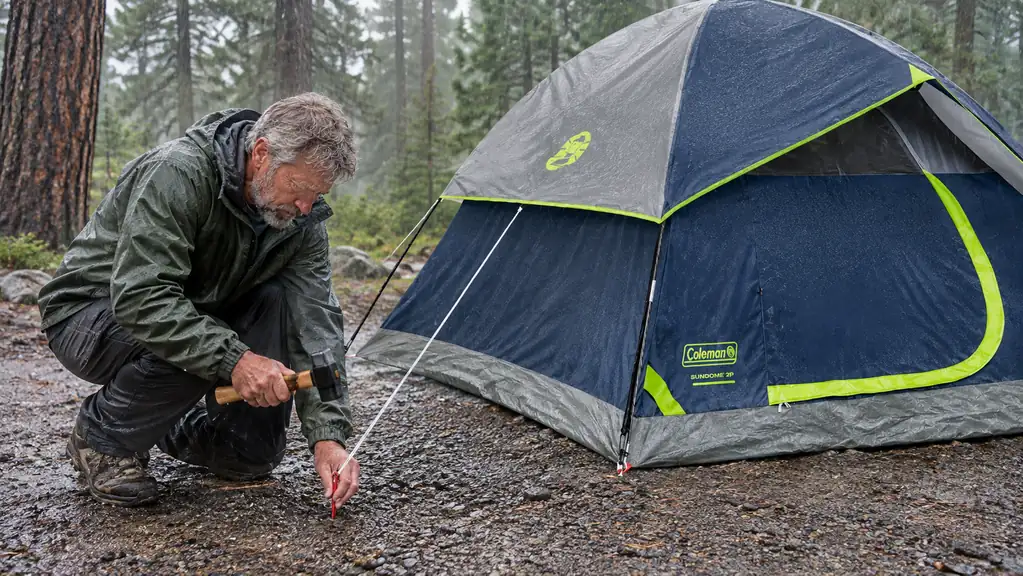
The part people skip is the rainfly. Stake all of it. Every loop. The fly has to be pulled out and away from the tent body so that no part of it is touching. Contact is how water gets in. Water beads on the outside of the fly and runs to the ground, but wherever the fly touches the tent, it wicks straight through the fabric and you get a damp patch on the inside with no visible hole anywhere to explain it. Guy lines go out at roughly 45 degrees. Stakes go in leaning away from the tent. You want the fly taut like a drum, not strained like it is about to tear.
Step 3: Know What the WeatherTec System Does and What It Does Not
Here is where I stop and read the label honestly instead of the way I wish it read. The Sundome is listed as water resistant, not waterproof, and the listing says so plainly. Water resistant means the fabric and its coatings turn rain away for a good long while, and the rainfly takes the bulk of it before it ever reaches the body. It does not mean you can sit through a three day soaker and expect a dry floor. Nearly every complaint I read about any tent in this class comes from someone expecting the second thing from a tent that promised the first.
The WeatherTec system is the Coleman name for how this tent is sealed up, and the details are on the hang tag. What matters to you after you buy it is upkeep. Seams wear. The coating on the underside of a rainfly breaks down from sun, from getting folded along the same creases over and over, and from being packed away wet. Once a season, set the tent up in the yard, treat the seams, and let it cure in the shade rather than in direct sun.
Zippers are the other weak point, and nobody warns you about them. The door zipper on any dome tent sits on a slope, and water runs down a zipper tape faster than it runs off the fabric beside it. Keep the storm flap sitting over the zipper track. Zip the door closed all the way, even when you step out for two minutes to check a line. And do not store a duffel pressed against the inside of the door, because that pushes the fabric out where the water is.
Step 4: Fight Condensation, Which Is the Wet You Will Actually Deal With
If I could only pass along one piece of advice, it would be this one. When a tent feels wet inside after a cold night, it is usually not a leak. It is condensation. Two adults breathing all night put a startling amount of water into the air inside a small tent, and that water has to land on something. It lands on the coolest surface available, which is the inside of the rainfly and the upper walls. You crawl out at dawn, touch the ceiling, and conclude the tent failed. It did not. You slept in a sealed box.
The fix is air movement. Stake the fly out so there is a gap between fly and body for moist air to escape. Do not button the tent up like a cooler. On a mild night I leave a door vent cracked even in rain, angled so the rain cannot come in through it. Wet jackets, wet boots, wet towels all go outside under the tarp or in the truck. Every wet object you bring inside is a quart of water you have just invited to live with you.
The grandkids are the wild card. They will roll into the walls, which is the one thing you cannot do in a wet tent, because body heat and the pressure of a shoulder push moisture straight through the fabric. Tell them the wall is not a pillow. Put them in the middle. Keep sleeping bags off the walls too, because a bag that touches a damp wall soaks that dampness up and then holds it against you for the rest of the night.
Almost every wet night I have spent in a tent came down to two things: the fly touching the body, or a tent pitched in the exact spot where the water was always going to go.
Step 5: Ride Out the Storm and Pack Out Dry
Once it is raining, there is not much to do except check the lines. I go out once, after the rain settles in for real, and I confirm the fly is still clear of the body and nothing has pulled loose. If water is running toward the tent and pooling against a wall, a shallow channel a few inches out from the tent, running downhill, will move it along. Dig it with a stake, keep it shallow, and fill it back in when you leave. Do not cut a ditch you are not willing to close.
Do not open the door on the windward side. Sounds obvious in the daylight. In a real storm at two in the morning it is not obvious at all. Find the sheltered side of the tent and use that door all night. Keep a towel just inside the door so the floor does not turn into a mud puddle from a dozen trips in and out.
In the morning, do not roll a wet tent into a ball and stuff it in the truck for a week. If the fly is wet, pack it separately from the body. Wipe down the floor. When you get home, set the whole thing up in the yard and let it dry completely before it goes back in the bag. Mildew is what kills tents, not rain. A tent that goes away wet comes out of the bag smelling like a gym locker, and the coating starts going with it.
What Else Helps
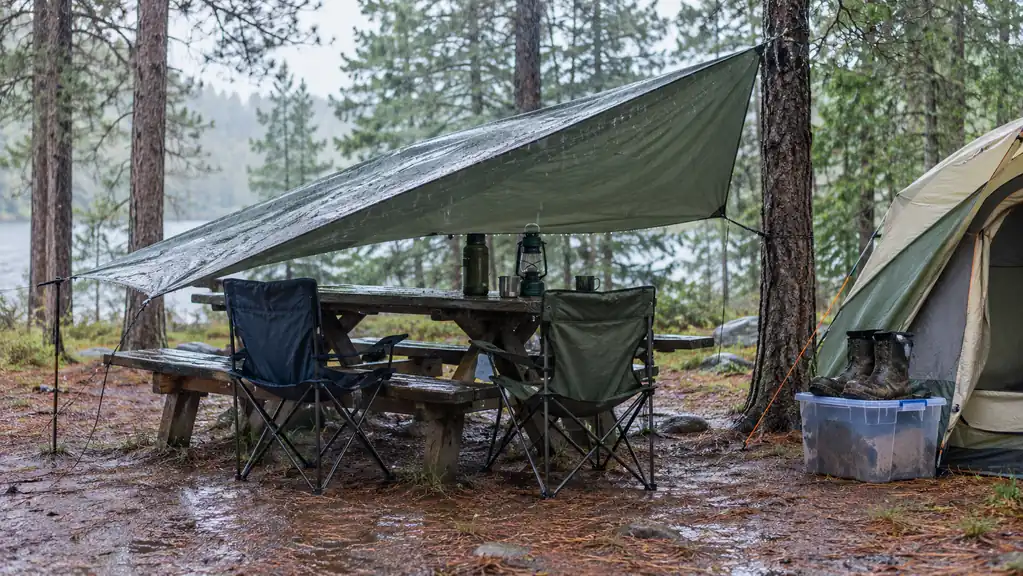
A tarp over the picnic table, pitched with a ridge line and one end lower than the other, gives you somewhere to cook and sit that is not the inside of your tent. That keeps wet people and wet gear out of the tent in the first place, which does more for a dry night than any coating ever will. String it high enough to stand under and angle it so the runoff lands away from your door.
A plastic tote by the door for boots and wet jackets. A second towel. A headlamp so you are not holding a phone in your teeth while you drive a stake. A small sponge for the puddle that shows up anyway despite everything. None of it is fancy and all of it earns its space in the Tacoma. And check the forecast the night before you leave. If the Sierra is calling for two inches, the honest answer is to move the trip or bring a book and a tarp, not to ask a three-season dome to do a job it was never built to do.
One last thing, and it costs you nothing but an afternoon. Practice the pitch, then practice it again in the rain at home with a hose running on the tent. Nothing teaches you faster where the fly touches the body, or which corner you keep forgetting to stake, than standing in your own driveway getting soaked on purpose. You will look ridiculous. You will also sleep dry.
Learn the pitch in the driveway, sleep dry in the mountains
Full rainfly, WeatherTec construction, 49 square feet of floor, 9 pounds in the bag, and a three-season dome that goes up in about 10 minutes once you have done it twice. The Coleman Sundome is the tent I still recommend to families who want simple over clever.
Amazon Check Today's Price on Amazon →