
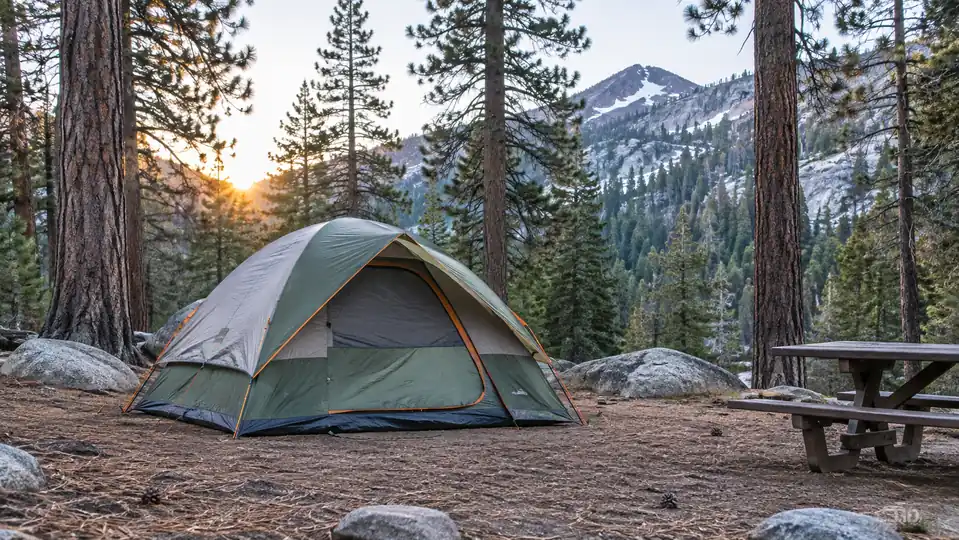
The wind shows up around two in the morning. You hear it in the pines before you feel it, a long rush that builds, and then the tent wall leans in toward your face and holds. That lean, and the fact that it holds, is the whole case for a dome tent. I have spent a lot of cold nights in the Sierra in tents that were not domes, and in bad weather the difference is not subtle. The Coleman Sundome is the tent I keep going back to for car camping with my wife Carol, and it is also a plain textbook example of why this shape works.
What follows are ten reasons, in ordinary language, why a dome handles wind and rain better than the tall cabin tents and old A-frames I grew up pitching. None of it is clever. It is geometry, a rainfly, and a floor that keeps your gear dry. I am 61 with a stiff lower back and one bad knee from my lineman years, so I also care how long a tent takes to put up when the sky is turning. The Sundome answers that part too.
The tent I pitch when the forecast turns
The Coleman Sundome is the one that goes in the truck when there is weather in the forecast and I still want to go. Three person, three season, rainfly in the box.
Amazon See the Coleman Sundome on Amazon →The curve sheds wind instead of catching it
A dome is built from curves, and a curve has no big flat sail for a gust to grab. The wind slides around it. The Sundome is listed as a round shape, and the walls lean back as they rise, so a gust hits, bends the fabric, and keeps moving. Compare that to a cabin tent with tall vertical walls, which is essentially a billboard with a bed inside. I have watched a flat-sided tent flap all night while a dome twenty feet away sat perfectly still. Same wind. Different shape.
A low profile keeps the whole thing planted
A dome gives up height at the edges, which is exactly where wind does its prying. The Sundome sleeps three and lists a 49 square foot floor area, and it does all that close to the ground. Low is not glamorous. Low is what stays put at three in the morning when the campground host is walking the loop in a rain jacket checking on everybody. Fifty years of camping has taught me to trust low.
Crossing poles brace each other
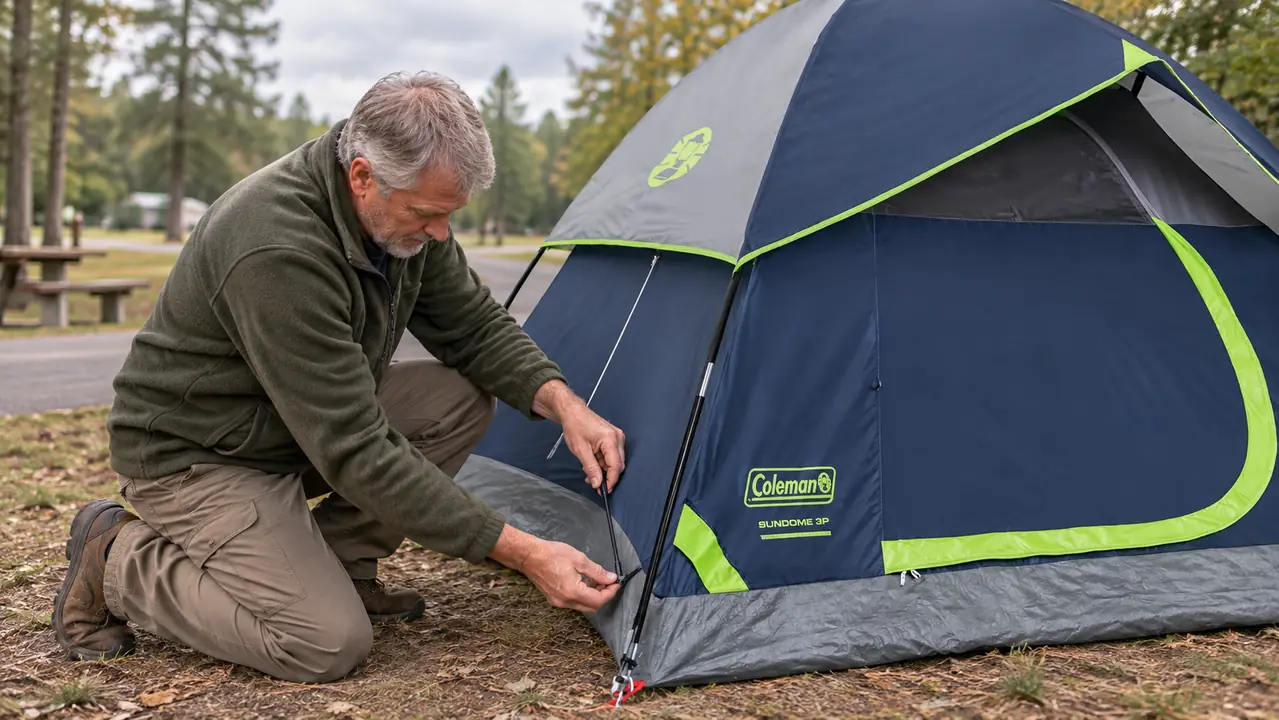
Every dome gets its strength from poles that cross and push against one another. Push on one and the others push back. The Sundome uses clips to attach the tent body to the frame, which is faster than threading a long sleeve in the dark, and it holds the fabric taut along the span. A taut wall does not slap all night. It also does not sag, and a sag is where water collects and starts hunting for a seam.
The rainfly comes in the box
Plenty of tents treat the rainfly as an accessory you buy later. The Coleman Sundome lists the rainfly as an included component, so the piece that actually keeps rain off the walls ships with the tent. A rainfly works by holding the water a few inches off the sleeping body and letting it run down and away. Without one you are betting everything on the wall fabric. With one, the wall can breathe and the rain never touches it.
Fewer flat panels means fewer places for water to pool
Water is patient. Give it a flat spot with a slight sag and it will sit there until it works into a seam. A curved roof does not offer that shelf. Rain hits the crown and runs off in every direction. The Sundome's water resistance comes from the WeatherTec system, and the fabric is Polyguard, which the listing says stands up to the elements. The shape does half the work before the coating is even part of the conversation.
Ten minutes to pitch means you beat the weather
Storms in the Sierra do not sneak up. You can watch them build over the ridge for a solid hour. The Coleman Sundome is rated to set up in about ten minutes, and that is the difference between pitching in a calm and pitching in a downpour with your jacket hood up. My back appreciates it too. Less time bent over clipping and staking means I am not paying for it the next morning.
Free standing means you can move it out of the bad spot
A free standing tent does not need stakes to hold its shape. You can pick it up, walk it ten feet, and set it down somewhere that is not the low corner of the site where the water gathers. I have done exactly that more than once, usually while muttering. Stake it once you are happy. The point is that you get a second chance at placement without taking the whole thing apart in the rain.
Buckles and zippers keep the door shut when it blows
Door hardware is boring right up until the wind is trying to open your tent for you. The Sundome lists buckle and zipper closure, so the door is held by two different things instead of one. Small detail, easy to overlook on a spec page. It matters on the night the gust front rolls through and every loose flap in camp is snapping like a flag.
It is a three season tent, which is the season you actually camp
Three season means spring, summer, and fall. It does not mean a mountaineering tent built to shed a snow load, and I will not pretend otherwise. What it does mean is that the tent was designed around rain, wind, and bugs, which is what a family trip to Shaver Lake in July actually contains. Buying a four season tent for a weekend at a drive-in site is like driving a tractor to the grocery store. Capable. Wrong tool.
49 square feet gives you room to wait out a storm
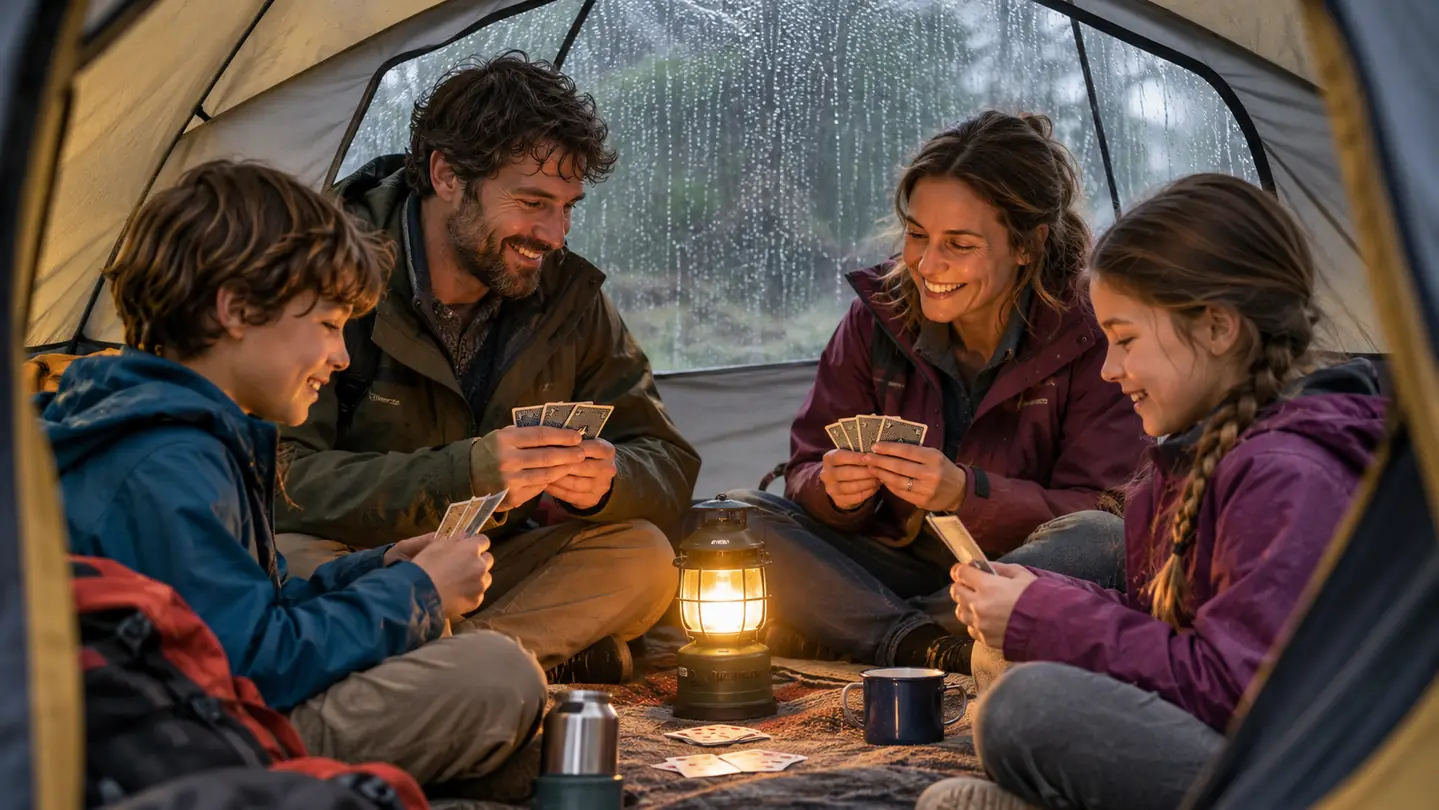
The floor area is listed at 49 square feet, and it fits one queen airbed. When the rain settles in for two hours, that number matters more than any waterproofing claim on the box. The grandkids can play cards on the floor. Carol can read. Nobody is sitting with their knees against a damp wall counting the minutes. A tent that handles weather is partly a tent that is big enough to be inside.
What I'd Skip
Two things I would skip. First, do not let the word waterproof talk you into a bad decision. The Sundome listing says water resistant, not waterproof, and I think that is honest and correct. The tent handles rain. It is not a boat, and no tent in this class is. Second, skip the urge to buy the smallest size that technically fits your family. The three person version holds three people arranged like sardines and one queen airbed. If the grandkids are along, plan on leaving the big cooler in the truck. The tent weighs nine pounds, so you are not being punished for a little extra room.
A taut wall does not slap all night, and it does not sag. A sag is where water collects and goes hunting for a seam.
Ten minutes of pitching, then you are inside and dry
If your last tent spent the night breathing in and out at you, this is the shape that stops doing that. Coleman Sundome, three person, three season, rainfly included.
Amazon Check the Coleman Sundome on Amazon →