
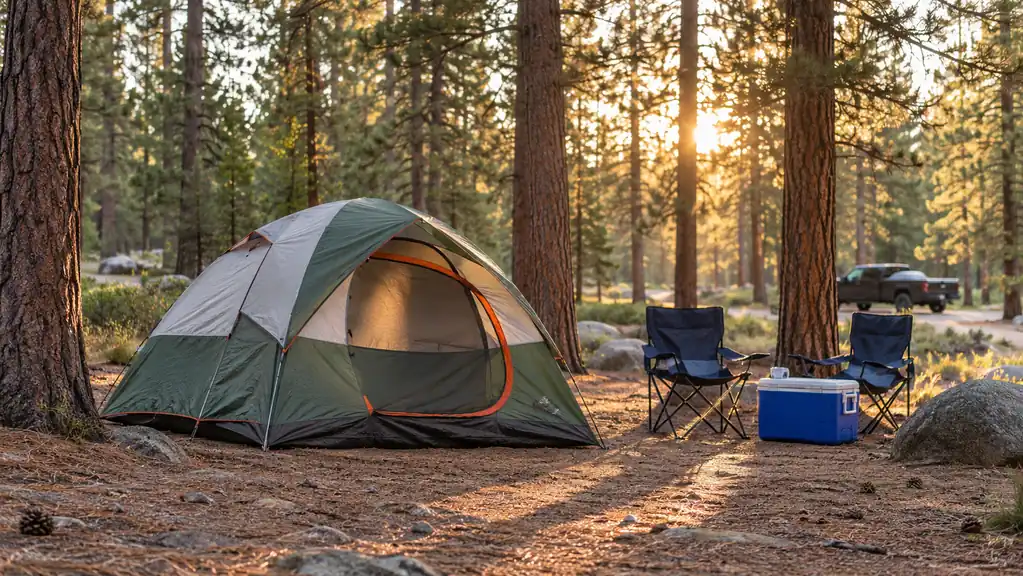
There is a moment on every trip when the tent stops being a plan and becomes a job. Mine was on the shore at Huntington Lake with the wind coming off the water and my bad knee planted in the pine duff while I wrestled a pole into place. A tent either helps you in that moment or it does not. There is not much middle ground. The Coleman Sundome helped. It also has four or five things about it that nobody puts in the listing, and those are the reason I am writing this instead of just saying it is fine.
My name is Walt Brenner. I am 61, retired out of the utility line trade, and I live outside Fresno, which puts Shaver Lake, Huntington Lake and the Sequoia country about two hours from my driveway. I camp out of a 2014 Toyota Tacoma with a camper shell, mostly car camping and short walk-in sites, sometimes with my wife Carol and sometimes with the grandkids along for a summer week. I have a stiff lower back and one knee that came out of thirty years of climbing poles, so how much kneeling and bending a tent asks of me counts as much as anything printed on the box. This is the honest version. What I like, what grates on me, and who should walk right past it.
The Quick Verdict
Fast to pitch, roomy for two, and honest about its limits. It is a three-season car camping tent, not a fortress, and it is built to that job.
Amazon Check Today's Price →The 10-minute setup is not marketing talk. It is the whole reason to own this tent.
Poles that go up without snagging, a shell that stands on its own, and a footprint small enough that one person can walk it to a better spot after the ground turns out to be wrong.
Amazon Check Today's Price on Amazon →How I've Used the Sundome
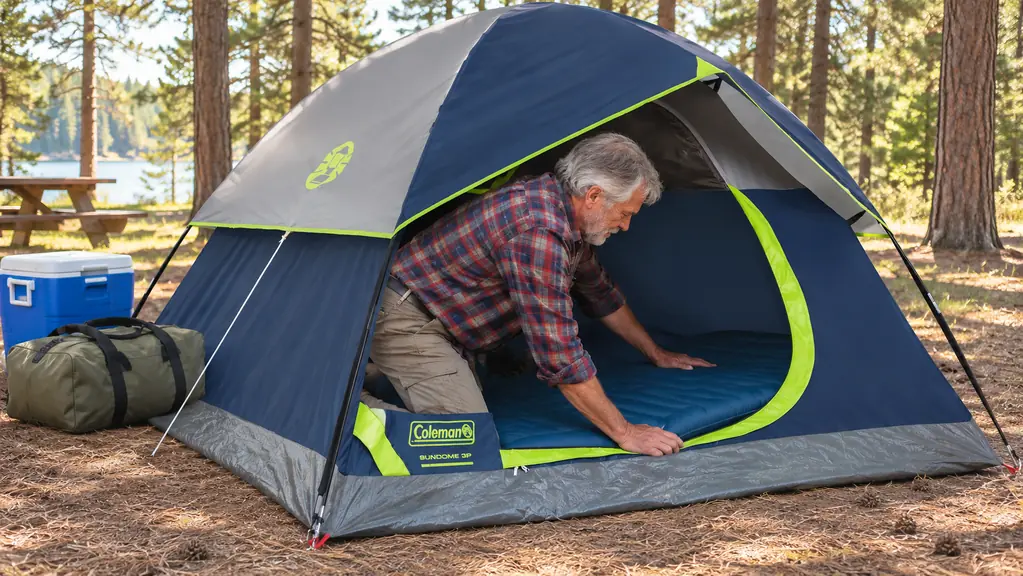
The one in my truck is the three-person, and three is a number that means something different to a tent company than it means to a camper. The floor measures 49 square feet. A queen airbed takes most of that, and once the bed is in, Carol and I have room for a duffel at our feet and boots in the corner and not a great deal else. That is comfortable for the two of us. Last July we had the grandkids up at Shaver Lake for four nights and put them in their own small tent beside ours, which is the arrangement I would recommend to anybody with the option. The summer before, we tried fitting one of them in with us on a pad on the floor, and by the second morning my hip had opinions about it. Three grown adults in this tent would be shoulder to shoulder with their gear living out in the truck, and somebody would be climbing over somebody at two in the morning. If your group is genuinely three people, size up. If it is two people and a grandkid on occasion, this size is right.
Setup is where the Sundome earns its keep. Ten minutes is the claim on the box, and my first pitch took closer to twenty because I read nothing and it was getting dark and I was in a hurry. I had the poles laid out wrong, and I had already staked the corners before the shell was up, which meant pulling stakes back out with my knee in the dirt and my patience gone. Now it runs eight or nine minutes on flat ground, stakes included, and that is with me moving carefully because of my back. The poles go up and the shell clips on without snagging, the whole thing stands on its own once the poles are in, and because the tent is free standing I can pick it up and walk it three feet when I find out I am camped on a root. That sounds like a small thing. It is not a small thing. The last time it mattered, I had the tent up and staked at Huntington Lake before I noticed the site sloped enough that I would have slept with my head downhill all night. I popped the stakes, carried the tent twenty feet to flatter ground, and was finished in four minutes. In my younger days that would have been a full repitch and a foul mood at dinner.
Packed up, it weighs 9 pounds and goes behind the seat of the Tacoma without a fight. I have handed it up onto the tailgate with one hand more than once. The grandkids can carry it from the truck to the site themselves, which buys me a few quiet minutes to sort the cooler and get the chairs out. Compare that to the big cabin tent a friend of mine brings, which is a two-person job and a discussion every single time. His takes two people, a tarp underneath, and about forty minutes if the wind is cooperating, and by the time it is standing the ice is melting and nobody feels like cooking. Mine is out of the bag and up before he has his poles sorted out of the pile.
What I Like and Would Buy Again
The best thing I can say about the Coleman Sundome is that there is nothing on it to break. No blower, no inflatable beams, no electronics, no pump to forget at home. It is fabric, poles and a rainfly, and every one of those either works or it does not, and you find out fast. I have had it up in wind at Shaver Lake that pushed the walls in and had it standing the next morning without a bent pole. The only failure I have had across several seasons was a bent stake, which cost me nothing because I keep spares in the truck door. When something does go wrong on a tent like this, it is usually a stake or a seam, which is a fifteen-minute fix at the picnic table rather than a trip to town. A neighbor of mine has an inflatable cabin tent that lost a beam on the second night of a trip and was useless for the rest of the week. He drove home a day early and left the thing in his garage.
The second thing is the room for two. Forty-nine square feet is not a big number on paper, but a dome shape uses its floor well because the walls come up off the edge instead of sloping in at your shoulder. Carol reads in her chair inside it in the evening. I can sit up and pull my trousers on without elbowing anybody. For a couple on a car camping weekend, the space feels generous rather than tight.
Third, it comes with the rainfly included, which should be unremarkable and is not. I have helped neighbors at campgrounds who discovered at dusk that their fly was a separate purchase and were facing a wet night over a missing part. The Sundome also carries a UV protection claim, and after several Sierra summers the fabric on mine has faded a little but has not gone chalky or started to tear at the pole ends the way an older tent of mine did. Sun at seven thousand feet is not gentle, and a tent that is going to fail from it usually fails by the third season. This one has not.
And fourth, the buckle and zipper closures are simple enough that I am not fumbling in the dark. That is a low bar, I know. Plenty of tents fail to clear it. The door zipper on mine has run smooth from the first night, with no snag at the corner where zippers usually start to go, and the buckles on the fly are big enough to work with cold fingers at six in the morning. That last part matters more every year I get older.
Eight minutes to pitch, and I can pick the whole tent up and move it when I get the spot wrong. At 61 with a bad knee, that beats every feature printed on the box.
What I Do Not Like, and What Nobody Tells You
Here is the first thing nobody mentions. The manufacturer rates this tent water resistant, not waterproof, and those are their words, not mine. The distinction shows up in hour three of a Sierra afternoon storm, when the fabric has taken all the water it is going to take and the seams start to think about it. The WeatherTec system does what it promises for ordinary rain. It is not a monsoon shelter and it was never sold as one. I found the edge of it in August a couple of summers back, when a storm sat on us at Huntington Lake for two full hours instead of the usual forty minutes. The ceiling stayed dry. The seam along the bottom of the long wall started to darken and I put a towel against it, and that towel was damp by morning. If you camp in wet country, plan on treating the seams once a season and putting something under the floor. A can of seam sealer costs less than dinner for two and takes twenty minutes in the driveway on a Saturday.
Second, there is no porch. When it is raining and you are standing at the door with muddy boots, you are standing in the rain while you take them off, and the ground you step onto is the ground you sleep on. I have gotten good at a little shuffle where I sit down on the threshold, swing my legs in and leave the boots in a bag by the door. It works. It is not dignified, and on a cold wet evening it is the difference between a good night and a long one. A tent with a vestibule solves this and costs more and weighs more. This tent does not, and you should know that before you buy rather than after.
Third, three-season is a real boundary. This is a summer and shoulder-season tent. I would not take it into the Sierra in October and I would not take it anywhere snow is on the forecast. The round dome shape sheds wind well because there is no flat wall for it to push against, but shed is not the same as stand up to a blizzard, and I have never asked it to. If you camp late into the fall, spend the money on something built for it and keep this one for the warm months.
Fourth, on a cold morning the inside of the walls will be wet if you sleep with everything closed up tight against the chill. That is true of nearly every tent this size and it is not a defect, it is just physics with a sleeping body inside a sealed bag of fabric. It does mean you should air the tent out in the yard when you get home instead of rolling it damp into the truck and leaving it there until August. I learned that one the hard way and threw out a tent bag that had gone to mildew.
And fifth, the honest complaint about the three-person label. It fits three people the way a compact car seats five. It is legally true and socially optimistic. I would rather Coleman call it a two-person tent with room for a kid, because that is how it actually gets used, including by me.
How It Handles Weather
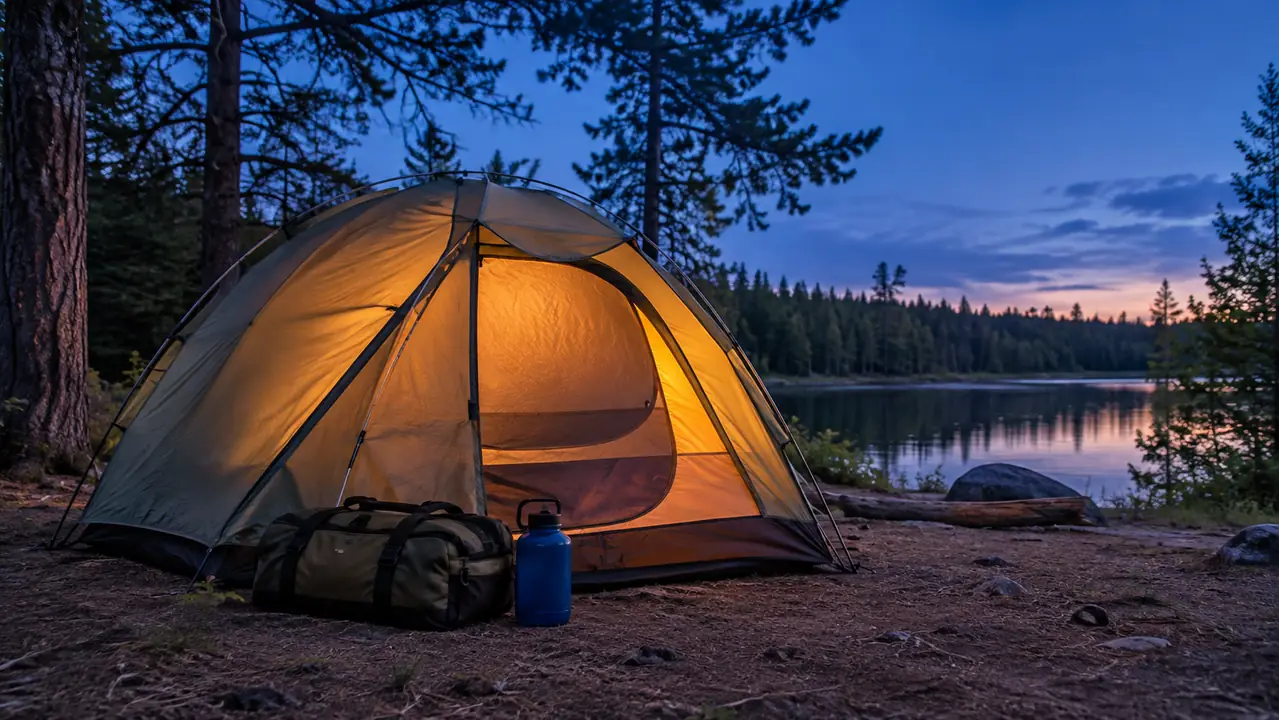
We get two kinds of weather in the Sierra in summer. Dry heat and wind in the afternoon, then a thunderstorm that arrives like it has an appointment around four o'clock. The Sundome is fine in the first and adequate in the second. Set it with the low end into the wind and it stands there and flaps and does not go anywhere. Pitch it broadside to a gust and you will be up at midnight checking stakes, which is true of anything this size and is why I carry four extra stakes and a length of line I almost never use. The round shape helps more than you would think. There is no big flat panel for a gust to get behind, so the wind walks around it instead of loading it up.
For rain, the practical routine is what saves you, not the tent. Pick ground that drains instead of the low spot everyone else avoided. Get the fly on before the first drop rather than during. Keep your bag off the walls. Do those three things and this tent keeps you dry through an ordinary storm. Skip them and you will be the one at the campground store at seven in the morning buying a tarp, and I have been that guy in a different tent. There was a night at Shaver Lake where I watched a family pitch a brand new tent in the dark, in the rain, without the fly, and then wonder at dawn why their bedding was soaked. Nothing about their tent was wrong. The order of operations was wrong.
What I Liked
- Pitches in under ten minutes once you know it, with poles that go up without snagging
- Free standing shell, so you can lift it and shift it after you see the ground
- 49 square feet of floor is genuinely comfortable for two adults
- 9 pounds packed, easy for one person to carry or hand up into a truck
- Rainfly included, plus a UV protection claim that has held up over several summers
- Nothing on it to break: no pump, no blower, no electronics
Where It Falls Short
- Rated water resistant, not waterproof, so seams want attention once a season
- No vestibule, so boot removal happens in the rain at the door
- Three-season only, not a cold-weather or snow tent
- Wall condensation on cold mornings if you sleep buttoned up
- The three-person label is optimistic for three adults plus gear
Who This Is For
This is a car camping tent for a couple, or a couple plus a grandkid, who go out a handful of times a summer and want to spend their evening at the lake rather than at the tent. It suits anybody whose back or knees have opinions about kneeling in the dirt, because there is not much of it and the shell stands up on its own. It suits the family that wants a second tent for the kids without spending a fortune on something that gets used four nights a year. It suits the person who wants one bag in the truck, one set of poles, and no charging cables. If you are the one who does the packing in your house, you will appreciate that this tent has no accessories to remember.
Who Should Skip It
Skip it if you camp where it rains sideways. Skip it if you need a covered place to stand while you strip off wet gear, because this tent will not give you one. Skip it if you are a party of three grown adults, or if you camp in the shoulder seasons where overnight temperatures dip below freezing. Skip it if you want to stand up inside, because you will be dressing sitting down. And skip it if you are the sort who wants the tent to be the interesting piece of gear, because this one is deliberately uninteresting.
One more note on research, since I did a lot of it before I bought. My long-term Coleman Sundome review covers how the fabric, seams and poles have held up across multiple seasons of real use, and if wind is your main worry, the piece on how dome tents handle wind and rain explains why this shape sheds a gust better than a cabin tent does. Neither one is required reading. Both will save you a wet night.
If the tent needs to be up before the light goes, this is the one I would hand you.
Three seasons, two people, one bag, eight minutes. That is the whole pitch, and it is the same pitch I would make to a friend at the picnic table.
Amazon Check Today's Price on Amazon →